Imagine a patient walks out of your pharmacy with the wrong strength of their blood thinner. They take it for three days before realizing something feels off. That single mistake could lead to a hospital visit, a lawsuit, and a loss of trust that is nearly impossible to rebuild. It sounds like a nightmare scenario, but these dispensing errors happen far more often than we’d like to admit. The good news? You have a powerful tool right at your counter to stop them.
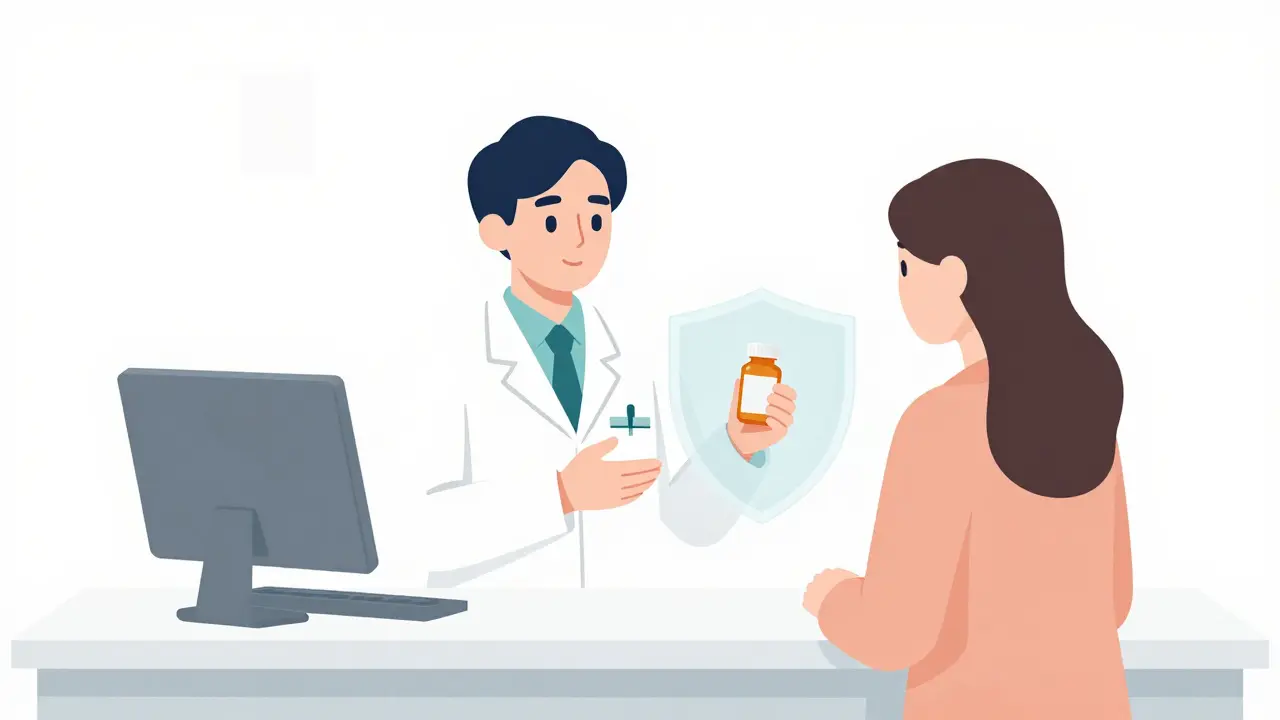
Patient counseling isn’t just about being nice or following a legal requirement from the Omnibus Budget Reconciliation Act of 1990 (OBRA '90). It is the final safety checkpoint in the entire medication journey. In fact, research shows that approximately 83% of dispensing errors are caught during this brief interaction. When you turn a passive transaction into an active conversation, you create what the Institute for Safe Medication Practices (ISMP) calls a "human firewall." This guide breaks down exactly how to use that conversation to protect your patients and your practice.
The Core Mechanics of Error Detection
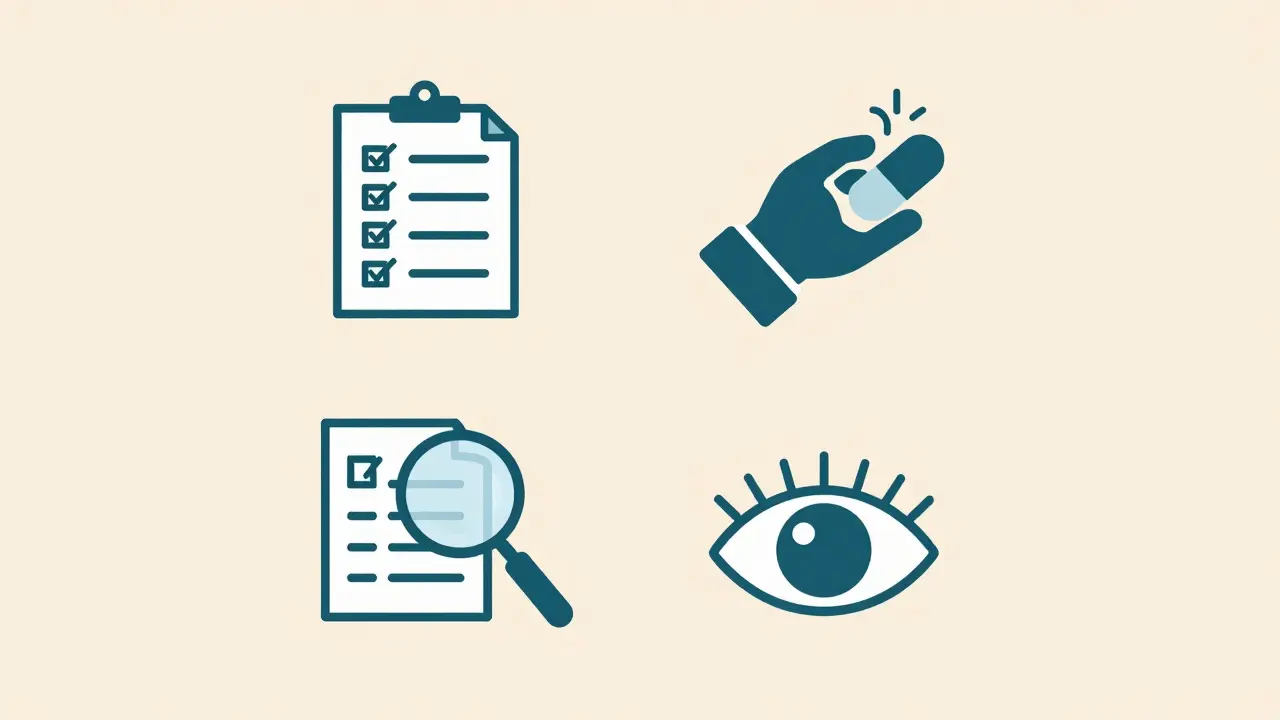
To catch mistakes, you need to move beyond simply reading instructions. You need to verify understanding. The American Society of Health-System Pharmacists (ASHP) defines this as an interactive process where you provide information to optimize outcomes and prevent errors. But for error detection specifically, you must focus on four critical elements recommended by the UConn School of Pharmacy’s Medication Safety Program.
- Confirm the Purpose: Ask, "What condition is this medication for?" If the patient says "headaches" but you dispensed a heart medication, you’ve caught a major mismatch before they leave.
- Verify Administration: Use the teach-back method. Ask, "Can you show me how you’ll take this?" Watching them demonstrate the dose reveals confusion that words alone might hide.
- Cross-Check History: Briefly review their current med list against the new prescription. This catches duplicates or dangerous interactions that automated alerts might miss if the data is outdated.
- Validate Appearance: Show them the bottle. Ask, "Does this look like what you’ve taken before?" This simple step catches 29% of look-alike medication errors, which are common with high-alert drugs like insulin or opioids.
The National Association of Boards of Pharmacy (NABP) updated standards in 2022 to emphasize these exact points. By making these four checks routine, you transform counseling from a monologue into a verification audit.
Why Counseling Beats Technology
We rely heavily on technology. Barcode scanning systems are great, catching about 53% of errors according to a 2022 study in the Journal of the American Pharmacists Association. Pharmacist double-checking identifies 67%. Yet, patient counseling achieves the highest detection rate at 83%. Why?
Technology verifies the physical object. Counseling verifies the human context. A scanner doesn’t know if the patient is confused, has low health literacy, or is expecting a different pill shape. It also can’t detect if the patient misunderstood the doctor's intent. According to Dr. Michael Cohen, President of ISMP, "Patient counseling isn't just about education; it's the last line of defense where the patient becomes the final quality checker - no technology can replace this human verification point."
Furthermore, counseling is incredibly cost-effective. The National Community Pharmacists Association (NCPA) found that structured counseling costs roughly $0.87 per prescription to implement. Compare that to $1.35 for barcode verification systems and $2.10 for pharmacist double-checking protocols. For independent pharmacies operating on thin margins, this efficiency is a game-changer.
| Method | Error Detection Rate | Cost Per Prescription | Key Limitation |
|---|---|---|---|
| Barcode Scanning | 53% | $1.35 | Cannot assess patient understanding |
| Pharmacist Double-Check | 67% | $2.10 | Labor intensive, prone to fatigue |
| Patient Counseling | 83% | $0.87 | Requires patient engagement and time |
The Power of Questions and Timing
Not all counseling is created equal. How you ask matters as much as what you ask. Pharmacy Times documented that open-ended questions identify 3.2 times more errors than closed ones. Instead of asking, "Is this for your blood pressure?" (which invites a simple "yes"), try, "What do you understand this medication is for?" This forces the patient to retrieve the information from memory, revealing gaps in understanding immediately.
Timing is equally critical. The NCBI’s StatPearls resource specifies that effective error-catching requires a minimum of 2.3 minutes per patient. Research shows that every additional 30 seconds of counseling time reduces error rates by 12.7%. However, reality often clashes with ideals. Pharmacists in corporate settings report spending only 1.2 minutes on average due to productivity demands. This gap explains why error detection rates drop significantly when pharmacists handle more than 14 prescriptions per hour, falling from 83% to 41% according to University of Arizona College of Pharmacy research.
To bridge this gap, prioritize high-risk scenarios. Counseling is most effective for new prescriptions (catching 91% of errors) and complex regimens involving five or more medications (87% detection). For routine refills, the detection rate drops to 33%, so adjust your intensity accordingly. Don’t waste your deepest scrutiny on a repeat statin fill if you can avoid it; save that energy for the new warfarin script.
Implementing a Structured Protocol
Ad-hoc counseling leads to inconsistent results. You need a repeatable framework. The American Pharmacists Association (APhA) recommends a 4-step protocol that takes exactly 2 minutes and 40 seconds. Here is how to break it down:
- Identity Verification (27 seconds): Confirm name, date of birth, and allergies. This ensures you’re talking to the right person about the right history.
- Purpose Confirmation (43 seconds): Discuss the indication. Use the teach-back method here. "So, you’ll take this twice a day to lower your cholesterol. Does that sound right?"
- Appearance and Administration Check (52 seconds): Hand the bottle to the patient. Point out the color, shape, and any unique markings. Explain exactly how to take it (with food, empty stomach, etc.).
- Interaction and Side Effect Review (38 seconds): Highlight one or two key side effects to watch for. Ask if they are taking any other supplements or OTC drugs that might interact.
Community pharmacies that implemented this specific protocol saw error detection rates jump from 61% to 85% within six months, according to a 2022 University of Michigan study. Documentation is key here. Using the NABP’s 2022 Counseling Documentation Standards, pharmacies reduced liability claims related to undetected errors by 44%. If you didn’t document the counseling, in the eyes of a court, it didn’t happen.

Overcoming Real-World Barriers
Let’s be honest: implementing thorough counseling is hard. Eighteen percent of patients decline counseling entirely, creating a blind spot. Corporate productivity metrics often discourage "slowing down the line," with 63% of technicians reporting pressure to keep things moving fast. Independent pharmacy owners note that structured counseling increases wait times by 2.4 minutes per prescription.
However, the trade-off is worth it. Those same independent pharmacies reported a 19% reduction in malpractice insurance premiums due to fewer error-related claims. Plus, patient sentiment is overwhelmingly positive. An analysis of over 1,200 reviews on Healthgrades and Yelp showed that 89% of patients appreciate thorough counseling. One patient noted, "The pharmacist caught that my new blood thinner was the wrong strength when I said it looked smaller than before." That comment alone is worth the extra two minutes.
To manage time constraints, consider leveraging pharmacy technicians. In 42 states, technicians are permitted to perform preliminary counseling tasks. This can increase effective counseling time by 37%, allowing the pharmacist to focus on the complex therapeutic checks while the technician handles basic administration instructions.
Focusing on High-Risk Populations
You cannot treat every patient with the same level of intensity. Resource allocation is smart practice. The American Society of Consultant Pharmacists (ASCP) advises prioritizing three groups:
- Patients over 65: Dosing errors are 3.7 times more likely to cause harm in this demographic due to physiological changes and polypharmacy.
- Patients with Low Health Literacy: This group accounts for 42% of undetected errors. Use plain language, avoid jargon, and rely heavily on visual aids.
- New High-Alert Medications: Drugs like opioids, anticoagulants, and insulin carry severe risks. The ISMP reports that 1 in 5 dispensing errors involve these classes. Never skip detailed counseling for these scripts.
By targeting your efforts here, you maximize safety impact without burning out your staff. Remember, counseling should be the final net, not the only net, as Dr. Jerry Fahrni warns. Combine it with robust internal verification systems for the best results.
How much time should I spend on patient counseling to catch errors?
Research indicates a minimum of 2.3 minutes per patient is required for effective error detection. Each additional 30 seconds reduces error rates by 12.7%. While corporate environments often limit this to 1.2 minutes, aiming for the full 2.3 minutes significantly improves safety outcomes.
What is the most effective question to ask during counseling?
Open-ended questions are superior. Instead of asking "Is this for your blood pressure?", ask "What do you understand this medication is for?" Open-ended questions identify 3.2 times more errors because they force the patient to articulate their understanding rather than just agreeing.
Does patient counseling really catch more errors than barcode scanners?
Yes. Barcode scanning catches approximately 53% of errors, while patient counseling catches 83%. Counseling verifies both the physical medication and the patient's understanding, context, and expectations, which technology cannot assess.
Who should receive the most intensive counseling?
Prioritize patients over 65, those with low health literacy, and anyone starting new high-alert medications (like opioids or insulin). These groups are at highest risk for severe harm from dispensing errors.
How can I document counseling to reduce liability?
Use standardized documentation tools like the NABP’s 2022 Counseling Documentation Standards. Pharmacies using these standards reduced liability claims related to undetected errors by 44%. Document the specific points covered, such as purpose, appearance, and administration instructions.