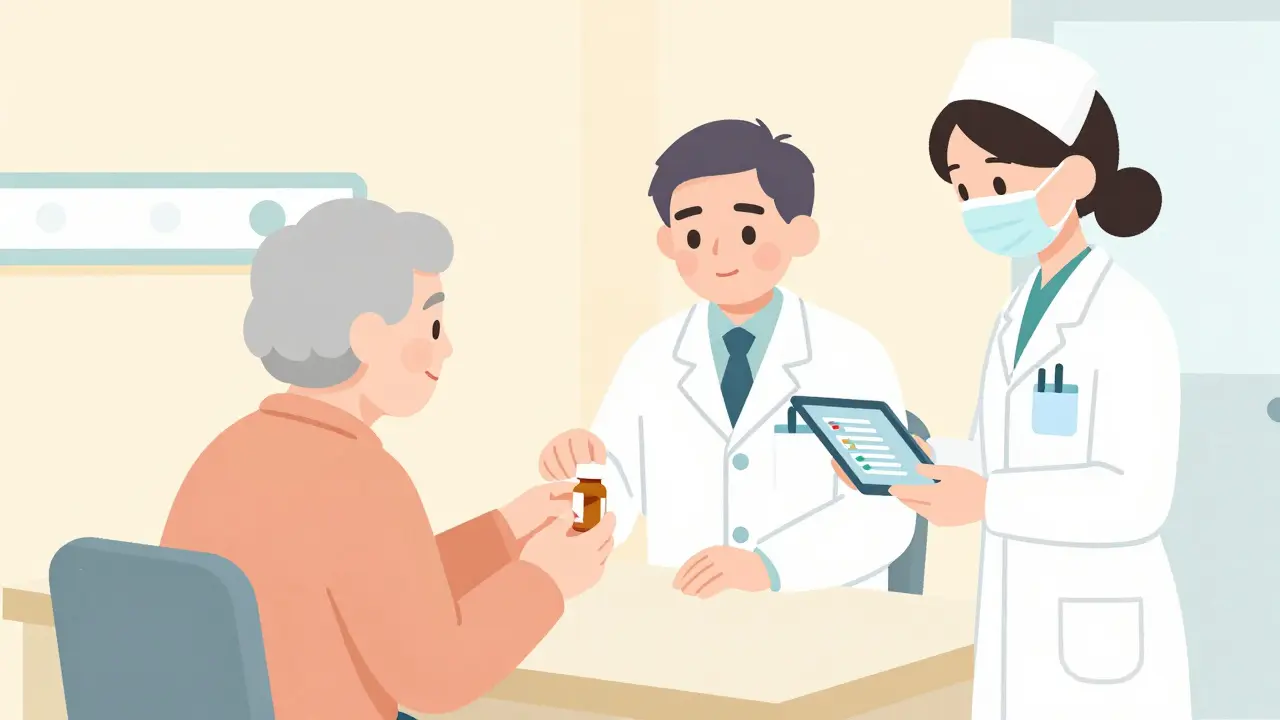
Every year, hundreds of thousands of patients in the U.S. are harmed because their medications don’t match up when they move from hospital to home, or from one doctor to another. These aren’t rare mistakes - they’re routine. A patient gets discharged with a new prescription, but the community pharmacist never gets the update. A nurse forgets to check if the patient is still taking that old blood pressure pill from last year. A doctor prescribes a new drug without knowing the patient already takes five others. The result? A trip back to the hospital, a dangerous bleed, or worse.
Medication errors during care transitions are one of the most preventable causes of patient harm. According to the Agency for Healthcare Research and Quality (AHRQ), 60% of all medication errors happen when patients move between care settings. That’s not a statistic - it’s a pattern. And it’s happening right now in hospitals, nursing homes, and clinics across the country.
What Exactly Is Medication Reconciliation?
Medication reconciliation isn’t just a checklist. It’s a process - a careful, step-by-step comparison of what a patient is actually taking, versus what the medical team thinks they’re taking. The Joint Commission has required this since 2005. The World Health Organization calls it a core part of its global safety campaign, Medication Without Harm.
The process has four clear steps:
- Get the most accurate list possible of all medications the patient is currently taking - including over-the-counter pills, vitamins, herbals, and even patches.
- Create a new list of medications the patient should be taking based on their current condition and care plan.
- Compare the two lists side by side - looking for omissions, duplications, dosage errors, or dangerous interactions.
- Make clinical decisions based on that comparison - and document every change.
This isn’t just paperwork. It’s the difference between a patient going home safe and a patient ending up in the ER with a dangerous drug reaction.
Why Do Errors Happen During Transitions?
It’s not because staff are careless. It’s because the system is broken.
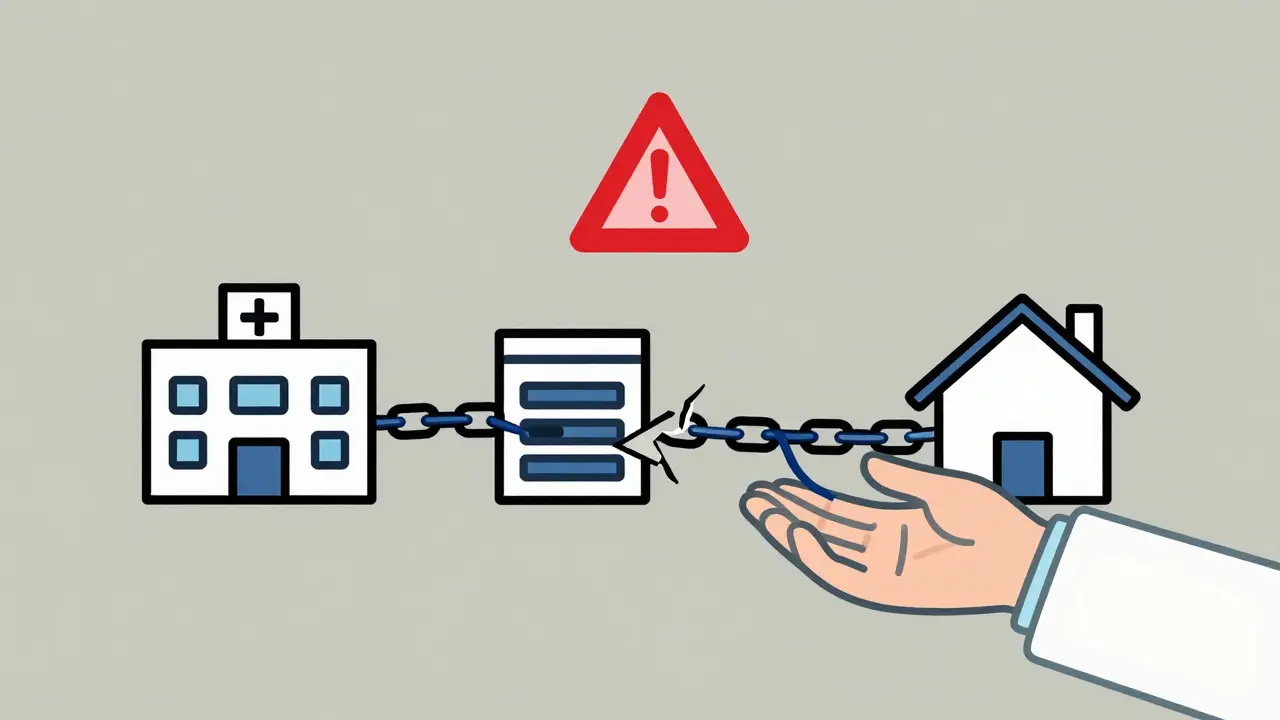
Most hospitals use electronic health records (EHRs), but those systems don’t talk to each other. Only 37% of U.S. hospitals can electronically send medication lists to community pharmacies. That means pharmacists often have to call the hospital - manually - to get the right info. One pharmacist in Cleveland told me, "I spend half my day on the phone just trying to figure out what a patient is really taking."
Doctors and nurses are rushed. A typical admission might take 8 to 10 minutes for medication history - but experts say you need 15 to 20 minutes to do it right. So shortcuts happen. A nurse asks, "Are you taking your blood pressure pill?" The patient says, "I think so." That’s not enough. People forget. They stop pills because they’re expensive. They take something from a friend. They don’t tell you.
And then there’s the discharge. A patient gets handed a stack of papers with new prescriptions. No one sits down and explains them. No one checks if they can afford them. No one calls their pharmacy. The patient leaves confused - and at risk.
Technology Helps - But It’s Not a Magic Fix
Computerized systems have cut medication errors by 48% in hospitals, according to a 2022 Cochrane review. Barcode scanners that check pills before administration, clinical decision tools that warn about interactions - these work.
But here’s the catch: when hospitals first roll out new EHRs, medication discrepancies often go up by 18%. Why? Because staff are learning a new system. They click the wrong button. They copy-paste old lists. They don’t update the right fields.
The AHRQ’s MATCH toolkit - updated in 2023 - is the most comprehensive guide out there. It doesn’t just say "use technology." It tells you how to train staff, how to assign roles, how to build workflows that fit into real life. Hospitals that used the full MATCH toolkit saw a 63% drop in errors. Those that just added an EHR module? Only 41%.
And AI tools are starting to help. MedWise Transition, cleared by the FDA in August 2024, analyzed medication lists across 12 hospitals and cut discrepancies by 41%. It flags hidden interactions, checks for duplicate therapies, even suggests cheaper alternatives. But it still needs a human to review the alerts.
The Role of Pharmacists - And Why They’re Essential
Pharmacists are the unsung heroes of medication safety. A 2023 study in the Journal of the American Pharmacists Association found that when pharmacists lead reconciliation at discharge, medication errors drop by 57%. Hospital readmissions fall by 38% in the first 30 days.
Why? Because pharmacists are trained to spot what others miss. They know that a patient on warfarin who suddenly starts taking a new antibiotic is at risk for a dangerous bleed. They know that a 72-year-old on five blood pressure pills might not need them all. They know when a medication was stopped six months ago but still shows up on the list.
The American Society of Health-System Pharmacists says facilities with dedicated transition pharmacists see 53% fewer adverse drug events. But only 28% of hospitals consistently involve patients in the process. That’s a gap.
Patients Need to Be Part of the Solution
Here’s a hard truth: 72% of patients don’t understand why their medication list matters when they’re discharged. They think it’s just paperwork.
But when patients are asked to bring their own pill bottles to the hospital - or to review their list with a pharmacist - their confidence soars. 85% of those who participated in reconciliation said they felt more in control of their care.
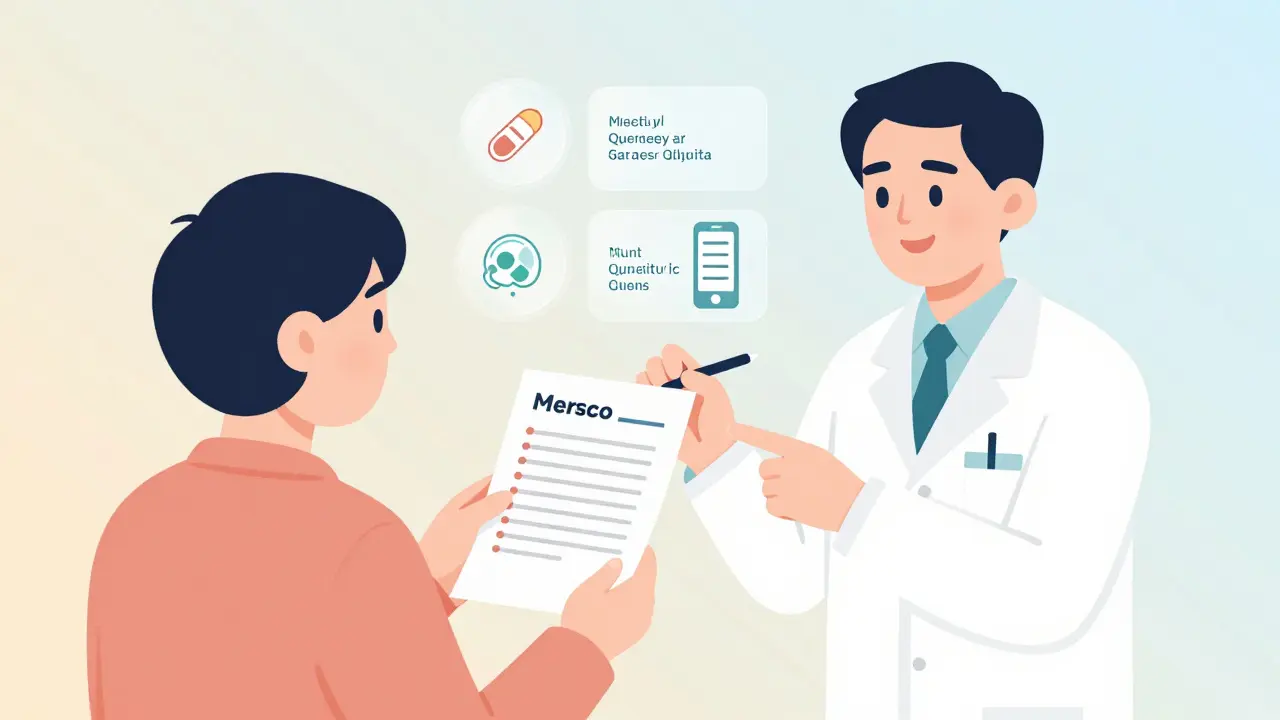
Simple tools help. A printed list they can keep. A video that explains each pill in plain language. A phone call from a pharmacist three days after discharge. These aren’t fancy tech - they’re basic human care.
What Works in Real Life?
Let’s look at what’s actually making a difference:
- Assign clear roles. Who does the reconciliation? The nurse? The pharmacist? The doctor? MARQUIS research found that unclear roles increased harmful errors by 15%.
- Dedicate staff to discharge. One hospital in Ohio assigned a pharmacist to stay with patients until discharge. They caught 12 dangerous errors in one month - including a duplicate anticoagulant that could have caused a fatal bleed.
- Train staff properly. Don’t just hand someone a new EHR and say "figure it out." Training must include real patient scenarios, not just software tutorials.
- Use two sources. The 2025 National Patient Safety Goals now require verifying high-risk medications with at least two sources - like the patient’s own list, plus the pharmacy record.
Time is the biggest barrier. Most hospitals give 8 to 10 minutes per patient. Experts say 15 to 20 is needed. But you don’t need more time - you need better workflow. Embed reconciliation into the admission process. Don’t make it a separate task. Make it part of the intake.
What’s Changing in 2025?
Regulations are tightening. The Joint Commission’s Standard MM.09.01.01 requires reconciliation at admission, transfer, and discharge. Hospitals that fail risk CMS payment cuts of up to 1.5%.
WHO’s Phase 2 of Medication Without Harm, launched in October 2024, sets a target: reduce medication-related harm during transitions by 30% by 2027. The U.S., EU, and Australia are all aligning on the same standards.
And the market is responding. The global medication safety tech market hit $3.27 billion in 2023 and is growing at 14.3% per year. More tools are coming - but they won’t fix the problem alone.
The Bottom Line
Preventing medication errors during transitions isn’t about buying new software. It’s about changing how people work together.
It’s about pharmacists sitting with patients, not just reviewing charts. It’s about doctors asking, "What are you really taking?" instead of assuming. It’s about nurses having enough time to double-check. It’s about hospitals fixing the broken links between their systems and community pharmacies.
And it’s about patients - finally - being treated as partners, not just recipients of care.
The tools exist. The evidence is clear. The cost of doing nothing is too high. Every transition of care is a chance to protect someone. Don’t waste it.

Davis teo
February 19, 2026 AT 22:23Michaela Jorstad
February 20, 2026 AT 17:29Scott Dunne
February 21, 2026 AT 05:16Ashley Paashuis
February 22, 2026 AT 01:05Oana Iordachescu
February 22, 2026 AT 05:01Arshdeep Singh
February 22, 2026 AT 09:01James Roberts
February 23, 2026 AT 21:01Danielle Gerrish
February 25, 2026 AT 01:05madison winter
February 26, 2026 AT 01:37James Roberts
February 26, 2026 AT 01:38