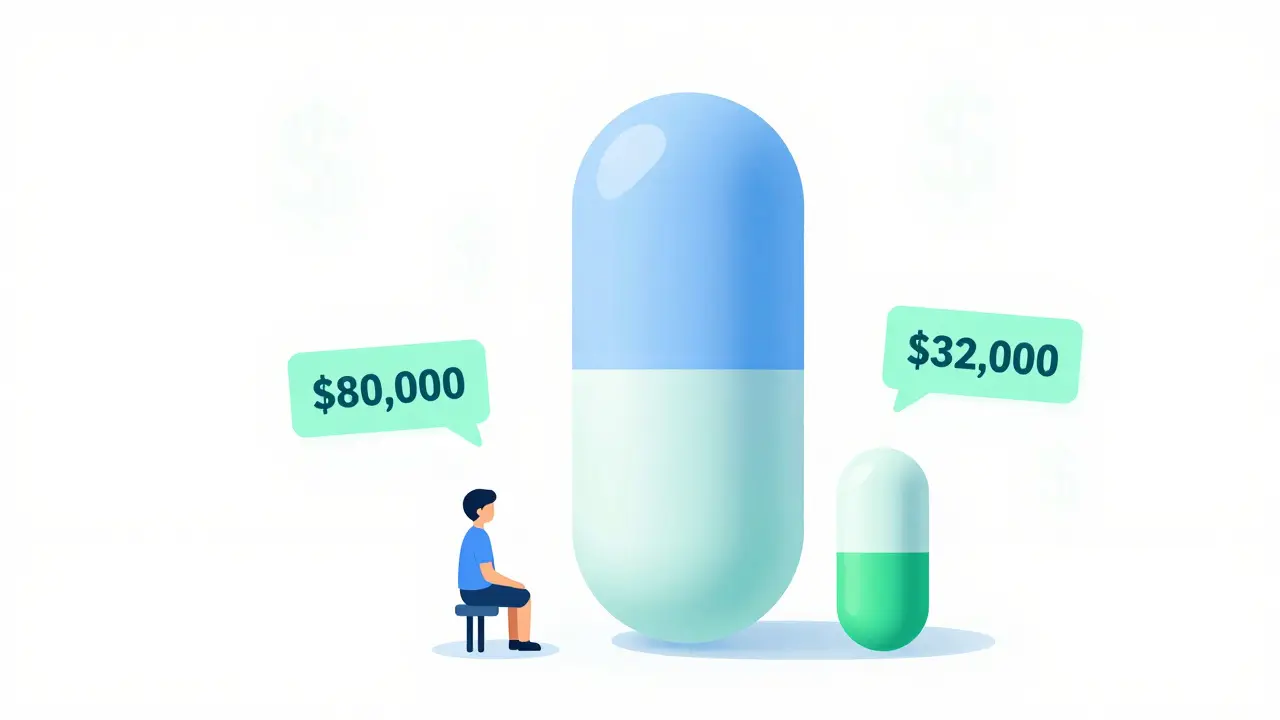
Biologic drugs aren’t like regular pills. They’re made from living cells - not chemicals in a lab. That’s why they cost so much. A single year of treatment for a brand-name biologic can run over $80,000. For many patients, that’s more than their annual income. But there’s a cheaper alternative: biosimilars. They’re not generics in the traditional sense, but they work the same way. And they’re cutting costs by half - sometimes even more.
What’s the real price difference?
In 2025, the average 30-day cost for a brand biologic in the U.S. was $2,104. The biosimilar version? $919. That’s a 56% drop. For patients paying out-of-pocket, that means saving about $1,200 per month. Over a year, that’s more than $14,000. And it’s not just a one-time discount. Once biosimilars enter the market, the original brand drugs often lower their prices too - by an average of 25% to 33%.
Take Humira, the world’s best-selling biologic. Before biosimilars hit the market, it cost about $80,000 per patient per year. After patents expired in 2023, biosimilars launched at an 80% discount. Within a year, they captured 65% of the market. One biosimilar, Hyrimoz by Sandoz, alone holds 14% of that share. That’s not a small shift - it’s a market earthquake.
Why are biosimilars cheaper but not identical?
Traditional generics are exact copies of small-molecule drugs. Biosimilars aren’t. Biologics are huge, complex proteins made in living cells - like yeast or hamster ovaries. Even tiny changes in the process can alter the final product. So biosimilars are “highly similar,” not identical. But here’s the key: the FDA requires them to prove they work just as well and are just as safe. No compromises.
That’s why they’re not called generics. They’re called biosimilars. And they’re held to the same strict standards as the original. Studies show no meaningful difference in side effects or effectiveness. The only real difference? Price.
How much have biosimilars saved the system?
Since 2015, biosimilars have saved the U.S. healthcare system between $36 billion and $56 billion, depending on who’s counting. The most conservative estimate still puts it at over $12 billion saved in 2023 alone. In 2024, $20 billion was saved just from biosimilars - and that doesn’t even include savings from lower brand drug prices after biosimilar competition kicked in.
Compare that to traditional generics: they make up 90% of all prescriptions but only 13% of total drug spending. Biosimilars are just starting to do the same for biologics. Right now, they make up less than 20% of the biologic market. That’s way behind where generics were at the same point in their adoption. But the potential? Huge. Experts predict biosimilars could save an extra $125 billion a year by 2030 if adoption keeps growing.
Why aren’t more people using them?
If biosimilars are safe, cheaper, and proven - why aren’t they everywhere?
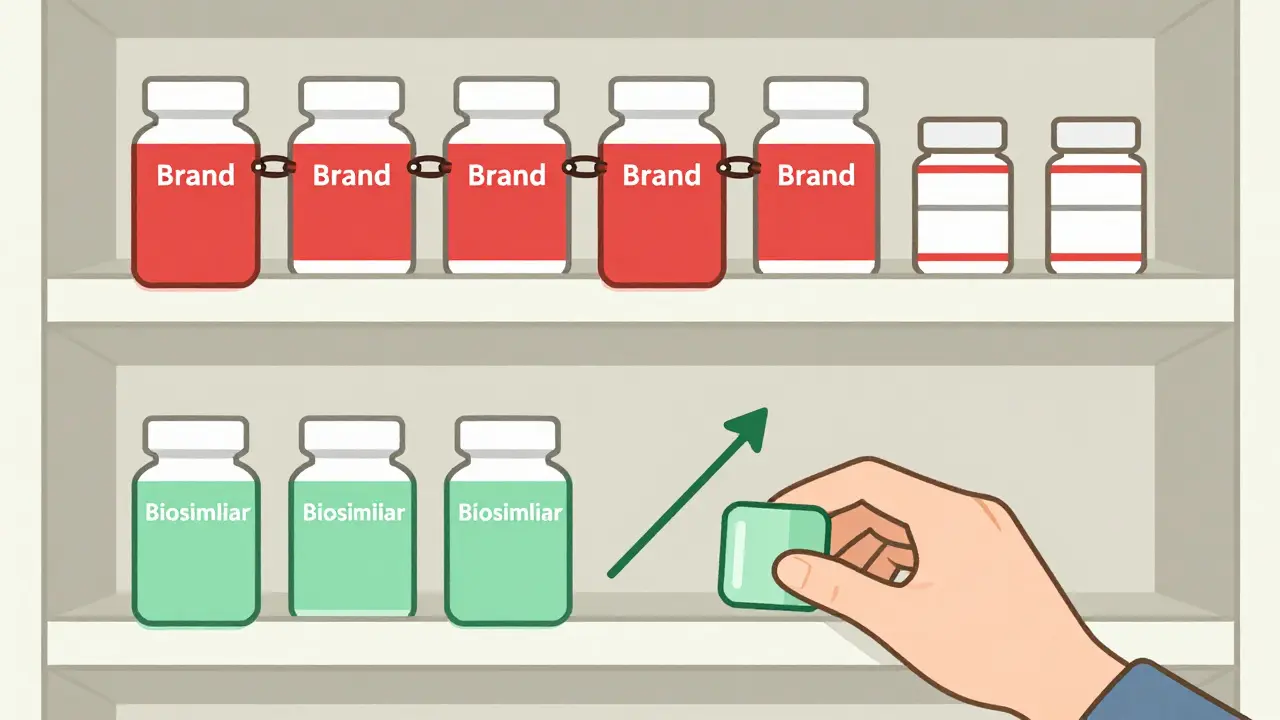
One big reason: patent thickets. Brand drug companies file dozens - sometimes hundreds - of overlapping patents to block biosimilar makers from entering the market. They stretch out legal battles for years. It’s the same tactic they used against small-molecule generics for decades. Now they’re doing it with biologics, and it’s working.
Then there’s the rebate system. Pharmacy Benefit Managers (PBMs) get big kickbacks from brand biologic makers if they keep those drugs on the preferred list. So even if a biosimilar is cheaper, the PBM might still push the expensive brand because they pocket the rebate. That’s called a “rebate wall.” It’s not illegal - it’s just broken.
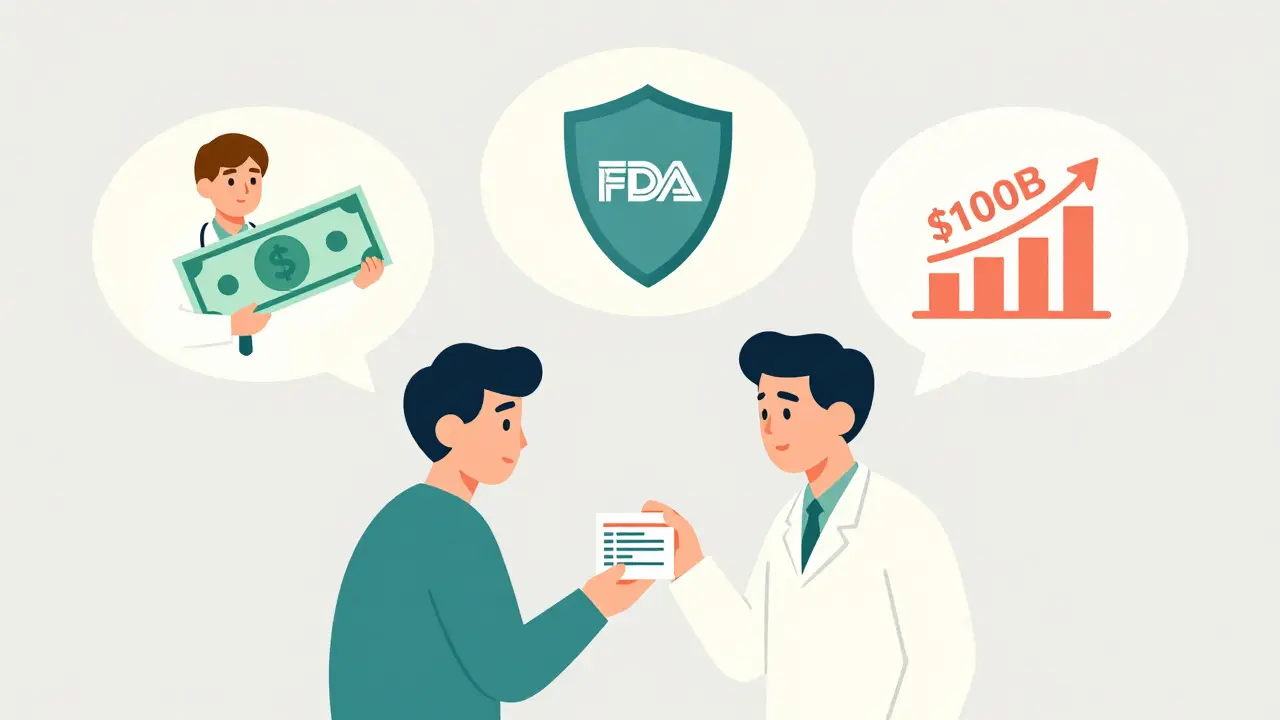
Doctors and pharmacists often don’t switch patients unless they’re forced to. Many still believe biosimilars are “less effective” - even though the FDA and multiple independent studies say otherwise. Education gaps like this are real, and they cost lives.
What’s changing - and what’s next?
The FDA just released new draft guidance to make biosimilar approval faster and cheaper. They’re cutting unnecessary clinical trials. That’s huge. Developing a biosimilar used to cost $100-250 million. That’s why only 10% of upcoming biologic patents have a biosimilar in development. If costs drop, that number will climb.
The Biden administration’s new Biosimilars Action Plan is pushing for better reimbursement rules. Medicare and Medicaid are starting to require biosimilar use when available. Private insurers are following. And payers are finally realizing: if you don’t use biosimilars, you’re paying more than you have to.
By 2030, experts expect biosimilars to make up 35-40% of the biologic market. That could mean over $100 billion in annual savings. For patients with rheumatoid arthritis, Crohn’s disease, or cancer - it could mean staying on treatment instead of dropping out because they can’t afford it.
What this means for you
If you’re on a brand biologic, ask your doctor: Is there a biosimilar available? If your insurance won’t cover it, ask why. Sometimes it’s just inertia - not cost. Many patients are switched without even being told. You have the right to know your options.
If you’re a caregiver or a patient advocate, push for biosimilar use in your clinic or health plan. The data is clear: biosimilars work. They’re safe. And they’re dramatically cheaper. The only thing holding them back is outdated policy, hidden rebates, and misinformation.
This isn’t about cutting corners. It’s about fixing a system that lets one drug cost more than a house - and then makes patients choose between rent and medicine. Biosimilars are the fix. They’re not perfect. But they’re the best shot we’ve got at making life-saving drugs affordable again.
How to check if a biosimilar is right for you
- Ask your prescriber: “Is there an FDA-approved biosimilar for my drug?”
- Check the FDA’s biosimilar database - it’s public and updated monthly.
- Call your pharmacy. Ask if they stock the biosimilar version and what your out-of-pocket cost would be.
- If your insurance denies coverage, file an appeal. Cite the FDA’s statement that biosimilars are “as safe and effective” as the brand.
- Don’t assume your doctor knows all the options. Many don’t - not because they’re careless, but because the system doesn’t make it easy for them to keep up.
The bottom line: if you’re paying thousands a month for a biologic, you’re not alone. But you don’t have to keep paying that price. There’s a cheaper, equally effective option out there. You just have to ask for it.
Are biosimilars as safe as brand biologics?
Yes. The FDA requires biosimilars to undergo rigorous testing to prove they work the same way and have no meaningful difference in safety or effectiveness compared to the original brand drug. Thousands of patients have used biosimilars since 2015 with no new safety concerns. The FDA and independent studies consistently confirm this.
Why are biosimilars cheaper if they’re so similar?
Biosimilars don’t need to repeat the full clinical trials the original brand did. That saves manufacturers hundreds of millions in development costs. They also face competition from multiple biosimilar makers once the patent expires, which drives prices down. Brand companies used to have a monopoly - now they don’t.
Can I switch from a brand biologic to a biosimilar?
Yes, and it’s often done automatically. Many insurers now require patients to try a biosimilar first. But you can also ask your doctor to switch you. Studies show no increased risk when switching. In fact, some patients report better outcomes after switching - likely because they can now afford to take the drug consistently.
Do biosimilars work for all biologic drugs?
Not yet. As of late 2025, only about 76 biosimilars have been approved in the U.S., out of roughly 600 biologics on the market. But new ones are coming fast. Drugs like Humira, Enbrel, and Rituxan now have multiple biosimilars. Others, especially newer ones, are still protected by patents. Check the FDA’s list to see what’s available for your specific medication.
Why don’t my doctors recommend biosimilars more often?
Many doctors aren’t fully informed. The pharmaceutical industry spends billions marketing brand biologics directly to prescribers. Biosimilar companies have far smaller budgets. Plus, some doctors worry about liability - even though there’s no legal or clinical reason to. Ask your doctor why they’re not suggesting a biosimilar. You might be surprised by the answer.

Michael Bond
December 26, 2025 AT 19:46Just switched my mom to a biosimilar for her RA. Her bill dropped from $2,200 to $800 a month. No side effects. No drama. Just cheaper medicine that works.
Matthew Ingersoll
December 27, 2025 AT 18:01The rebate wall is the real villain here. PBMs get paid to keep prices high. It’s not about patient care-it’s about corporate kickbacks disguised as pharmacy benefits.
carissa projo
December 28, 2025 AT 19:58There’s something deeply human about this issue. We’ve built a system where life-saving drugs become luxury items, and then we act surprised when people can’t afford to live. Biosimilars aren’t just a cost fix-they’re a moral reckoning. If we believe in dignity, in access, in care, then we have to tear down the walls that make medicine a privilege. This isn’t about science or patents-it’s about who we are as a society when someone has to choose between insulin and rent.
I’ve watched friends cry over copay cards. I’ve seen people skip doses because their insurance ‘didn’t approve’ the cheaper version. The science is settled. The data is clear. What’s missing is the will to act.
And yet, here we are-on the edge of change. More transparency. More pressure. More voices saying ‘enough.’ Maybe this is the moment we start choosing people over profit. Not tomorrow. Not someday. Now.
josue robert figueroa salazar
December 30, 2025 AT 19:15Brand companies are criminals and the FDA is their enabler. They let them charge $80k then slap a biosimilar label on it like it’s magic. Same drug. Same factory. Different price tag. Who’s really saving lives here?
david jackson
December 31, 2025 AT 05:52Let me tell you something that keeps me up at night. Imagine you’re 32, diagnosed with Crohn’s, and your insurance says ‘nope, we’re not covering Humira unless you try the biosimilar first.’ So you switch. You’re nervous. You read every study. You cry before your first injection. But you do it. And then-miracle-you’re not in the ER every other week. You go back to work. You start sleeping through the night. You take your dog for walks again. That’s not a savings statistic. That’s a life. And that’s what’s at stake here. Not dollars. Not market share. Real people. Real pain. Real hope. And the system? It’s still trying to bury that under layers of patents, rebates, and corporate jargon. We’re not talking about pills. We’re talking about whether someone gets to see their kid graduate. That’s the real cost difference.
Joanne Smith
December 31, 2025 AT 09:35Oh, so now we’re supposed to be grateful that the system lets us pay $900 instead of $2,100? Cute. Meanwhile, the same companies that sold us Humira for $80k are now selling the biosimilar… and still making a killing. The math doesn’t add up unless you’re the one holding the rebate check.
And don’t get me started on how ‘FDA-approved’ became the new marketing slogan for ‘we didn’t get sued.’
Bryan Woods
December 31, 2025 AT 12:34The data presented here is compelling and aligns with peer-reviewed economic analyses on biosimilar adoption. The projected savings by 2030 are not speculative-they’re extrapolated from current market penetration trends and regulatory momentum. The primary barrier remains structural, not scientific.
Ryan Cheng
January 1, 2026 AT 05:47Just spoke to my rheumatologist. She said 70% of her new patients are starting on biosimilars now. That’s a huge shift in just two years. But here’s the thing-most of them didn’t ask for it. They were switched automatically. No conversation. No consent. That’s not patient-centered care. That’s cost-driven triage dressed up as efficiency.
We need better education-not just for patients, but for doctors. And we need transparency. If your insurance pushes a biosimilar, they owe you an explanation. Not a form letter.
wendy parrales fong
January 2, 2026 AT 21:09My brother’s on a biosimilar for psoriasis. He used to skip doses because it was too expensive. Now he takes it every week. His skin is clear. He’s smiling again. That’s not a statistic. That’s family. We need more of this-not less.
Jeanette Jeffrey
January 3, 2026 AT 02:00Oh wow biosimilars are magic? Did you forget that the original drug was developed with taxpayer money? Now the pharma bros get to sell it for $80k then charge again for the copy? Classic. You think this is healthcare? It’s a casino with IV drips.
Shreyash Gupta
January 3, 2026 AT 23:34India makes 80% of the world’s generics 🇮🇳. Why can’t we make biosimilars here too? We have the labs. We have the talent. But the US keeps the patents locked up like a monopoly. This isn’t science-it’s colonialism with a prescription pad. 💸💊