Most people don’t think about when their medicine expires until they find a bottle tucked behind old painkillers and cough syrup. But an expired pill isn’t just useless-it can be dangerous. The medication expiration date isn’t a suggestion. It’s the last day the manufacturer guarantees the drug is fully potent and safe. The FDA says most medications retain some effectiveness past that date, but others-like insulin, nitroglycerin, or antibiotics-can break down into harmful substances. And if you’re giving medicine to a child or elderly parent, the risk isn’t worth it.
Why Tracking Expiration Dates Matters
Every year, households throw away billions of dollars worth of unused or expired medications. But the real cost isn’t financial-it’s safety. A 2021 study in the Journal of Patient Safety found that 15% of medication errors in homes involve expired drugs. Think about it: someone takes an old antibiotic because it’s "still in the bottle," only to find it didn’t work. The infection gets worse. Or worse, they take an expired epinephrine auto-injector during an allergic reaction and it fails.
It’s not just about pills. Liquid medicines, eye drops, and even patches degrade faster. Heat, light, and moisture speed up the process. A bottle of liquid amoxicillin kept in a bathroom cabinet? That’s a recipe for failure. The same goes for insulin pens left in a hot car or a child’s fever reducer stored near the shower.
How to Start Tracking-No Tech Needed
You don’t need a smart cabinet or an app to get this right. Start simple.
- Take everything out of your medicine cabinet. Yes, everything. Even that old bottle you haven’t touched since 2018.
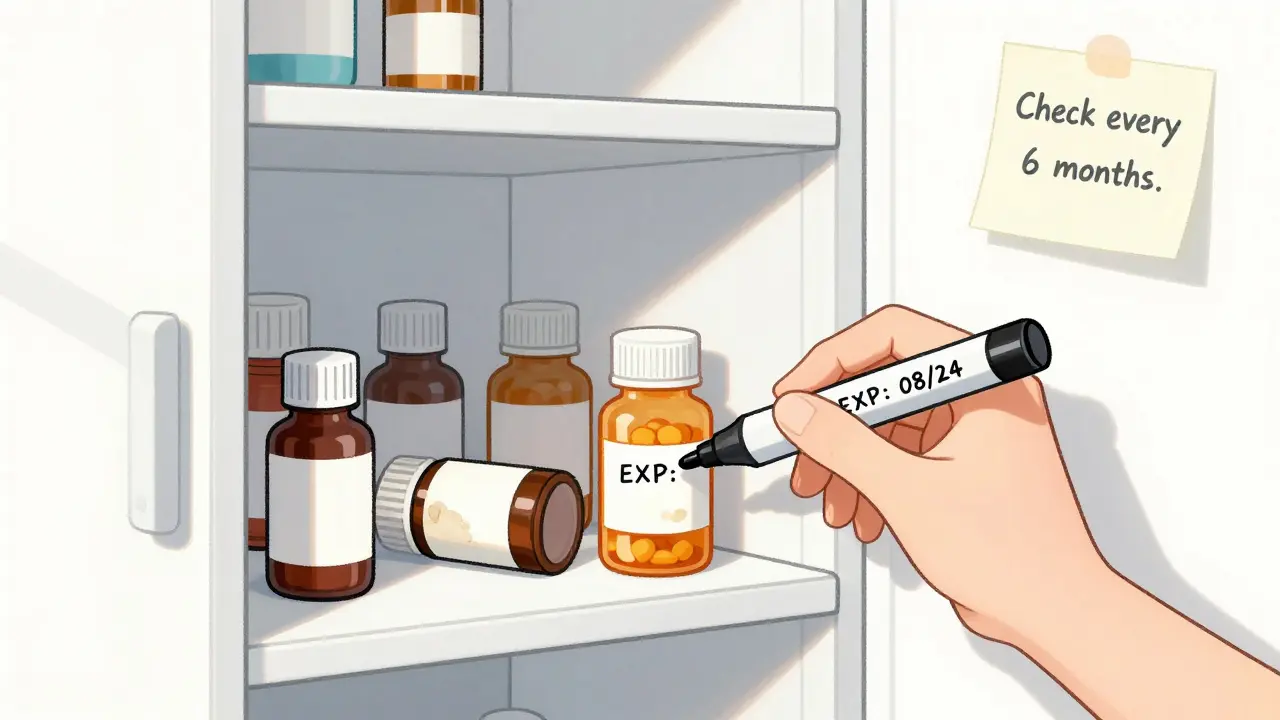
- Check each label for the expiration date. It’s usually printed as "EXP" or "Expires" followed by a month and year. If it’s a prescription, look for the date the pharmacy printed on the label-that’s your real deadline.
- Write the expiration date on the bottle with a permanent marker if it’s not clear. Use a small label or sticky note if the bottle is too small.
- Sort everything into three piles: active, expired, and unsure.
For the "unsure" pile-like that bottle with a faded label-when in doubt, throw it out. You can’t guess whether it’s safe. A 2023 study from the American Pharmacists Association found that 43% of households kept medications past their expiration date because they "weren’t sure." That’s not caution. That’s risk.
Organize for Clarity
Now that you’ve cleared the clutter, organize so you never lose track again.
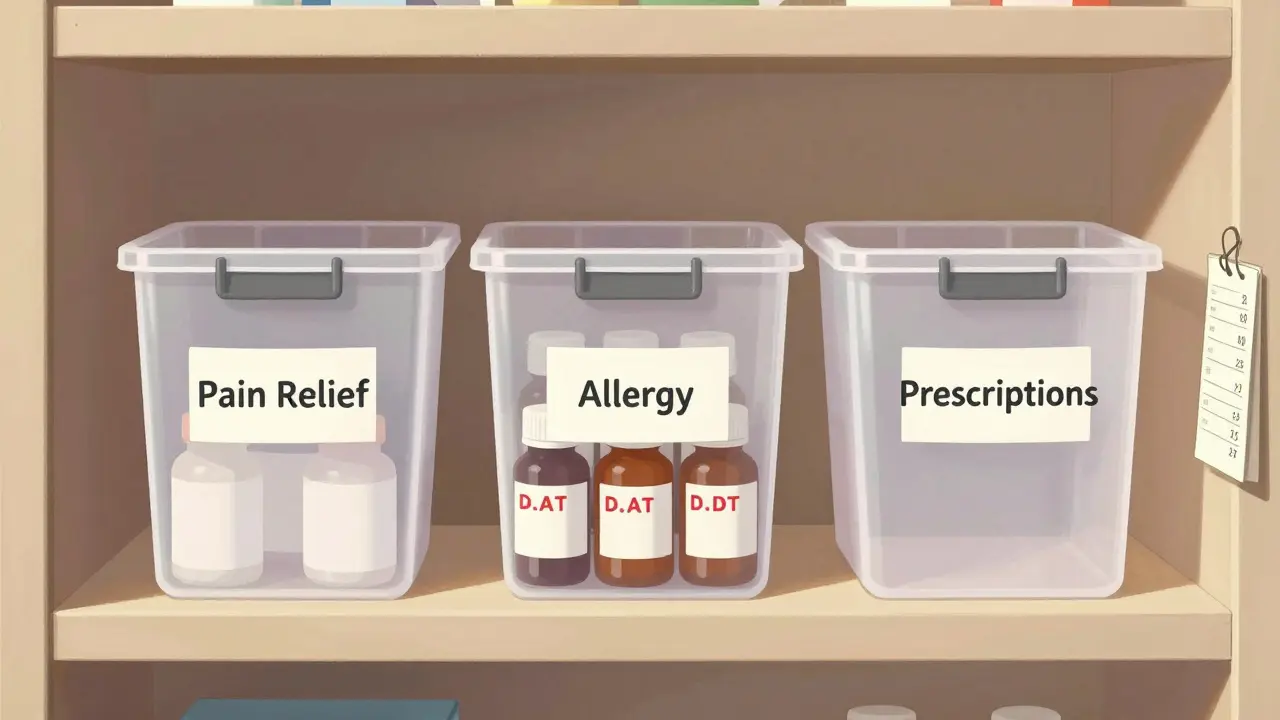
- Use clear plastic bins or divided containers. Group by type: pain relief, allergy meds, prescriptions, first aid.
- Put the soonest-to-expire items in front. Use the "first in, first out" rule-like a grocery pantry.
- Keep liquids and creams separate from pills. Humidity ruins them faster.
- Store away from heat and light. A bedroom drawer is better than a bathroom cabinet. A cool, dry place is ideal.
Some people use a small whiteboard or notebook taped to the inside of the cabinet door. Write down each medicine and its expiration date. Update it every time you refill a prescription. It takes 30 seconds a month and saves you from panic later.
Use Technology-If You Want To
If you’re tech-savvy or manage medications for multiple people, apps can help. There are dozens of free options: Medisafe, MyTherapy, and Pill Reminder are popular. They send alerts when a pill is due-and when it’s about to expire.
Some apps even let you scan the barcode on the bottle and auto-fill the expiration date. That’s handy if you’re juggling five prescriptions. But don’t rely on them completely. Phones die. Apps glitch. Always double-check the physical label.
For those managing medications in a home care setting-like an elderly parent or someone with chronic illness-smart dispensers like the Hero or MedMinder can automate refills and send alerts to family members. These aren’t cheap ($200-$400), but for high-risk meds, they’re worth it.
What to Do With Expired Medicine
Don’t flush it. Don’t toss it in the trash. Don’t give it to a friend.
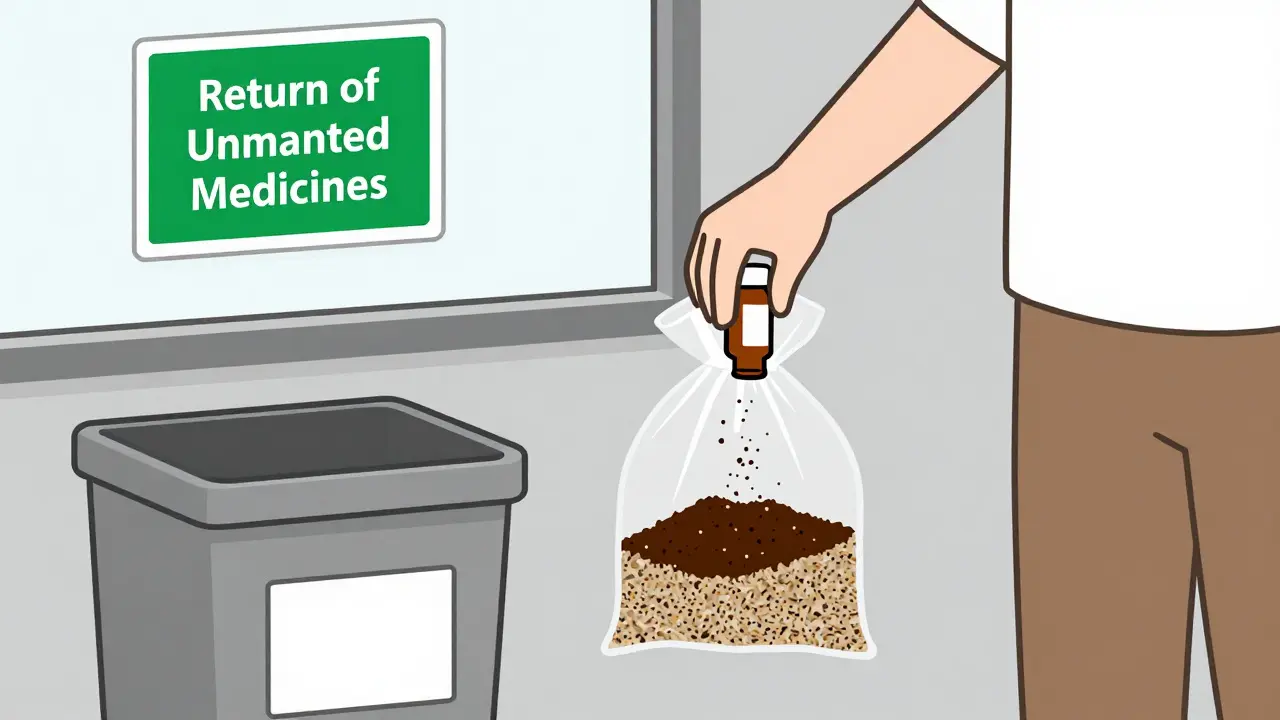
The safest way? Take it to a drug take-back program. Most pharmacies in the UK and US have drop-off boxes. In Sheffield, you can drop off expired meds at any NHS pharmacy that participates in the Return of Unwanted Medicines (RUM) scheme. Just ask at the counter.
If no take-back option is available, mix pills with coffee grounds or cat litter in a sealed bag before throwing them away. This makes them unappealing to kids or pets and prevents them from being picked out of the trash. Remove personal info from the bottle before recycling it.
When to Replace Without Waiting
Some meds lose potency fast-even before the expiration date. Here’s when to replace them:
- Insulin: Once opened, lasts 28-30 days, even if the bottle says 3 months.
- Nitroglycerin: Expires 3-6 months after opening. Keep in original bottle, tightly closed.
- Eye drops: Discard 4 weeks after opening, even if the bottle says 6 months.
- Epinephrine pens: Replace at expiration date. No exceptions.
- Antibiotics: Never use past expiration. They can become toxic or ineffective.
Keep a list of these critical meds and set calendar reminders. A simple phone alert 30 days before expiration can save a life.
Check Every Six Months
Make it a habit. Twice a year-say, on your birthday and the start of winter-do a quick medicine cabinet audit. It takes 15 minutes. You’ll find expired items, duplicates, and forgotten prescriptions.
People who do this regularly report fewer trips to the doctor for preventable issues. They also save money. One UK household tracked their meds for a year and found they’d been paying for duplicate prescriptions because they didn’t know they still had old ones. That’s £120 a year just from cleaning out the cabinet.
It’s not about being obsessive. It’s about being prepared.
What About Over-the-Counter?
Yes, OTC meds expire too. Painkillers, antihistamines, antacids-they all degrade. A 2022 study in the British Journal of Clinical Pharmacology showed that 12% of common OTC pain relievers stored in warm homes lost over 15% potency before their labeled expiration date.
That means your "as needed" ibuprofen might not work when you really need it. Same with antihistamines. If you’ve had a stuffy nose for three days and your allergy pill doesn’t help, it might not be your allergies. It might be your medicine.
So treat OTC meds like prescriptions. Write the date you opened them. Track them. Toss them when they’re old.
Final Thought: It’s Not Just About Pills
Medication safety isn’t just about what’s inside the bottle. It’s about how you store it, how you track it, and how you dispose of it. A clean, organized cabinet isn’t just tidy-it’s a health tool.
Every time you throw out an expired pill, you’re not just cleaning up. You’re protecting your family. You’re avoiding a mistake that could cost a hospital visit. You’re taking control.
Start today. Pull out that cabinet. Check the dates. Write them down. Toss what’s old. Organize what’s left. Your future self will thank you.
Can I still use medicine after the expiration date?
Some solid medications like aspirin or ibuprofen may remain effective for years past their expiration date, but this isn’t guaranteed. Liquid medicines, insulin, antibiotics, and epinephrine can become dangerous or ineffective. The FDA and pharmacists recommend not using any medication past its labeled expiration date unless it’s part of an emergency stockpile under professional guidance.
Where should I store my medications?
Store medicines in a cool, dry place away from sunlight and moisture. A bedroom drawer or closet shelf is ideal. Avoid bathrooms and kitchens-heat and steam from showers and stoves degrade pills and liquids faster. Keep them out of reach of children and pets.
How do I dispose of expired medicine safely?
Use a drug take-back program at your local pharmacy or NHS facility. If that’s not available, mix pills with coffee grounds or cat litter in a sealed container before throwing them in the trash. Never flush unless the label specifically says to. Remove or black out personal information on the bottle before recycling.
Do I need to track OTC meds too?
Yes. Over-the-counter pain relievers, antihistamines, and cold medicines lose potency over time, especially if stored in warm or humid places. Many people assume "it’s just a pill," but if it doesn’t work when you need it, that’s not just inconvenient-it can be risky.
How often should I check my medicine cabinet?
Every six months. Set a reminder on your phone for January 1 and July 1. Take everything out, check dates, toss expired items, and reorganize. It takes less than 20 minutes and prevents accidents, wasted money, and ineffective treatment.

Leonard Shit
January 7, 2026 AT 07:42man i just threw out a 2019 bottle of ibuprofen yesterday after reading this - didn’t even realize it was that old. thanks for the kick in the pants.
Rachel Wermager
January 8, 2026 AT 10:40Let’s be precise: the FDA’s Shelf Life Extension Program (SLEP) demonstrates that 90% of expired pharmaceuticals retain >90% potency beyond labeled expiration dates - but this applies only to federally stockpiled, climate-controlled, solid-dose formulations. Household cabinets? Not even close. Heat, humidity, and UV exposure induce hydrolytic and oxidative degradation pathways in ester-containing compounds like aspirin and nitroglycerin, rendering them therapeutically inert or potentially toxic. Don’t confuse population-level stability data with individual risk management.
Brian Anaz
January 8, 2026 AT 21:03why are we even talking about this? just throw it all out. if you’re dumb enough to keep meds past the date, you deserve what happens. america is full of lazy people who think they’re doctors. check the date. toss it. move on.
Vinayak Naik
January 10, 2026 AT 19:39bhaiya, i use a old chai tin to store my pills - painted it red and wrote dates with feviquick. works better than any app! also, i keep my insulin in my pocket during winter - body heat keeps it stable. my aunty says i’m crazy but i’ve been doing this since 2015. no problems yet 😎
Saylor Frye
January 11, 2026 AT 13:56How quaint. I use a blockchain-based decentralized medication ledger synced with my smart fridge and my neurologist’s EHR. The fact that you’re still using permanent markers and sticky notes suggests a fundamental failure of personal infrastructure. Also, your bathroom cabinet is a biohazard zone - you’re basically incubating pathogens and expired serotonin reuptake inhibitors. Just saying.
Kiran Plaha
January 13, 2026 AT 05:23my mom used to say: if you can’t read the date, it’s not worth taking. i never forgot that. simple, right? no apps needed. just a little care.
Matt Beck
January 13, 2026 AT 16:14every time i open my cabinet… i feel like i’m opening a time capsule of my past self’s poor decisions 🕰️💊😭. that bottle of Benadryl from 2017? it’s been watching me. judging me. i think it’s crying… or maybe it’s just leaking. either way, i’m throwing it out. with love. and a prayer. 🙏
Kelly Beck
January 14, 2026 AT 17:44you know what? this made me feel so much better about myself. i used to feel guilty for not being the perfect medicine-organizer… but now i realize it’s not about being perfect - it’s about being kind to your future self. i did my biannual check today and tossed 7 expired things. i even gave myself a little hug afterward 🤗✨ you’re doing great. keep going. you’ve got this. 💪❤️
Molly McLane
January 16, 2026 AT 17:24for anyone with elderly parents or young kids - this isn’t just advice, it’s a safety protocol. i had a neighbor whose grandkid got into an old hydrocodone bottle. didn’t end well. don’t wait for tragedy to motivate you. do it now. make it a ritual. write the date on the bottle. put the soonest-expiring in front. it takes 10 minutes. your family will thank you - even if they don’t say it.
Katie Schoen
January 17, 2026 AT 16:19soooo… i did this last week and found THREE bottles of my ex’s antidepressants. like… why did i keep those? 🤔 also found a 2014 tube of Neosporin. it’s probably sentient by now. tossed it all. felt weirdly cathartic. like emotional spring cleaning. also, i now have a little chalkboard on my cabinet. it says ‘NO MORE SURPRISES’ in glitter pen. it’s dumb. i love it.
Beth Templeton
January 18, 2026 AT 13:42expired meds are dangerous. toss them. done.
Wesley Pereira
January 18, 2026 AT 18:55you guys are overcomplicating this. i use a spreadsheet. column A: drug name. column B: expiration. column C: last refill date. column D: whether i still care. if D says ‘no’, i delete the row and throw it out. works every time. also, i use the same logic for my sock drawer. same principle. chaos is just unorganized data.