
When someone is undergoing chemotherapy or radiation for cancer, the goal isn’t just to kill the cancer-it’s to help them live through it. That’s where supportive care comes in. It’s not flashy. It doesn’t make headlines. But for patients, it’s often the difference between finishing treatment and being forced to stop because the side effects are too much.
Growth Factors: Keeping Your Blood Cells Alive
Chemotherapy doesn’t just target cancer cells. It wipes out healthy ones too-especially the ones in your bone marrow that make white blood cells. When those drop too low, you’re at risk for febrile neutropenia: a dangerous infection that can land you in the hospital, delay your next round of chemo, or even end your treatment early. That’s where growth factors like filgrastim and pegfilgrastim come in. These are synthetic versions of proteins your body naturally makes to tell your bone marrow to produce more white blood cells. Pegfilgrastim, the long-acting version, is given as a single injection under the skin about 24 to 72 hours after each chemo cycle. It cuts the time your white blood cell count stays dangerously low by nearly two days. Studies show that when used correctly, pegfilgrastim reduces the chance of febrile neutropenia from over 17% down to under 10% in high-risk patients. That might sound small, but it means fewer hospital visits, fewer antibiotics, and more chances to stay on schedule with your treatment. In fact, patients who get these drugs are often able to receive full doses of chemo without delays-something that directly improves survival rates in curable cancers like breast and lymphoma. But it’s not perfect. About one in three people get bone pain after the injection. It’s not life-threatening, but it can feel like deep, aching pressure in your hips, back, or legs. Some patients need over-the-counter painkillers for it. Rarely, there’s a risk of spleen rupture or lung issues-so doctors screen for risk factors like prior spleen problems or lung disease before prescribing. And cost matters. The brand-name version can run $6,000 to $7,000 per dose in the U.S. But biosimilars-copies that work the same way-are now available for $3,500 to $4,500. Many insurance plans now cover them, but not all. Patients without good coverage often skip doses or delay them, which defeats the purpose.Antiemetics: Taking Back Control of Nausea
Nausea and vomiting from chemotherapy used to be something patients just endured. Now, with modern antiemetics, most people can avoid it entirely-if they get the right drugs at the right time. The NCCN guidelines classify chemo drugs into four risk levels: high, moderate, low, and minimal. Cisplatin, for example, is high-risk. A single dose can make you throw up for days. For those, doctors now use a three-drug combo: a 5-HT3 blocker like palonosetron, an NK1 blocker like aprepitant, and a steroid called dexamethasone. Palonosetron is given intravenously 30 minutes before chemo. Aprepitant is taken as a pill an hour before. Dexamethasone starts with a high dose and tapers over the next few days. Together, they work on different pathways in the brain and gut to block nausea signals. For high-risk chemo, this combo gives a complete response-no vomiting, no need for rescue meds-in 75% to 85% of patients. Even better, newer fixed-dose combinations like netupitant/palonosetron (NEPA) come in one pill, taken once before chemo. They’re about 10% to 15% more effective than older regimens. But they cost 30% to 50% more. For many patients, the standard three-drug combo still works just fine. The biggest problem? Timing. If you take the antiemetics too late-or skip the steroid taper-you’re more likely to get delayed nausea, which hits 2 to 5 days after chemo. That’s when patients feel most helpless. One patient on Reddit said, “I thought the nausea was over after the first day. Then I couldn’t eat for three more days. If I’d known about the taper, I’d have kept taking the dexamethasone.” And yet, studies show only about 58% of U.S. oncology practices consistently follow these guidelines. Some clinics still give single drugs like ondansetron alone, even for cisplatin. That’s not just ineffective-it’s outdated care.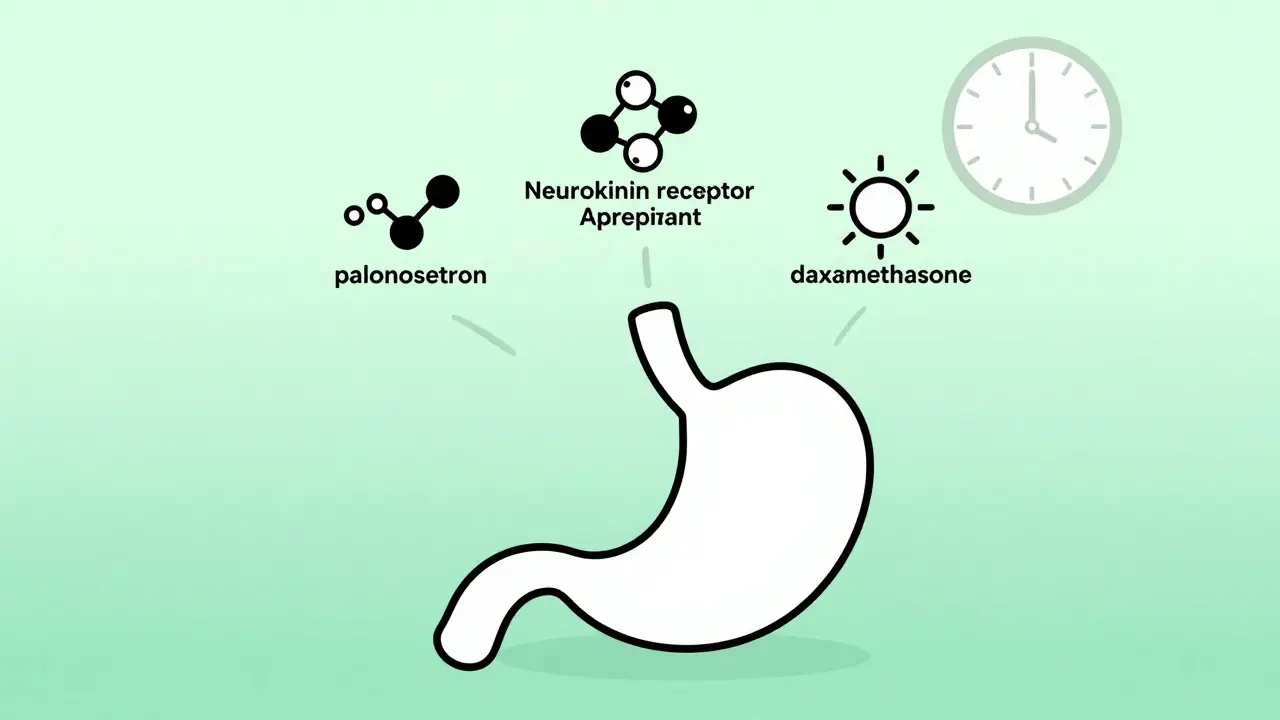
Pain Relief: More Than Just Pills
Cancer pain isn’t one thing. It can be sharp and localized from a tumor pressing on a nerve. It can be burning and shooting from nerve damage (neuropathic pain). Or it can be a dull, constant ache from bone metastases. The WHO’s three-step ladder-start with acetaminophen or ibuprofen, move to weak opioids like codeine, then strong ones like morphine-is still taught in medical schools. But in real-world practice, it’s outdated. Today, pain management is multimodal. For bone pain, doctors often add bisphosphonates like zoledronic acid or denosumab to slow bone destruction. For nerve pain, pregabalin or gabapentin are used, not opioids. These aren’t painkillers in the traditional sense-they calm overactive nerves. They work for about half of patients, reducing pain by 30% to 50%. When opioids are needed, they’re chosen based on the patient’s history, kidney function, and risk of addiction. Fentanyl patches, oxycodone, and hydromorphone are common. But here’s the catch: 90% of people on opioids get constipated. That’s not a side effect-it’s a medical issue that needs its own treatment, usually with laxatives and stool softeners. About 20% to 30% of patients need to switch opioids because the first one doesn’t work well or causes intolerable side effects. That’s called opioid rotation. It’s not failure-it’s standard practice. Patients often say their pain isn’t managed well because no one asks. The Edmonton Symptom Assessment System (ESAS) is a simple tool used at every visit: rate your pain, nausea, fatigue, and other symptoms from 0 to 10. If you say your pain is a 7, your doctor should act-not wait for it to get worse. One patient on HealthUnlocked wrote, “I told them my pain was bad, but they just upped the morphine. It made me drowsy and confused. No one asked if I had burning in my feet-until I brought it up myself.” That’s why screening tools and patient advocacy matter.What Patients Actually Experience
Real stories tell you what the guidelines don’t. On CancerCare’s forum, 78% of patients said growth factors let them finish treatment without delays. One woman with breast cancer said, “Pegfilgrastim let me do all six cycles of my chemo. Without it, I would’ve missed two.” But 34% said the bone pain was so bad they needed extra pain meds. For antiemetics, reviews are mostly positive. On Reddit, 850 patients gave the three-drug combo an average of 4.2 out of 5. “I thought I’d be vomiting every day,” one wrote. “Instead, I ate pizza the night after chemo.” But 22% still had breakthrough nausea-often because they skipped the steroid taper or took the pill too late. Pain relief gets lower ratings. Only 3.5 out of 5. Why? Because breakthrough pain-sudden spikes between doses-is often ignored. Patients report being told, “Just take more pills,” without adjusting the schedule or adding nerve-targeting drugs. And money? That’s the silent killer. A 2023 survey found 38% of cancer patients struggled to afford supportive care meds. A single dose of pegfilgrastim can cost more than a month’s rent for some. Antiemetic combos can run $500 per cycle. Even generic opioids, when combined with laxatives, gabapentin, and steroids, can hit $500 a month.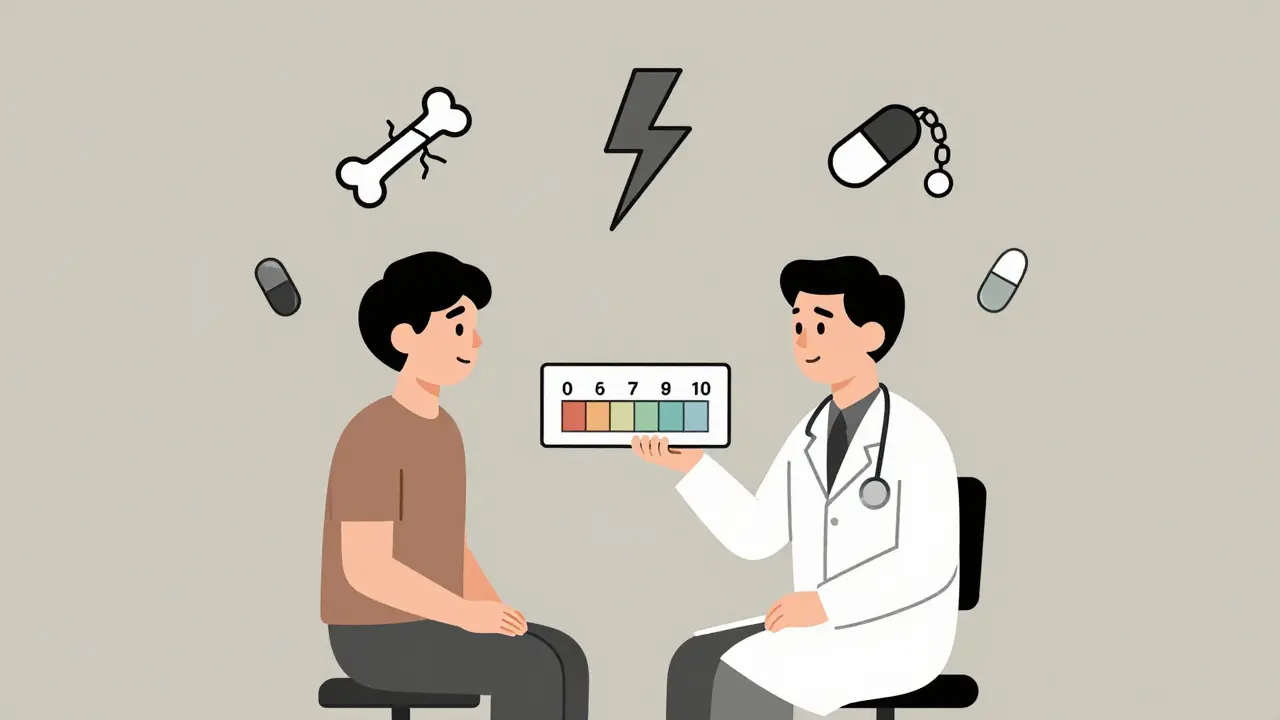
How It All Fits Together
Supportive care isn’t optional. It’s part of the treatment plan. You wouldn’t skip antibiotics for an infection. You shouldn’t skip growth factors, antiemetics, or pain control for cancer. The best outcomes happen when these three elements are used together:- Before chemo: Antiemetics to prevent nausea
- After chemo: Growth factors to protect your immune system
- At every visit: Pain screening to catch problems early
What You Can Do
If you or someone you love is in treatment:- Ask: “Am I at risk for febrile neutropenia? Should I get a growth factor?”
- Ask: “What’s the antiemetic plan? Will I get the three-drug combo?”
- Ask: “Will you check my pain every time? Can we talk about nerve pain or constipation?”
- Ask: “Are there cheaper options? Are there patient assistance programs?”
Do growth factors really help me finish my chemo?
Yes. For patients at high risk of febrile neutropenia, growth factors like pegfilgrastim reduce the chance of infection by nearly half. This means fewer hospital stays and fewer delays in chemotherapy. Studies show patients who use them are more likely to complete their full treatment plan, which improves survival chances in cancers like breast and lymphoma.
Why do I still get nauseous even after taking antiemetics?
Nausea can still happen if the antiemetic plan doesn’t match your chemo’s risk level, or if you don’t take the full course. For high-risk chemo like cisplatin, you need three drugs-not just one. Also, delayed nausea (2-5 days after chemo) often happens if the steroid (dexamethasone) isn’t tapered properly. Breakthrough nausea is common in 20% of patients and may need extra meds like lorazepam or cannabinoids.
Is opioid pain medication the only option for cancer pain?
No. Opioids work for 70-90% of moderate to severe pain, but they’re not the first or only choice. For bone pain, drugs like zoledronic acid help. For nerve pain, gabapentin or pregabalin are better. Even non-drug options like physical therapy, acupuncture, or nerve blocks can be part of the plan. The key is matching the drug to the type of pain-not just reaching for morphine first.
Can I afford these supportive care drugs?
Cost is a real barrier. Pegfilgrastim can cost $6,000 per dose, but biosimilars are available for $3,500-$4,500. Many drugmakers offer patient assistance programs. Ask your oncology nurse or social worker-they can help you apply for financial aid. For antiemetics and pain meds, generic versions exist and can cut costs by 70%. Never skip meds because of cost-there are always options.
Why isn’t my doctor giving me all these treatments?
Some clinics, especially outside major cancer centers, don’t have the resources or training to follow the latest guidelines. Others worry about cost or don’t realize how effective these drugs are. If you’re high-risk and not getting growth factors or a full antiemetic combo, ask why. You have the right to evidence-based care. If they say no, ask for a referral to a specialist or a supportive care team.

Katie Taylor
December 25, 2025 AT 02:33Let me tell you, pegfilgrastim saved my mom’s life. She got all six rounds of chemo without a single hospital trip. Yeah, the bone pain sucked - she called it ‘being stabbed by a thousand invisible nails’ - but it was worth it. We got her through it. Don’t let cost scare you. Ask for biosimilars. Ask for help. You’re not alone.
And if your doctor acts like growth factors are optional? Push back. Hard. This isn’t luxury care - it’s survival.
Also, stop skipping dexamethasone tapers. I’ve seen too many people think they’re ‘done’ after day one. Nope. Delayed nausea hits like a freight train. You’re not weak - you just didn’t get the full playbook.
Andrea Di Candia
December 25, 2025 AT 17:04It’s funny how we treat cancer like a war, but then act like side effects are just ‘part of the battle.’ What if we stopped glorifying suffering and started demanding better? Growth factors, antiemetics, pain control - these aren’t bonuses. They’re the scaffolding that lets the real treatment work.
I used to think pain was something you just endured. Then I watched my sister cry because she couldn’t sit down without her bones screaming. We didn’t know about gabapentin until six months in. That’s not negligence - it’s systemic failure.
Why do we celebrate ‘toughing it out’ instead of asking why the system doesn’t give people the tools to actually live through this? We need to stop treating supportive care like an afterthought. It’s the spine of the whole thing.
Chris Buchanan
December 27, 2025 AT 12:38Oh so now we’re supposed to be impressed that doctors finally figured out you shouldn’t let people vomit for days? Congrats, we’ve moved from ‘just suck it up’ to ‘here’s a three-drug cocktail.’ Took long enough.
And don’t get me started on the $6,000 growth factor. You think that’s a drug? Nah. It’s a corporate extortion racket with a medical license. Biosimilars exist. Insurance denies them. Patients skip doses. Then they get infected. Then the system acts shocked. Classic.
Meanwhile, my cousin’s oncologist still gives ondansetron alone for cisplatin. Like, in 2024? Bro, you’re practicing medicine in 2002. Wake up.
And yes - constipation from opioids is a medical emergency. Stop acting like it’s just ‘a side effect.’ That’s like saying ‘oh, your car’s on fire, but hey, the radio still works.’
Spencer Garcia
December 28, 2025 AT 13:35Just want to add: if you’re on opioids, ask for a bowel regimen upfront. Laxatives + stool softeners = non-negotiable. No one tells you this until you’re stuck on the toilet for three days. Then it’s too late. Simple fix. Don’t wait to be miserable.
Raja P
December 28, 2025 AT 22:10From India - we don’t have access to most of this. Pegfilgrastim? Unheard of. We use whatever’s left after the rich take it. My uncle got chemo with just ondansetron and paracetamol. He made it through, but barely. No one talks about how this system fails people outside the US and Europe. We need global equity, not just better guidelines.
Harsh Khandelwal
December 30, 2025 AT 15:28Let’s be real - this whole supportive care thing is just Big Pharma’s way to sell more drugs. Growth factors? Made to keep people alive just long enough to keep buying more chemo. Antiemetics? They don’t cure nausea - they just make you pay $500 for the privilege of not throwing up.
And don’t get me started on the ‘three-drug combo.’ That’s three different patents. Three different companies. Three different profit margins. The real cure? Stop treating cancer like a vending machine.
Meanwhile, the real solution? Diet. Meditation. Turmeric. But you won’t hear that from your oncologist because they get kickbacks from the drug reps. Ask yourself - who profits when you’re sick?
Delilah Rose
December 31, 2025 AT 06:40I’ve been thinking a lot about how we talk about pain in cancer care. We say ‘rate your pain from 0 to 10’ like it’s a simple math problem, but pain isn’t linear. It’s emotional. It’s tied to fear. It’s the sound of your own body betraying you. One day it’s a dull ache, the next it’s electric shocks in your feet - and no one believes you until you’re crying in the exam room.
I spent months telling them my feet burned like I was standing on hot coals. They kept upping my morphine. I got drowsy. Confused. Lost my appetite. My husband said I stopped laughing. Then one nurse asked, ‘Have you ever had tingling like this before?’ And I said yes - it’s neuropathy. She finally prescribed gabapentin. Two days later, I slept through the night for the first time in months.
It’s not about the numbers on the scale. It’s about being heard. And if your doctor doesn’t ask the right questions, you have to be the one to say it out loud. Even if it feels exhausting. Even if you’re tired of being the advocate. You’re worth it.
Lu Jelonek
January 1, 2026 AT 06:53Just wanted to add a note from the nursing side - we know how overwhelming this all is. Patients are drowning in meds, appointments, insurance forms, and fear. That’s why we push for the ESAS tool. It’s not perfect, but it gives us a snapshot. If you’re a 7 on pain and a 9 on fatigue, we can’t just give you another pill. We have to ask: ‘What’s the real problem here?’
And yes - sometimes the answer isn’t more drugs. Sometimes it’s a warm blanket. A quiet room. Someone just sitting with you.
Supportive care isn’t just pills. It’s presence. And we’re trying. But we’re understaffed. And overworked. And we need more help to give you what you deserve.
Jeffrey Frye
January 1, 2026 AT 10:43so like… pegfilgrastim is just like a magic shot? i thought cancer was supposed to be all chemo and radiation and stuff. why are we giving people like… growth hormones? is this like bodybuilding for your blood cells? lol
also why do they make you take 3 different anti-nausea pills? is this a cocktail? like a bar but for chemo? i need a drink after reading this.
and why is constipation a ‘medical issue’? isn’t that just what happens when you take opioids? like… duh? why is everyone acting surprised?
also i’m pretty sure i saw a tiktok where someone said turmeric cures cancer so… are we all just wasting money on this stuff?
Andy Grace
January 2, 2026 AT 17:25My sister finished treatment last year. She’s in remission. But she still wakes up at 3 a.m. worrying about the next dose of dexamethasone. The cost. The side effects. The silence from doctors who don’t ask. We won the battle - but the war’s still inside her.
Supportive care isn’t just about drugs. It’s about dignity. And we’re not doing enough to protect it.