
Imagine you have a prescription for a life-saving medication. You go to the pharmacy, and the shelf is empty. The pharmacist says there is no ETA for restock. This isn't just an inconvenience; it’s a health crisis. For years, the pharmaceutical industry operated on a "lean" model-keeping inventory low to save money. That model broke down during the pandemic and hasn't fully recovered since. Today, building resilient pharmaceutical supply chains is not just a business strategy; it is a public health imperative.
The core problem? We rely too heavily on foreign sources for the raw materials that make our medicines. According to the FDA, about 80% of active pharmaceutical ingredients (APIs) consumed in the United States are manufactured overseas. China and India account for roughly 68% of this global API production. When geopolitical tensions rise or natural disasters strike these regions, the ripple effect hits your local pharmacy fast. To stop this cycle of shortages, we need preventive measures that shift from reactive panic to proactive stability.
Understanding Supply Chain Resilience
Resilience isn't just about having backup plans. It is a specific capability defined by the U.S. Department of Health and Human Services in a 2023 report by Mathematica Inc. They define it as "the ability of medical product supply chains to anticipate, prepare for, respond to, and recover from disruptions while maintaining continuous delivery of critical products."
This definition breaks resilience into three technical components:
- Preparedness: Proactive efforts like scenario planning and monitoring risks before they happen.
- Response: The ability to keep functioning when a disruption occurs, such as switching suppliers quickly.
- Recovery: Getting back to normal operations efficiently after the crisis passes.
Why does this matter? Because the cost of failure is high. ZS Associates’ 2024 analysis shows that companies with comprehensive resilience strategies had 23% higher operational continuity during disruptions. For large firms, that translates to avoiding roughly $14.7 million in revenue losses per major event. But beyond money, it’s about national security. The U.S. Department of Defense has labeled pharmaceutical supply vulnerabilities as "critical national security risks."
The Technology Shift: Continuous Manufacturing
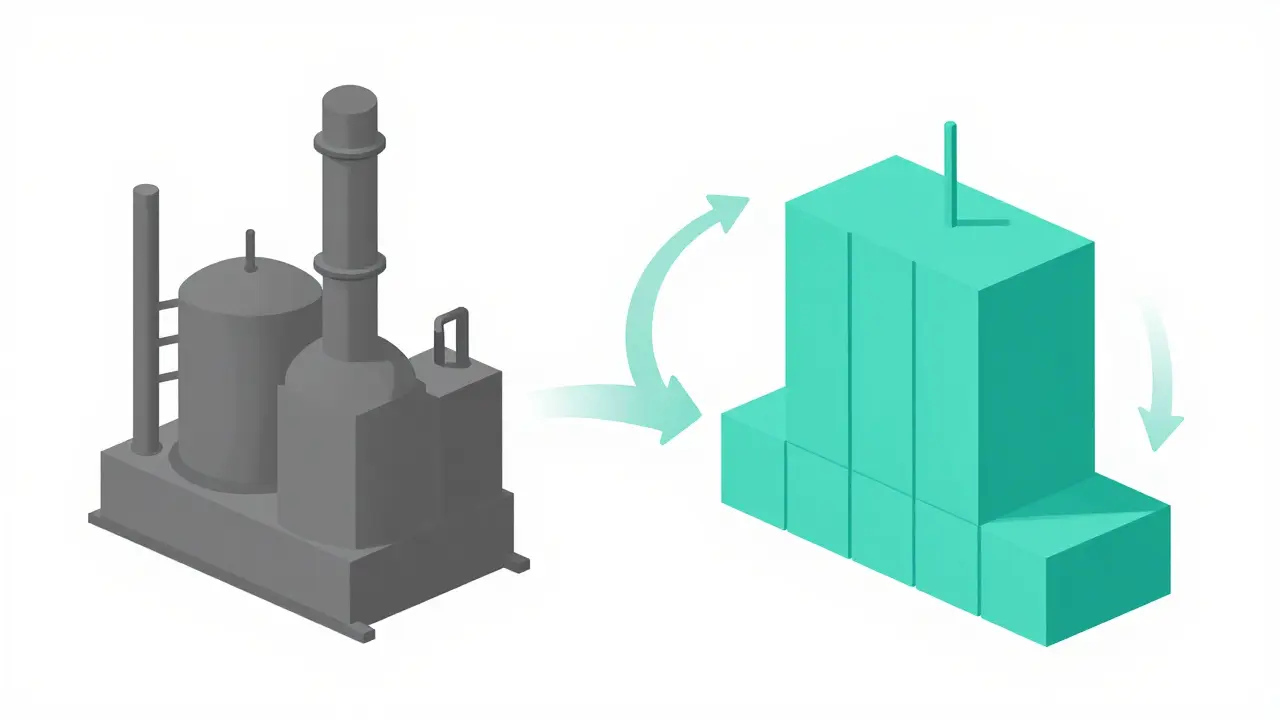
One of the most powerful preventive measures is changing how drugs are made. Traditional batch manufacturing is slow, uses more energy, and creates more waste. It also requires massive facilities that take 3-5 years to build. Enter Continuous Manufacturing (CM).
Continuous manufacturing runs production non-stop, like an assembly line rather than in discrete batches. According to the Center for Strategic and International Studies (CSIS) in 2025, CM systems offer significant advantages:
- Smaller Footprint: Facilities are 30-40% smaller.
- Lower Energy Use: Consumption drops by 20-25%.
- Less Waste: Material waste reduces by 15-20%.
- Faster Deployment: Modular facilities can be deployed in 12-18 months instead of years.
However, adoption has been slow. As of Q2 2025, the FDA had granted only 12 approvals for continuous manufacturing processes compared to over 10,000 for traditional batch processes. The barrier isn't just technology; it's regulation. The FDA released new guidance in 2025 to speed up approvals, reducing timelines from 24-36 months to 12-18 months for qualified facilities. By 2027, analysts project that 45-50% of new manufacturing capacity will use these technologies.
Strategic Sourcing and Diversification
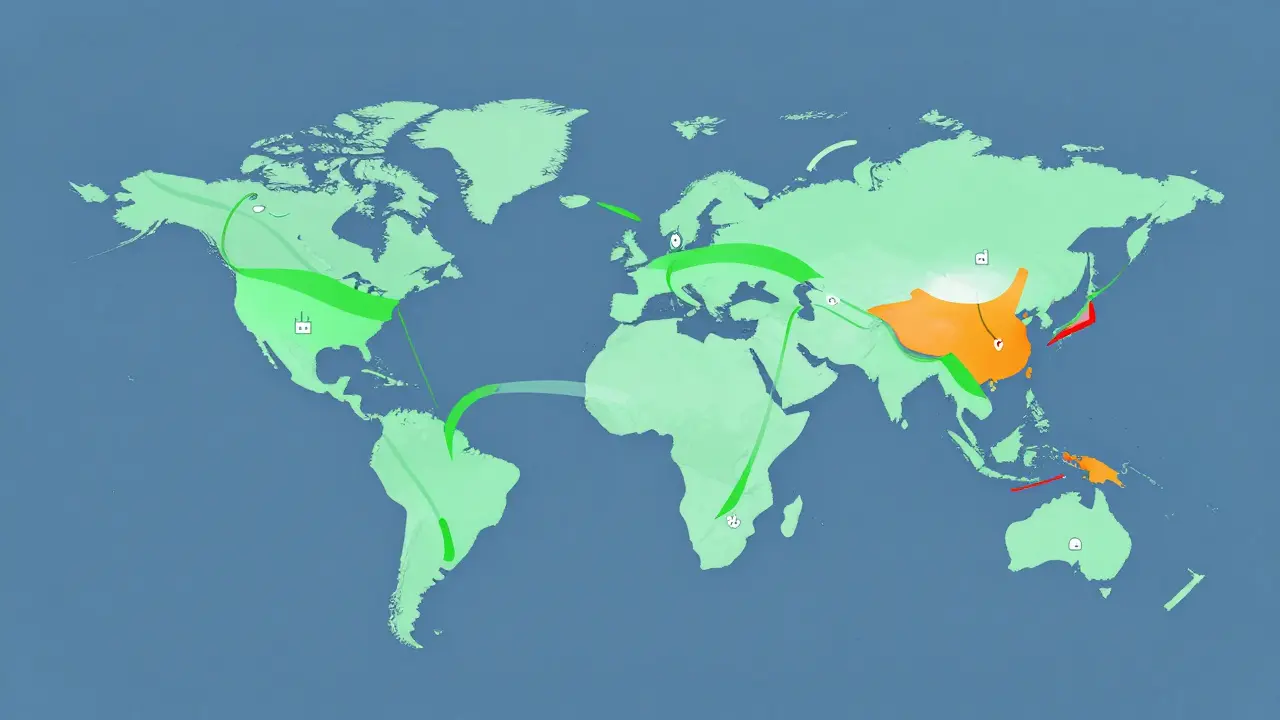
You cannot fix a fragile supply chain without looking at where your materials come from. For decades, the industry optimized for lowest cost, which meant single-sourcing from regions with cheap labor and lax regulations. Now, the strategy is shifting toward diversification.
| Sourcing Region | Share in 2022 | Share in 2025 | Trend |
|---|---|---|---|
| China | 38% | 29% | Decreasing |
| India | Stable | 23% of Global Total | Stable but monitored |
| United States (Domestic) | 22% | 28% | Increasing |
| Other Regions | Low | Growing | Diversifying |
North American companies are actively reducing their dependency on Chinese APIs. However, moving everything back to the U.S. isn't a magic bullet. Dr. Robert Chen from the National Academies of Sciences warns that overemphasizing domestic manufacturing could increase costs by 20-30% without improving resilience if it leads to single-sourcing within the U.S. The goal is a balanced network: dual-sourcing 70-80% of critical components across 3-4 geographic zones.
Government Policy and Strategic Reserves
Private companies can’t solve this alone. Government intervention plays a crucial role in stabilizing the market. In August 2025, the White House issued an executive order titled "Ensuring American Pharmaceutical Supply Chain Resilience by Filling the Strategic Active Pharmaceutical Ingredients Reserve."
This initiative aims to create a strategic reserve for critical medications. The target is ambitious: achieve 90-day supply coverage for 150 essential medicines by 2027. This acts as a buffer stock, similar to how countries maintain oil reserves. For essential medicines, experts recommend maintaining 60-90 days of inventory. Without such buffers, a two-week port delay can cause a month-long shortage for patients.
Financial support is also part of the equation. The U.S. government committed $1.2 billion through the CHIPS and Science Act for pharmaceutical infrastructure, with an additional $800 million proposed in the 2025 budget. These funds help offset the high capital requirements of new technologies like continuous manufacturing, which can cost $50-150 million per facility.
Implementation Challenges and Solutions
Knowing what to do is different from doing it. Implementing resilient supply chains faces real-world hurdles. PwC’s 2024 survey of 157 pharmaceutical companies identified three major barriers:
- Organizational Silos: Reported by 78% of companies. Supply chain teams often don’t talk to R&D or regulatory affairs, slowing decision-making.
- Inadequate Data Integration: 65% of companies struggle to get a clear view of their supply chain beyond Tier 1 suppliers. Leading firms now map dependencies across 12-15 tiers.
- Regulatory Uncertainty: 52% cite unclear rules as a blocker, especially for new manufacturing methods.
To overcome these, successful companies allocate 5-7% of their annual supply chain budgets specifically to resilience initiatives. Top performers invest 8-10%. They also focus on cross-functional alignment. A case study from ZS Associates showed that aligning teams reduced decision-making time by 40-60% during disruptions.
Data platforms are key here. Integrated systems can reduce vulnerability identification time from 45 days to just 7 days. AI-powered predictive analytics are becoming standard, forecasting disruption risks with 85-90% accuracy 60-90 days in advance. This allows companies to move inventory or switch suppliers before a crisis hits.
The Future Outlook
The landscape is evolving rapidly. The global pharmaceutical supply chain resilience market is projected to grow from $4.2 billion in 2023 to $9.7 billion by 2027. This growth reflects a fundamental shift: companies are willing to pay a premium for security. Resilience investments may add 8-12% to the cost of goods sold, but the return on investment is strong. PwC notes a 1.8x ROI within 36 months due to avoided disruption costs.
By 2030, McKinsey & Company forecasts that regional manufacturing networks will supply 65-70% of U.S. pharmaceutical needs, up from 55% in 2023. Domestic production is expected to rise to 35-40% of total requirements. However, challenges remain. There is a projected shortage of 250,000 skilled manufacturing positions by 2027. Additionally, regulatory standards are still fragmented, with only 35% of manufacturing standards aligned across major markets.
The era of lean, globally optimized supply chains is over. We are entering an era of resilient, regionally balanced networks. As Dr. Jane Smith from MIT puts it, we must accept 10-15% higher operational costs for a 50-70% reduction in disruption risk. It’s a trade-off that saves lives.
What is the biggest threat to pharmaceutical supply chains today?
The biggest threat is over-reliance on a few geographic regions for active pharmaceutical ingredients (APIs). With China and India producing 68% of global APIs, any political tension, natural disaster, or logistical bottleneck in these areas can cause widespread drug shortages in other countries, particularly the U.S., which imports 80% of its APIs.
How does continuous manufacturing improve supply chain resilience?
Continuous manufacturing (CM) improves resilience by allowing for faster deployment of production facilities (12-18 months vs. 3-5 years), smaller physical footprints, and greater flexibility. If one facility goes offline, others can potentially adjust output more easily. CM also reduces waste and energy consumption, making the supply chain more efficient and less vulnerable to resource price spikes.
Is bringing all manufacturing back to the U.S. the solution?
Not entirely. While increasing domestic production is important for critical medicines, moving everything to the U.S. can increase costs by 20-30% and create new vulnerabilities if it leads to single-sourcing domestically. Experts recommend a balanced approach: diversifying suppliers across multiple regions (including North America, Europe, and Asia) and maintaining strategic reserves for essential drugs.
What is the Strategic Active Pharmaceutical Ingredients Reserve?
It is a U.S. government initiative launched via an executive order in August 2025. The goal is to create a buffer stock of critical APIs to prevent drug shortages. The target is to hold enough supply to cover 90 days of demand for 150 essential medicines by 2027, acting as a safety net during global disruptions.
How much does building a resilient supply chain cost?
Implementing resilience strategies typically adds 8-12% to the cost of goods sold. However, this investment pays off. Companies with robust resilience plans see a 1.8x return on investment within three years by avoiding revenue losses from disruptions. For large firms, this means saving millions per major disruption event.
What role does AI play in preventing drug shortages?
AI enables predictive analytics that can forecast supply chain disruptions 60-90 days in advance with 85-90% accuracy. This early warning system allows pharmaceutical companies to proactively switch suppliers, reroute shipments, or boost production before a shortage actually impacts patients.