
Latex allergy isn't just a nuisance-it can be life-threatening. For some people, touching a latex glove, balloon, or even a rubber band can trigger a reaction that ranges from itchy skin to full-blown anaphylaxis. The real danger? Many don’t realize they’re at risk until it’s too late. This isn’t rare. In healthcare settings, where latex gloves were once everywhere, up to 12% of workers developed sensitization. And for patients with spina bifida, the risk jumps to over 60%. The good news? We know how to stop it.
What Exactly Is Latex Allergy?
Latex allergy is an immune response to proteins in natural rubber latex (NRL), the milky fluid from the Hevea brasiliensis tree. It’s not a reaction to the rubber itself, but to specific proteins mixed in during processing. These proteins bind to IgE antibodies, triggering an allergic reaction. There are two main types: Type I and Type IV.
Type I is immediate and dangerous. It can cause hives, swelling of the throat, wheezing, or even cardiac arrest within minutes. This is the kind that requires epinephrine. Type IV is delayed-usually appearing 24 to 72 hours after contact. It looks like a rash, dry skin, or blisters, similar to poison ivy. It’s less scary but still damaging over time.
The problem started in the 1980s. As hospitals adopted universal precautions for bloodborne diseases, glove use exploded. Powdered latex gloves became the norm. But the powder carried latex proteins into the air. Workers breathed them in. Skin contact multiplied. Sensitization rates climbed. By the late 1990s, it was clear: this was an occupational crisis.
Who’s Most at Risk?
Not everyone reacts the same. Risk isn’t random-it’s tied to exposure patterns and underlying health conditions.
People with spina bifida are at the highest risk. Why? Repeated surgeries, catheterizations, and medical procedures mean constant contact with latex. Studies show that as few as five procedures can sensitize a child. Their risk of anaphylaxis during surgery is 500 times higher than the general population. This isn’t theoretical-it’s been documented in operating rooms for decades.
Healthcare workers are next. Nurses, surgeons, lab techs, and dialysis staff face daily exposure. A 2000 PubMed study found 8-12% of healthcare workers were sensitized. The more years on the job, the higher the risk. Those in high-exposure areas like ORs, ERs, and dental clinics have the worst rates.
Even outside hospitals, people with certain food allergies are more likely to react to latex. That’s because of cross-reactivity. Proteins in latex look a lot like proteins in some fruits and vegetables. If your immune system has already flagged those foods as threats, it might mistake latex for them.
Cross-Reactivity: The Hidden Food Link
Latex doesn’t just affect skin or lungs-it can mess with your lunch. Around 30-50% of people with latex allergy also react to certain foods. This isn’t coincidence. The proteins in latex share similar structures with proteins in:
- Bananas
- Avocados
- Kiwis
- Chestnuts
- Apples
- Carrots
- Tomatoes
- Potatoes
It’s not that these foods contain latex. It’s that your immune system confuses them. Someone who breaks out after eating a banana might not realize their latex glove caused the same reaction last week. That’s cross-reactivity in action.
Not everyone with latex allergy reacts to all these foods. And not everyone who eats them will react. But if you’ve had a reaction to latex and then to one of these foods, the link is likely real. A 2023 study in the Journal of Allergy and Clinical Immunology confirmed that IgE antibodies bind to both latex and certain plant proteins, triggering identical pathways. This isn’t folklore-it’s measurable biology.
There’s no universal list. The CDC doesn’t give one because reactions vary too much. The best advice? Keep a food-symptom diary. If you notice itching, swelling, or stomach pain after eating a new food, especially if you already have latex allergy, talk to an allergist. Testing can confirm cross-reactivity.

Workplace Management: How Hospitals Got It Right
Latex allergy isn’t something you just manage-it’s something you prevent. And hospitals learned how to do it.
In the late 1990s, Germany banned powdered latex gloves. Finland followed. Within years, new cases of latex allergy among healthcare workers dropped by nearly 80%. Why? Powdered gloves were the worst offenders. The powder carried allergens into the air. Workers inhaled them. Skin contact increased. The solution was simple: remove the powder and switch to alternatives.
Today, latex-safe environments rely on three pillars:
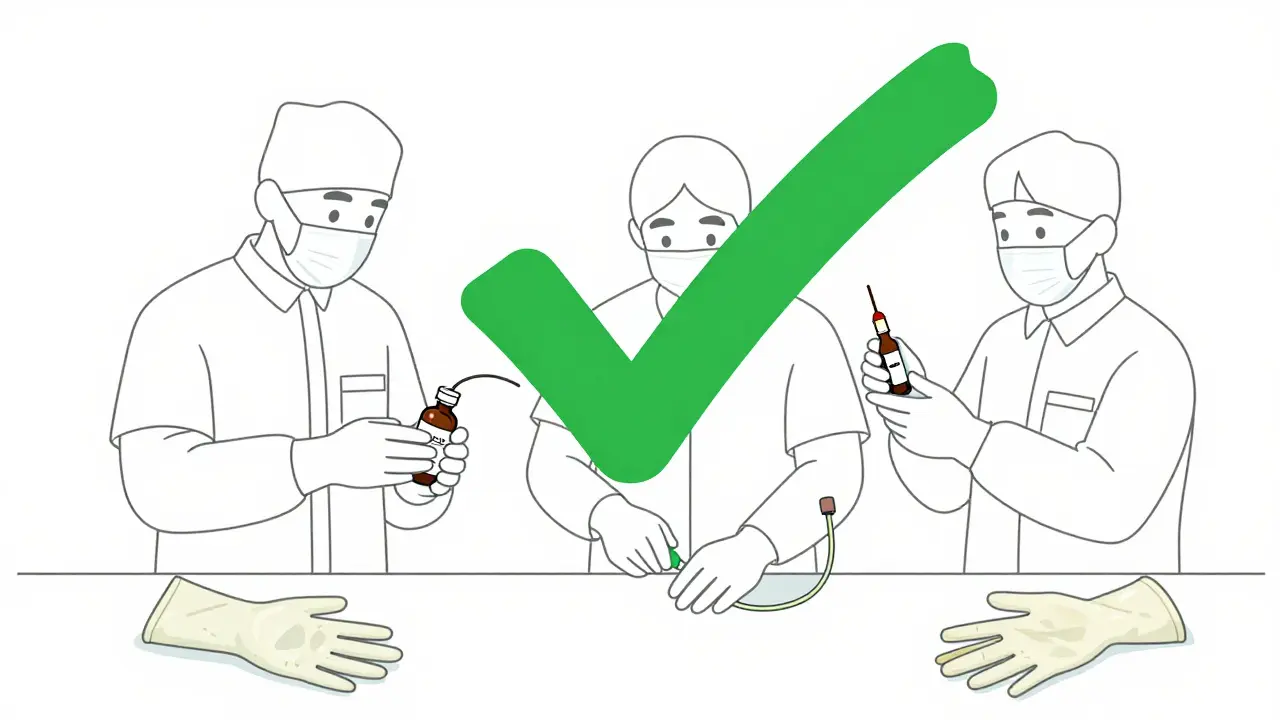
- Replace powdered latex gloves with non-powdered, low-allergen latex or, better yet, synthetic gloves made from nitrile, neoprene, or vinyl.
- Expand the definition of "latex-free"-it’s not just gloves. Blood pressure cuffs, catheters, tubing, elastic bandages, and even some adhesive tapes contain latex. Facilities now audit all medical supplies.
- Train everyone. Staff need to know which products are safe, how to recognize a reaction, and what to do if someone has anaphylaxis.
Some hospitals now have dedicated latex advisory committees. They review purchasing, update protocols, and ensure compliance. The result? Fewer new cases. Fewer lost workdays. Fewer emergencies.
Even more important: if a worker is already sensitized, they must use non-latex gloves at all times. And if someone else in the room still uses latex gloves (which shouldn’t happen in a fully latex-safe facility), they must use non-powdered ones. Powder is the silent spreader.
What You Can Do: Personal and Workplace Action
If you’re allergic to latex, avoidance is your only cure. There’s no vaccine. No treatment that reverses sensitization. But you can control your environment.
- Carry epinephrine. If you’ve ever had a serious reaction, you need two auto-injectors. Don’t leave home without them. Epinephrine saves lives-it works fast to open airways and stabilize blood pressure.
- Wear medical alert jewelry. A bracelet or necklace that says "Latex Allergy" can be the difference between life and death if you’re unconscious.
- Inform everyone. Doctors, dentists, emergency responders, employers, teachers, even friends. Don’t assume they know. Say it clearly: "I’m allergic to natural rubber latex."
- Check everyday items. Latex is in more places than you think: rubber bands, baby bottle nipples, condoms, shoe soles, and some toys. Look for "latex-free" labels. Switch to silicone, vinyl, or nitrile alternatives.
For employers, especially in healthcare, education, or food service:
- Switch to non-latex gloves across the board.
- Train staff on recognizing symptoms and responding to anaphylaxis.
- Keep a supply of non-latex gloves on hand for anyone who needs them.
- Review all medical equipment for hidden latex sources.
The Allergy & Asthma Network says it plainly: latex allergy is preventable. But it’s not curable. Once sensitized, you’re at risk for life. The goal isn’t to treat reactions-it’s to stop them before they start.
What About Treatment?
For mild skin reactions-itchy red patches after touching latex-over-the-counter 1% hydrocortisone cream or antihistamines can help. But these don’t prevent future reactions. They just manage symptoms.
For anaphylaxis? Epinephrine is the only first-line treatment. Delaying it increases death risk. Don’t wait for symptoms to worsen. Inject it immediately. Call 911. Even if you feel better, you still need to go to the ER. A second wave of reaction can happen hours later.
Immunotherapy (allergy shots) for latex is still experimental. No approved treatment exists yet. Research is ongoing, but for now, strict avoidance remains the gold standard.
The Bigger Picture: Progress and Ongoing Risks
Manufacturers have improved. Chlorination reduces allergen levels. Powder-free gloves are now standard. Many hospitals have cut new cases by over 90% since the 1990s.
But risks remain. In low-resource settings, latex gloves are still cheaper. Some countries still use powdered gloves. Emergency responders, dentists, and home care workers may not have access to alternatives. And people with spina bifida still face repeated exposure.
The lesson? Progress isn’t automatic. It takes policy, training, and vigilance. A single powdered glove in a room can re-expose someone who thought they were safe. A missed label on a catheter can trigger a crisis.
Latex allergy is one of the most successfully managed occupational hazards we’ve ever had. But only because we listened to the science-and acted.
Can you outgrow a latex allergy?
No. Once your immune system becomes sensitized to latex proteins, the reaction stays. Avoidance can prevent symptoms, but the allergy doesn’t disappear. Even if you haven’t had a reaction in years, exposure can still trigger a severe response. Never assume you’re "cured."
Are all gloves labeled "latex-free" safe?
Not always. Some products labeled "latex-free" may still contain trace amounts due to cross-contamination during manufacturing. Look for certifications like "nitrile" or "synthetic rubber" and avoid products that say "natural rubber" or "rubber" without clarification. For high-risk individuals, choose gloves with a verified latex-free label from reputable manufacturers.
Can latex allergy develop after years of working with gloves?
Yes. Sensitization can take months or even years. A worker might use latex gloves daily for five years without issues, then suddenly develop a rash or asthma. This is why ongoing awareness and glove replacement policies are critical-even experienced staff aren’t immune.
Is it safe to use latex balloons at a child’s party if someone has a latex allergy?
No. Latex balloons release airborne proteins when handled or inflated. Even without direct contact, these particles can trigger reactions in sensitive individuals. For safety, use Mylar or foil balloons instead. Many schools and event venues now use latex-free policies for this exact reason.
Do synthetic gloves cause allergic reactions too?
Rarely, but yes. Some people react to chemicals used in manufacturing synthetic gloves-like accelerators or additives. These reactions are usually Type IV (delayed contact dermatitis), not IgE-mediated like latex. If you get a rash from nitrile or vinyl gloves, talk to your doctor. You may need a different brand or type.


Stephanie Paluch
March 11, 2026 AT 15:58tynece roberts
March 11, 2026 AT 19:20Hugh Breen
March 13, 2026 AT 09:52Byron Boror
March 14, 2026 AT 17:46Lorna Brown
March 15, 2026 AT 05:41Rex Regum
March 17, 2026 AT 03:26Kelsey Vonk
March 17, 2026 AT 21:57Emma Nicolls
March 18, 2026 AT 09:06Jimmy V
March 18, 2026 AT 19:45Tim Schulz
March 19, 2026 AT 05:43Jinesh Jain
March 21, 2026 AT 01:29