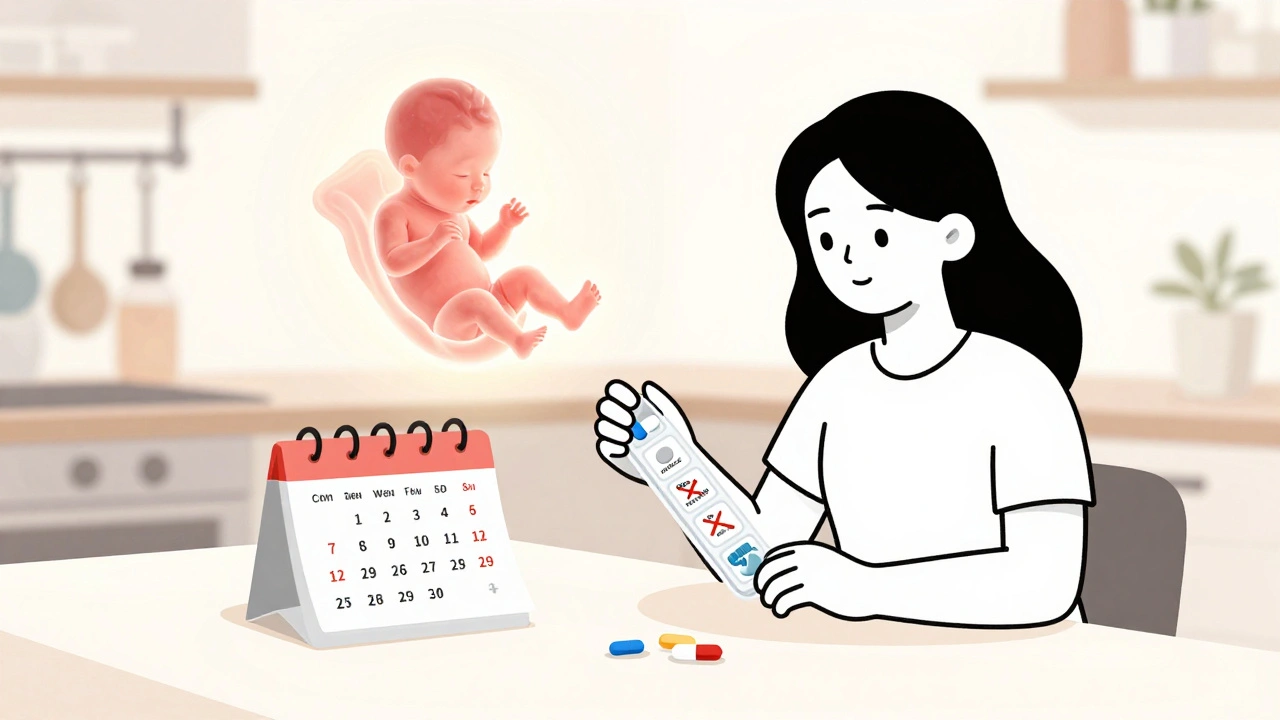
Many women don’t realize that the first few weeks of pregnancy - when the baby’s heart, brain, and spine are forming - happen before they even know they’re pregnant. By the time a home pregnancy test turns positive, the most critical window for fetal development is already behind you. That’s why creating a medication plan before conception isn’t just a good idea - it’s essential for a healthy pregnancy.
Why Timing Matters More Than You Think
Major organs like the brain, heart, and limbs form between weeks 3 and 8 of pregnancy. If you’re taking a medication that can harm a developing fetus during that time, the damage is already done before you’ve had a chance to stop it. About 45% of pregnancies in the U.S. are unintended, which means most women aren’t thinking about their meds until it’s too late. The good news? You have time to fix this. Experts from the American College of Obstetricians and Gynecologists (ACOG) and the Society for Maternal-Fetal Medicine (SMFM) recommend starting your medication review at least 3 to 6 months before you start trying to conceive. That gives your body time to adjust, clear out unsafe drugs, and stabilize your health.What Medications Are Risky Before Pregnancy?
Not all medications are dangerous, but some carry known risks. Here are the most common ones that need attention:- Valproic acid (used for seizures and bipolar disorder): Increases the risk of neural tube defects by 10-12%. Avoid completely if possible.
- Lithium (for bipolar disorder): Linked to Ebstein’s anomaly, a rare heart defect. Risk is low (about 1 in 2,000), but still significant enough to warrant a switch.
- Topiramate (for seizures or migraines): Doubles the risk of cleft lip or palate compared to the general population.
- Methotrexate (for autoimmune diseases like lupus or rheumatoid arthritis): Highly teratogenic. Must be stopped at least 3 months before trying to conceive.
- Isotretinoin (Accutane for acne): Causes severe birth defects. Requires 1 month of contraception after stopping - but many doctors recommend 3 months to be safe.
- Warfarin (blood thinner): Crosses the placenta and can cause fetal warfarin syndrome. Switch to heparin before conception.
- Liraglutide (for weight loss or diabetes): No safety data in pregnancy. Stop at least 2 months before trying.
What Medications Are Safe - or Even Required?
Some medications aren’t just safe - they’re necessary. Stopping them can be more dangerous than keeping them.- Folic acid: Everyone should take 400-800 mcg daily before conception. If you have epilepsy, diabetes, obesity, or a family history of neural tube defects, bump it up to 4-5 mg daily. This single supplement reduces neural tube defects by up to 70%.
- Levothyroxine (for hypothyroidism): Your thyroid needs to be perfectly balanced before pregnancy. Aim for a TSH level below 2.5 mIU/L. Once pregnant, you’ll likely need a 30% dose increase.
- Antiretrovirals (for HIV): Keeping your viral load under 50 copies/mL before conception reduces transmission risk to less than 1%. Don’t stop these - optimize them.
- Insulin (for diabetes): Better than oral diabetes pills during pregnancy. Work with your doctor to get your blood sugar into target range before conceiving.
- Low-molecular-weight heparin (for blood clots): Safe during pregnancy and doesn’t cross the placenta. Switch from warfarin before conception.
How to Build Your Personal Medication Plan
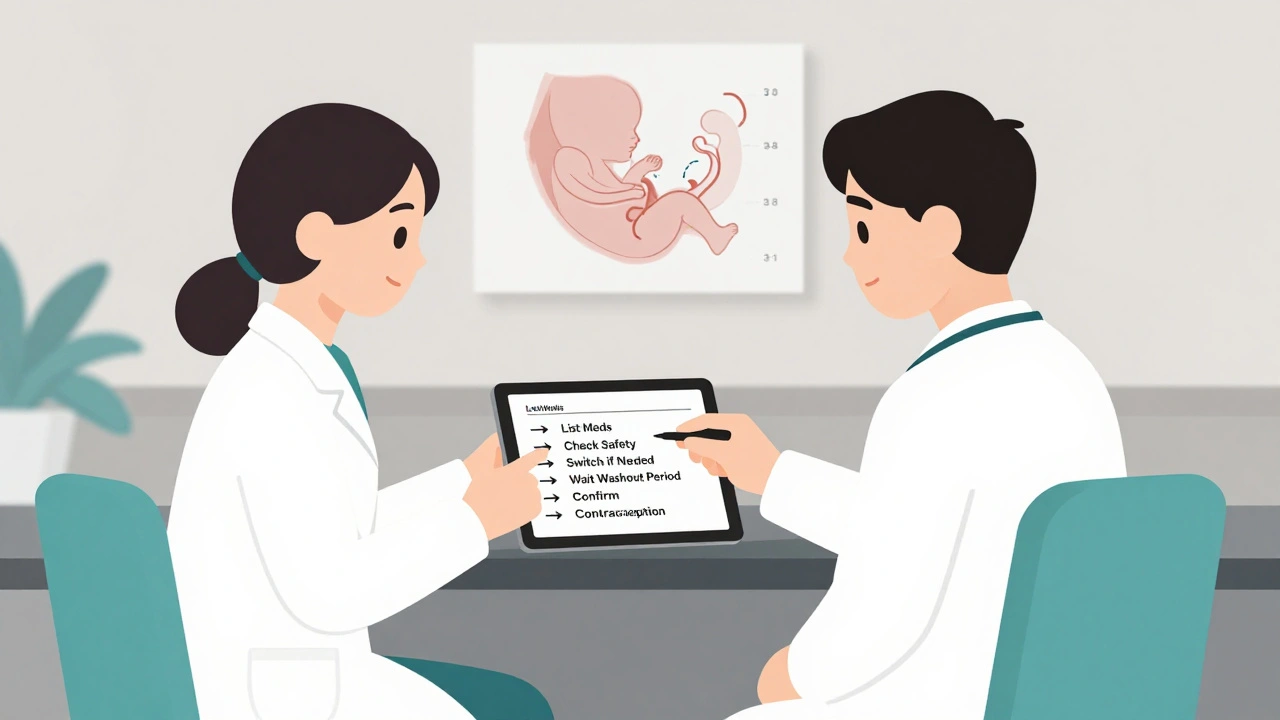
Creating your plan isn’t about guessing. It’s about structure. Follow these steps:- List everything: Prescription meds, over-the-counter drugs, supplements, herbs, and vitamins. Include dosages and how often you take them.
- Meet with your doctor: Don’t wait for your OB/GYN. See your primary care provider or specialist first. Bring your list. Ask: “Is this safe before and during pregnancy?”
- Check for alternatives: If a drug is risky, ask: “Is there another one that works just as well but is safer?” For example, lamotrigine is often preferred over valproic acid for seizures.
- Plan for washout periods: Some drugs stay in your system for months. Methotrexate needs 3 months. Isotretinoin needs 1-3 months. Don’t skip this step.
- Adjust your contraception: If you’re on seizure meds like carbamazepine, birth control pills may not work well. Use a backup method like an IUD or condoms with spermicide.
- Document everything: Use ICD-10 code Z31.69 if your provider is billing for preconception counseling. Keep a copy of your plan.
Special Cases: Chronic Conditions and Pregnancy
If you have a chronic illness, your medication plan needs to be more detailed.- Epilepsy: Use the lowest effective dose of one medication (monotherapy). Avoid valproic acid and topiramate. Lamotrigine and levetiracetam are safer choices.
- Autoimmune diseases (lupus, rheumatoid arthritis): Stop methotrexate, cyclophosphamide, and leflunomide. Sulfasalazine and hydroxychloroquine are often safe.
- Diabetes: Aim for HbA1c under 6.5% before conception. Switch from oral meds to insulin if needed.
- High blood pressure: Avoid ACE inhibitors and ARBs. Switch to methyldopa or labetalol.
- Depression or anxiety: SSRIs like sertraline and citalopram are generally considered low-risk. Don’t stop abruptly - talk to your psychiatrist.
What If You’re Already Pregnant and Didn’t Plan?
It’s not too late. If you just found out you’re pregnant and you’re on a risky medication, don’t panic. Call your doctor immediately. Many drugs are only dangerous in the first 8 weeks. After that, the risk drops significantly. Some women worry about stopping meds cold turkey. That can be dangerous too. For example, stopping seizure meds suddenly can cause seizures, which are far more harmful to the baby than the medication itself. Work with your team to make the safest switch as soon as possible.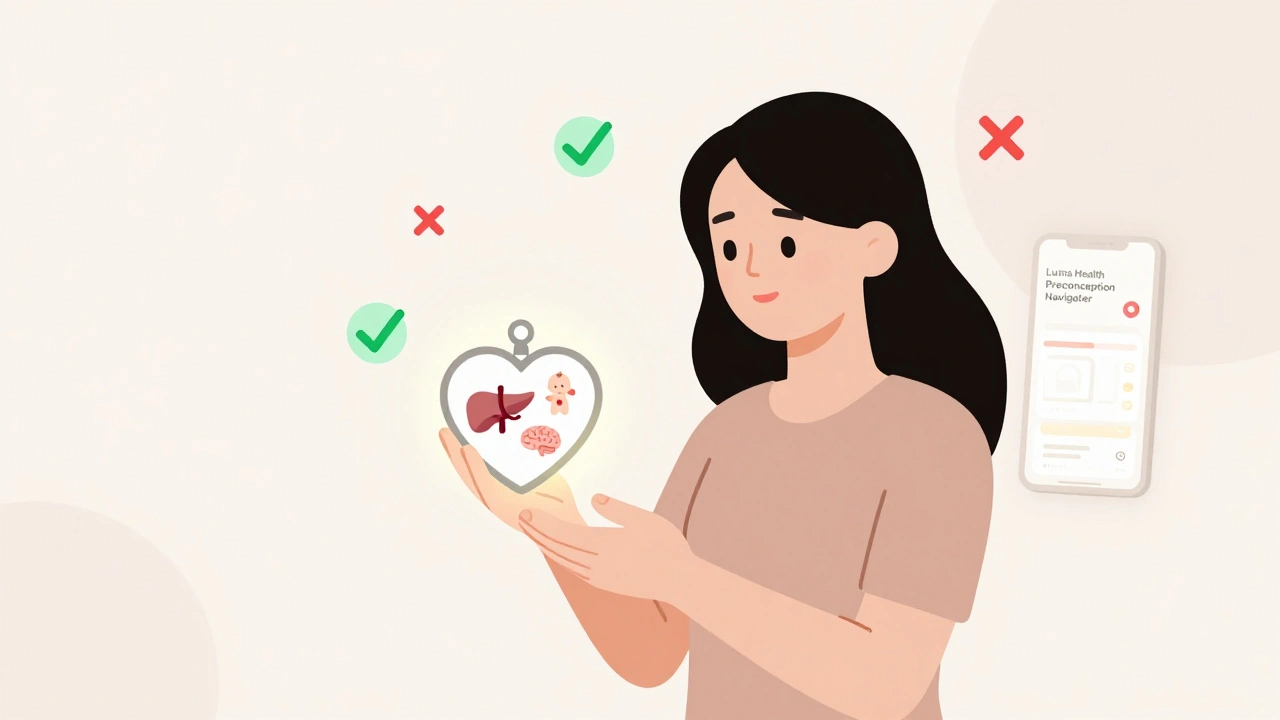
Why So Few Women Do This - And How to Change That
Only 38% of women with chronic conditions get a preconception medication review, according to CDC data. Why? Doctors don’t always bring it up. Many women don’t know to ask. Health systems aren’t set up to track it. But change is happening. Kaiser Permanente, for example, has a 67% review rate among high-risk patients. They use electronic alerts and team-based care. You can do the same - just be your own advocate. Ask your provider: “Have you reviewed all my medications for pregnancy safety?” If they say no, ask for a referral to a maternal-fetal medicine specialist or a pharmacist who specializes in pregnancy.What’s Next: Technology and Personalized Care
In January 2023, the FDA approved the first digital tool - Luma Health’s Preconception Navigator - that uses AI to scan your meds against teratogenicity databases. It’s not a replacement for your doctor, but it’s a powerful helper. The NIH is also launching the PharmaTox study to predict individual risk based on your genes and how your body processes drugs. In the future, your plan won’t just be based on general guidelines - it’ll be tailored to you.Final Checklist: Your Preconception Medication Plan
Before you stop using birth control, make sure you’ve checked off these items:- ✅ Folic acid: 400-800 mcg daily (4-5 mg if high-risk)
- ✅ Stopped all teratogenic drugs (valproic acid, isotretinoin, methotrexate, etc.)
- ✅ Switched to pregnancy-safe alternatives where needed
- ✅ Thyroid levels checked and optimized (TSH <2.5)
- ✅ Blood sugar, blood pressure, and mental health meds reviewed
- ✅ Contraception adjusted for drug interactions
- ✅ All changes documented and discussed with your care team
This isn’t about being perfect. It’s about being prepared. The goal isn’t to eliminate all risk - it’s to reduce it as much as possible. And that starts long before you get a positive pregnancy test.

Emmanuel Peter
December 5, 2025 AT 10:00Wow, so now we’re supposed to be medical detectives before we even try to get pregnant? What’s next, a background check on our DNA? I’ve been on sertraline for 8 years and now I’m supposed to just ‘switch’? Like it’s a Netflix subscription? No thanks. My mental health is more important than some hypothetical birth defect that might not even happen.
Ashley Elliott
December 5, 2025 AT 15:41This is such an important post-seriously, thank you for laying it out so clearly. I wish my OB had mentioned this when I was on birth control. I was on topiramate for migraines and had no idea it could cause cleft palate. I switched to lamotrigine 6 months before trying and it made all the difference. Folic acid is non-negotiable. 4 mg for me, every day. No excuses.
Chad Handy
December 6, 2025 AT 05:47Let’s be real here-this whole preconception medication plan thing is just another way for Big Pharma and the medical-industrial complex to profit off women’s anxiety. Who says you even need to stop isotretinoin three months out? That’s just a recommendation, not a law. And why are we assuming every woman wants to get pregnant? Maybe I just want to live my life without being policed by a bunch of doctors who’ve never even had a kid. The real risk here is losing autonomy over your own body.
Augusta Barlow
December 8, 2025 AT 03:14Did you know that the CDC quietly funded a study in 2021 showing that 89% of ‘teratogenic’ drug warnings were based on animal studies with doses 10x higher than human use? And yet, we’re still scaring women into stopping life-saving meds? This whole post feels like fear-mongering dressed up as ‘precaution.’ If you’re on lithium and you’re terrified of Ebstein’s anomaly, maybe the real issue is that your doctor didn’t explain the actual risk is 0.05%. That’s less than being struck by lightning. We’re turning pregnancy into a minefield.
Joe Lam
December 8, 2025 AT 10:01Let me guess-you got this from a Kaiser Permanente pamphlet? Pathetic. Real medicine isn’t about checking boxes on a list. It’s about clinical judgment. You can’t just swap out valproic acid for lamotrigine like it’s a game of musical chairs. Some of us have tried every single ‘safe’ alternative and none of them work. The fact that you think this is a one-size-fits-all checklist proves you’ve never had a real seizure disorder. This isn’t parenting advice-it’s medical malpractice waiting to happen.
Jenny Rogers
December 8, 2025 AT 12:25It is, indeed, a moral imperative to prioritize fetal development over maternal autonomy, particularly in light of the sanctity of nascent human life. One cannot, ethically, justify the continued use of pharmacological agents with known teratogenic potential under the guise of personal preference or convenience. The responsibility to ensure the integrity of the developing organism supersedes transient comfort. One must ask oneself: If one’s medication were to cause irreversible harm, would one not bear the burden of conscience? The answer, in all candor, is unequivocally yes.
Rachel Bonaparte
December 9, 2025 AT 00:14Okay, but have you heard about the 2023 whistleblower report from the FDA? The one where they admitted they didn’t fully review the long-term neurodevelopmental data on lamotrigine because the vendor paid for expedited approval? And now we’re telling women to switch from valproic acid to it? Meanwhile, the NIH is funding a study on gene-based drug metabolism that could make all this obsolete in 2 years. Why are we forcing people to jump through hoops based on outdated guidelines? And don’t even get me started on the fact that folic acid supplements are often contaminated with lead. I’m not taking anything unless it’s organic, non-GMO, and sourced from a farm in Vermont. And even then… I’m skeptical.
Scott van Haastrecht
December 9, 2025 AT 14:48So let me get this straight-you want me to stop my anticoagulant, which keeps me alive, and switch to heparin… which I have to inject myself with daily? And you think that’s ‘safer’? What’s next, forcing women to take daily enemas to ‘cleanse’ their wombs? This isn’t medicine-it’s torture disguised as prevention. And the fact that you think a checklist solves this? You’re not helping. You’re traumatizing women who are already terrified of pregnancy. My mom died from a clot. I’m not risking that for a 0.02% chance of a cleft palate. You’re not my doctor. Stop giving advice you don’t understand.
Chase Brittingham
December 10, 2025 AT 08:30Just wanted to say thank you for this. I’ve been on levothyroxine for 12 years and my TSH was at 3.8 before I read this. I got it down to 1.9 before I got pregnant and had zero issues. My kid’s 2 now and thriving. It’s not about being perfect-it’s about being intentional. And if you’re scared to talk to your doctor? Just say, ‘I want to be a safe mom.’ They’ll help. I promise.
Bill Wolfe
December 10, 2025 AT 11:24Wow. So we’re now treating pregnancy like a software update? ‘Install folic acid v4.2, patch lithium v1.1, reboot thyroid v2.0.’ What’s next? QR codes on birth control packs? ‘Scan to see if your meds are pregnancy-compatible.’ And don’t even get me started on the fact that this whole system is designed to make women feel guilty for being human. I’m on sertraline. I’m not stopping. My brain is my body. And if my kid has anxiety? Well… maybe they’ll understand me better. 🤷♂️
Ollie Newland
December 11, 2025 AT 17:53From a UK perspective-this is exactly what NHS preconception clinics are designed for. We’ve got multidisciplinary teams: OBs, pharmacists, endocrinologists, mental health specialists. You book a ‘pre-pregnancy review’ and they run your meds through their teratogenicity database. It’s not about fear-it’s about integration. We don’t stop meds unless the benefit-risk ratio tips. And we document everything in the electronic record. Why can’t the US just… do that?
Rebecca Braatz
December 12, 2025 AT 12:10YES. This is the kind of info that needs to be shouted from the rooftops. I was on methotrexate for lupus and didn’t know I needed to stop 3 months out. I got pregnant accidentally and panicked. My rheumatologist saved me-switched me to hydroxychloroquine, got me on prenatal vitamins, and I had the healthiest pregnancy of my life. You’re not broken for needing meds. You’re brilliant for planning ahead. Go talk to your doctor today. You’ve got this.
Michael Feldstein
December 13, 2025 AT 21:48My sister’s on carbamazepine and was on birth control pills-turns out the meds made the pill useless. She got pregnant without realizing it. Now she’s terrified she did damage. This post is a lifesaver. I’m sharing it with everyone I know. Seriously, if you’re on any kind of chronic med and thinking about kids-even someday-do this. Don’t wait. It’s not overthinking. It’s being smart.
jagdish kumar
December 15, 2025 AT 02:24Life is impermanent. Medication is attachment. Conception is karma. Why fight nature?
Emmanuel Peter
December 16, 2025 AT 19:26Oh wow, so now I’m supposed to trust a doctor who’s never had a kid? You think I’m going to let some guy in a white coat decide what’s in my body? I’ve been on lithium for 15 years. I’m stable. I’m happy. I’m not turning into a lab rat for your checklist. And if my kid has a heart defect? Fine. At least they’ll have a mom who’s not medicated into a zombie.