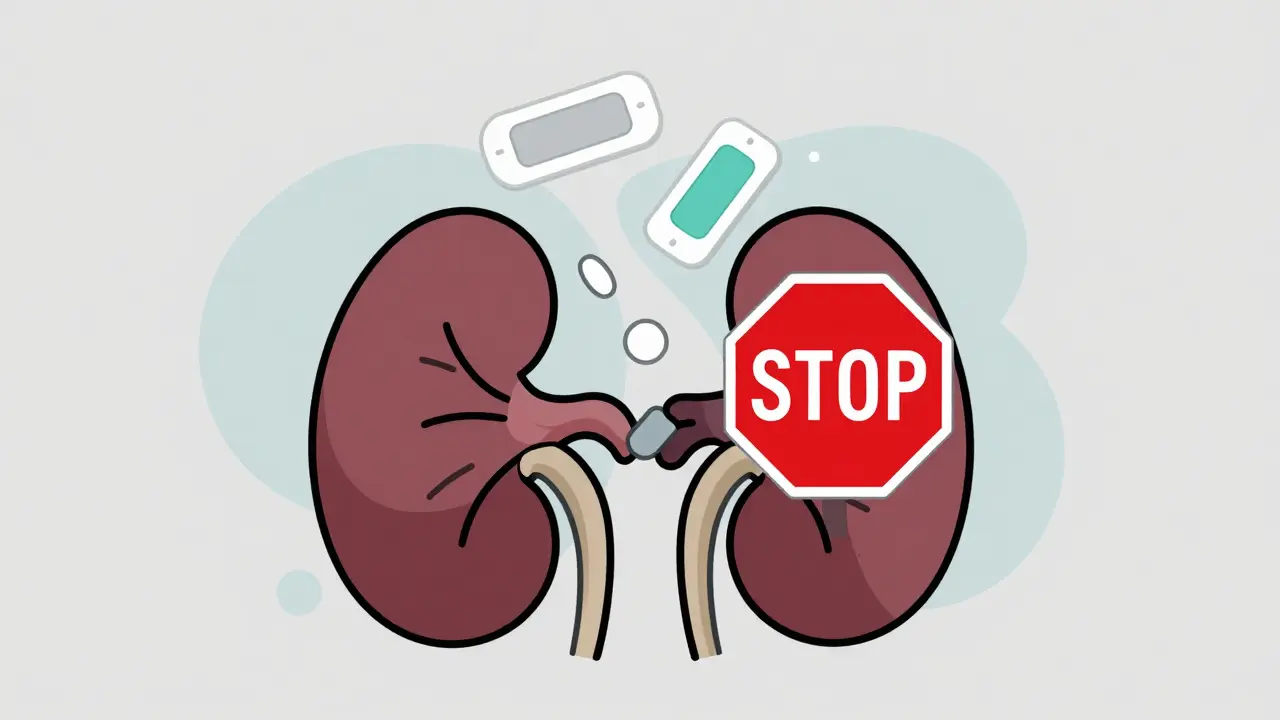
Opioid Safety Calculator for Kidney Patients
Managing pain in patients with kidney failure is one of the most tricky decisions in clinical practice. Opioids are often needed - chronic pain affects up to 85% of people with end-stage renal disease (ESRD). But standard doses can be deadly. Why? Because kidneys that aren’t working can’t clear opioid metabolites. Those leftovers build up, leading to confusion, seizures, slowed breathing, or even death. The good news? There are safer options. And they’re not what most doctors assume.
Why Most Opioids Are Dangerous in Kidney Failure
Morphine and codeine are the most commonly prescribed opioids - and the most dangerous in kidney disease. Both break down into metabolites that the kidneys normally flush out. In someone with a GFR below 30 mL/min, those metabolites stick around. Morphine-3-glucuronide and codeine-6-glucuronide are neurotoxic. They cause myoclonus (involuntary muscle jerks), delirium, and seizures. One study found that up to 37% more neurotoxicity occurs in non-dialysis CKD patients on hydromorphone compared to those on dialysis.
Meperidine (pethidine) is even worse. Its metabolite, normeperidine, accumulates at levels as low as 0.6 mg/L - and it’s a known seizure trigger. KDIGO guidelines say it’s absolutely off-limits in any stage of kidney disease. Yet, some providers still prescribe it out of habit.
Hydromorphone is tricky. The parent drug is metabolized by the liver, but its active metabolite, hydromorphone-3-glucuronide, builds up in advanced kidney failure. Even small doses can lead to central nervous system toxicity. It’s not banned, but it’s high-risk without close monitoring.
The Safest Opioids for Kidney Patients
When pain needs an opioid, two agents rise to the top: fentanyl and buprenorphine.
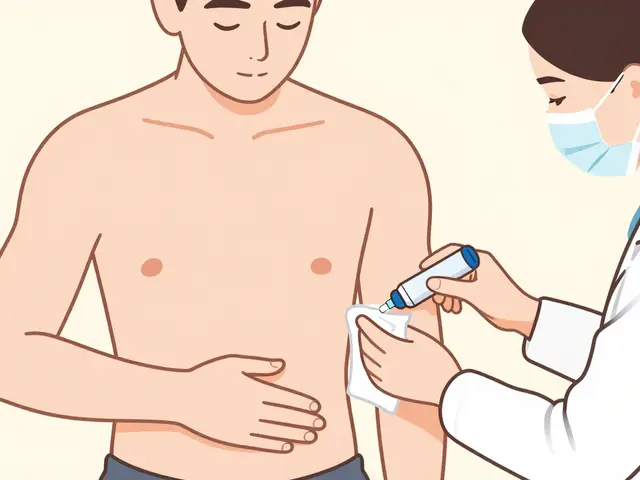
Fentanyl is 85% metabolized by the liver. Only 7% is cleared by the kidneys. That means even in ESRD, it doesn’t accumulate like morphine does. Studies show stable blood levels in patients with GFR under 10 mL/min. Transdermal patches are ideal for chronic pain - they deliver steady doses without peaks and crashes. But here’s the catch: never start fentanyl patches in someone who’s opioid-naïve. The risk of overdose is real. And avoid patches during hemodialysis. Clearance during dialysis is unpredictable, and levels can drop too low or spike dangerously.
Buprenorphine is another top choice. About 30% of it is cleared by the kidneys, but its metabolites are inactive. That means even in dialysis patients, you don’t need to reduce the dose. It’s also less likely to cause respiratory depression than other opioids. A 2022 review in the Journal of Clinical Medicine confirmed its safety profile in CKD and ESRD. One caution: it can prolong the QT interval. So if the patient has heart issues or takes other QT-prolonging drugs, an ECG is wise before starting.
Dosing Adjustments Based on Kidney Function
There’s no one-size-fits-all. Dosing must match kidney function - measured by GFR or CrCl.
- GFR >50 mL/min/1.73m²: No adjustment needed for fentanyl, methadone, or buprenorphine. Morphine can be used at full dose - but only if absolutely necessary.
- GFR 10-50 mL/min/1.73m²: Reduce morphine to 50-75% of usual dose. Fentanyl can stay at 75-100%. Methadone and buprenorphine remain unchanged.
- GFR <10 mL/min/1.73m² (ESRD): Morphine should be cut to 25% of normal. Methadone to 50-75%. Fentanyl to 50%. Buprenorphine? No change.
Start low. Go slow. Always begin at half the usual dose in advanced kidney disease. Wait 48-72 hours before increasing. Pain relief isn’t urgent - safety is.
What About Oxycodone, Tapentadol, and Methadone?
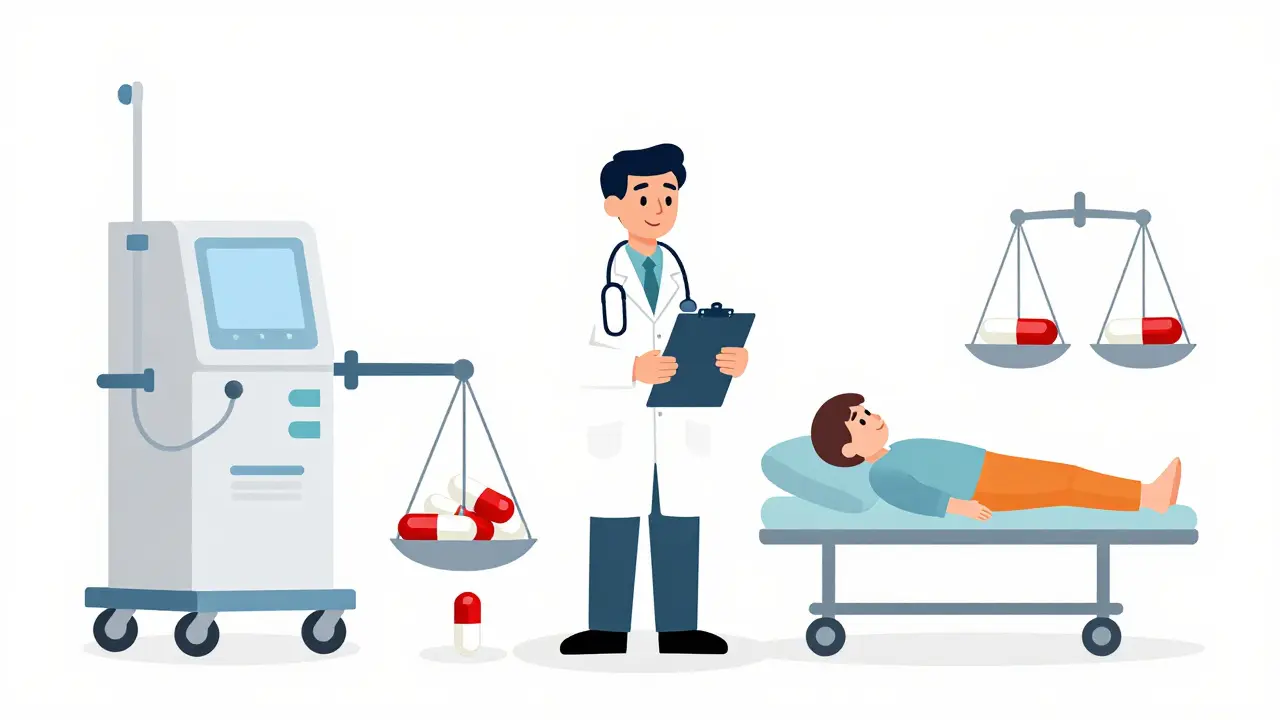
Oxycodone has about 45% renal clearance of its metabolites. It’s not ideal, but not banned. Use it cautiously. Maximum daily dose should not exceed 20 mg if CrCl is under 30 mL/min. Monitor for sedation and confusion.
Tapentadol is newer and dual-acting (mu-opioid + norepinephrine reuptake inhibition). It doesn’t need dose adjustment for mild-to-moderate CKD (CrCl ≥30 mL/min). But there’s no data for ESRD. Avoid it in dialysis patients until more evidence is available.
Methadone is effective but complex. It’s metabolized by the liver, so it doesn’t accumulate like morphine. But it carries a high risk of QT prolongation - which can lead to fatal arrhythmias. Every patient starting methadone needs a baseline ECG and repeat monitoring after dose changes. In many states, prescribers need special certification to use it. It’s not first-line, but it’s an option when others fail.
Non-Opioid Alternatives and Adjuncts
Opioids shouldn’t be the only tool. In fact, the 2022 CDC guideline urges clinicians to combine opioids with non-opioid therapies - especially in kidney patients.
Gabapentin and pregabalin are often used for neuropathic pain. But they’re cleared by the kidneys. Gabapentin needs a 50-70% dose reduction in CrCl under 30 mL/min - max 700 mg daily. Pregabalin requires even more caution: reduce dose by 50% and extend dosing intervals. Both can cause dizziness and swelling, which are worse in fluid-overloaded CKD patients.
Tricyclic antidepressants like nortriptyline? Avoid them. They raise the risk of heart rhythm problems, especially when potassium and sodium levels swing during dialysis. Serum levels above 100 ng/mL increase cardiac event risk by 2.3 times.
Acetaminophen is safe at 3,000 mg/day in CKD - no dose adjustment needed. NSAIDs? Avoid them. They reduce kidney blood flow and can worsen function. Topical lidocaine or capsaicin can help localized pain without systemic effects.
Managing Constipation - A Hidden Crisis
Up to 80% of kidney patients on opioids get severe constipation. It’s not just uncomfortable - it can lead to bowel obstruction or hospitalization. Standard laxatives often don’t work well.
Naldemedine is the only peripherally-acting mu-opioid receptor antagonist (PAMORA) that doesn’t need dose adjustment in CKD or dialysis. Standard dose: 0.2 mg daily. It doesn’t cross the blood-brain barrier, so it doesn’t interfere with pain relief. Other PAMORAs like methylnaltrexone require dose reductions in kidney failure - making naldemedine the clear winner.
What the Guidelines Say - And What Hospitals Are Doing
KDIGO’s 2013 guidelines are still the gold standard. They say: “DO NOT USE” codeine, morphine, meperidine, and propoxyphene. Fentanyl and buprenorphine are preferred. Start at half-dose. Monitor closely.
But real-world practice lags. Only 12% of CKD patients get guideline-concordant opioid care. In dialysis centers, under-treatment hits 64%. Why? Lack of training. Outdated formularies. Confusing labels. Sixty-eight percent of opioid package inserts don’t mention renal dosing.
Some systems are catching up. Kaiser Permanente added renal dosing alerts to their EHR. Result? A 47% drop in inappropriate opioid prescriptions from 2018 to 2022.
The Bigger Picture: Risk of Faster Kidney Decline
Long-term opioid use isn’t just risky for the brain and lungs - it might hurt the kidneys too. A 2022 study in Nephrology Dialysis Transplantation found that patients using opioids for more than 90 days progressed to ESRD 28% faster than those who didn’t. Why? Chronic inflammation. Immune suppression. Altered blood flow. Opioids aren’t harmless - even when they’re “safe.”
This is why multimodal pain management matters. Physical therapy. Cognitive behavioral therapy. Acupuncture. Nerve blocks. Non-opioid meds. These aren’t backups - they’re essential.
Bottom Line: What to Do Today
- Never use morphine, codeine, or meperidine in CKD or ESRD.
- Choose first-line: Transdermal fentanyl or buprenorphine.
- Start low: Use 50% of standard dose in advanced kidney disease.
- Wait and watch: Reassess pain and side effects every 2-3 days.
- Treat constipation: Use naldemedine 0.2 mg daily.
- Monitor heart: ECG before and after starting methadone or buprenorphine.
- Use non-opioids: Acetaminophen, topical agents, physical therapy.
Pain is real. But so is the risk. The goal isn’t just to relieve pain - it’s to relieve it safely. In kidney failure, that means choosing the right drug, at the right dose, with the right monitoring. The tools are there. It’s time to use them.

Jessica Salgado
December 15, 2025 AT 22:26Fentanyl patches are a game-changer for chronic pain in ESRD - steady delivery, no peaks, no crashes. But I’ve seen so many nurses panic when a patient’s on dialysis and the patch gets removed. The clearance isn’t predictable, and suddenly they’re in withdrawal or overdosing. Always have naloxone ready and talk to the nephro team before dialysis.
Also, buprenorphine’s QT prolongation risk is real. One patient I followed had torsades after starting it with amiodarone. ECG isn’t optional - it’s mandatory.
Joe Bartlett
December 16, 2025 AT 22:55UK guidelines say the same. Fentanyl’s the only opioid worth using here. Morphine? Don’t even bother. We stopped prescribing it in renal units years ago.
Brooks Beveridge
December 17, 2025 AT 21:33Big thanks for this breakdown. I’ve seen too many elderly patients on morphine for back pain, then end up in the psych ward from delirium. It’s heartbreaking.
And buprenorphine? It’s not just safe - it’s kinder. Less sedation, less constipation, less risk of crashing. We’ve switched 12 patients to it in the last 6 months. All are sleeping better and moving more. 🙏
CAROL MUTISO
December 18, 2025 AT 17:01Of course fentanyl’s the answer - because the pharmaceutical industry paid for the studies, right?
Meanwhile, the real solution? Non-opioid pain management. Physical therapy. Acupuncture. Cannabis. But nope - we’re still pushing pills because that’s where the money is. 😒
Anu radha
December 18, 2025 AT 17:45My uncle in India had kidney problem. Doctor gave him small pain medicine. He feel better. No big medicine. No hospital. Simple.
Donna Packard
December 20, 2025 AT 14:58I’m a nurse on the dialysis unit. We had a patient on hydromorphone for 3 weeks. No dose changes. He started twitching like he was having a seizure - but awake. Turned out it was the metabolite buildup. We switched him to buprenorphine and he was calm within 12 hours.
Doctors need to stop thinking ‘if it works in healthy people, it works here.’ It doesn’t. Not even close.
Chris Van Horn
December 22, 2025 AT 00:22As a board-certified pain specialist with 22 years of experience (and yes, I publish in JAMA), I must say this article is dangerously oversimplified. Fentanyl patches are NOT 'ideal' for ESRD - they have erratic absorption in hypotensive, cachectic patients. And buprenorphine? Its partial agonist profile can precipitate withdrawal in opioid-dependent patients - a fact conspicuously omitted. Also, methadone is still the gold standard in palliative care, despite its QT risk - which, by the way, is mitigated with serial ECGs. This is amateur hour.
Michael Whitaker
December 22, 2025 AT 07:48While I appreciate the effort, the author clearly has never managed a patient on CRRT. Fentanyl clearance during continuous dialysis is not 'unpredictable' - it's mathematically quantifiable using pharmacokinetic models. The real issue is that most nephrologists don't bother to learn them.
Also, 'buprenorphine doesn't need dose adjustment' - technically true, but in patients with low albumin and high unbound fraction, the effect is amplified. A subtle point, but critical.
BETH VON KAUFFMANN
December 23, 2025 AT 18:27‘Safest opioids’? Please. This is just pharma’s latest marketing push disguised as clinical guidance. Fentanyl? That’s a Schedule II narcotic with a 20-year history of abuse in dialysis units. Buprenorphine? It’s just Suboxone repackaged. And where’s the data on long-term cognitive outcomes? Nobody talks about that. Because they don’t want you to ask.
Also, why is methadone not the first-line? Because it’s cheap and generic. Profit motive wins again.
Jigar shah
December 24, 2025 AT 10:20Interesting. In India, we often use tramadol for moderate pain in CKD patients - even though it’s metabolized by the liver, its active metabolite is renally excreted. But we limit doses to 50mg twice daily and monitor closely. It’s not perfect, but it’s accessible. Would be curious to know if any studies have looked at tramadol in ESRD.
Martin Spedding
December 26, 2025 AT 09:47Typo in the article: 'GFR ' ends mid-sentence. Who proofread this? Also, 'meperidine' is spelled right but everyone knows it's pethidine in the UK. Amateur.
Erik J
December 27, 2025 AT 22:21Has anyone considered non-pharmacological options? TENS units, mindfulness, even cold therapy? I’ve seen patients with ESRD reduce opioid use by 70% just by doing daily breathing exercises and light stretching. Maybe the real problem isn’t the drugs - it’s that we’ve forgotten how to treat pain without them.
Marie Mee
December 28, 2025 AT 21:08They're hiding something. Fentanyl patches are used to track patients. The government is monitoring dialysis patients through the skin patches. I read it on a forum. That's why they push it so hard. Also, the dialysis machines are connected to satellites. You think that's a coincidence?
Philippa Skiadopoulou
December 30, 2025 AT 00:26Clear, accurate, and clinically sound. Buprenorphine’s inactive metabolites make it uniquely suited for renal failure. The 2022 review cited is robust. Fentanyl’s hepatic metabolism is well documented. This is exactly the guidance we need in primary care.