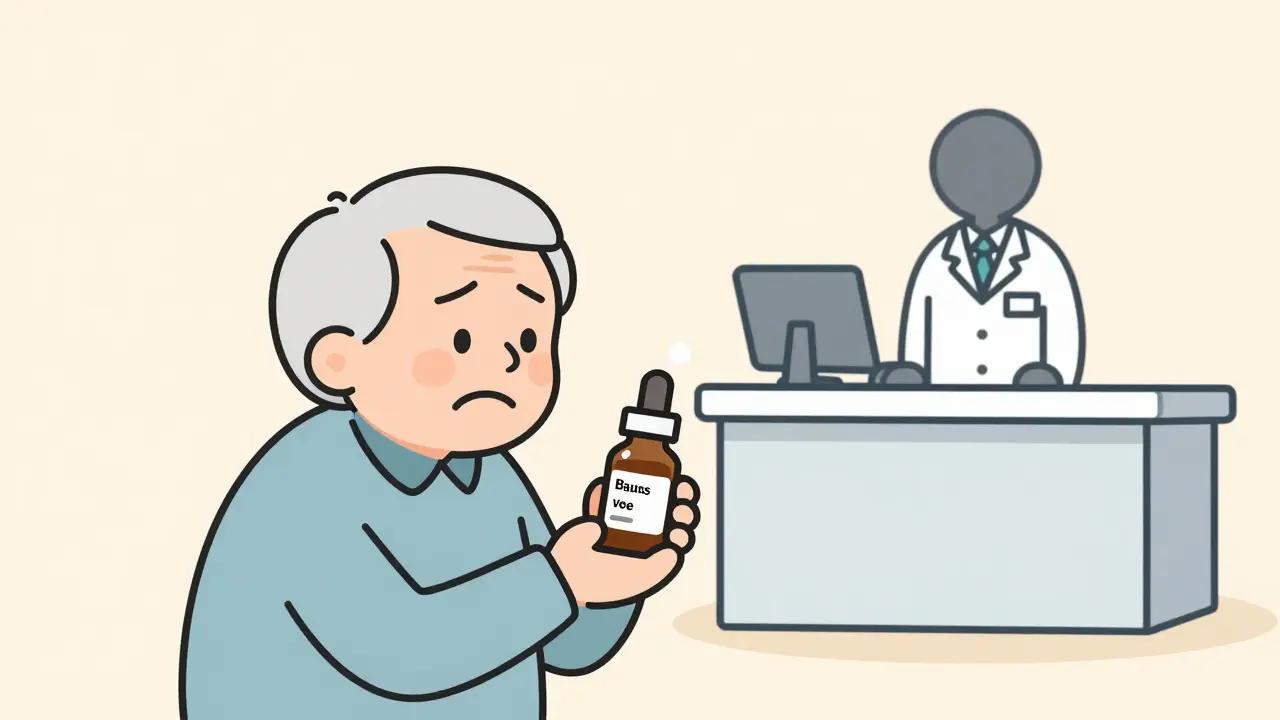
Imagine you’re given a new medicine. The bottle says "take one dropperful at bedtime". But you don’t know what a dropperful is. You don’t know if "bedtime" means 9 p.m. or when you fall asleep. You’re scared to ask because the pharmacist speaks only English, and your family member who helps you translate isn’t sure either. This isn’t a rare story. It’s happening every day in hospitals, clinics, and pharmacies across the U.S.
Why Language Barriers Put Lives at Risk
When patients can’t understand their medication instructions, mistakes happen. And those mistakes aren’t just inconvenient-they’re deadly. Studies show that children in families with limited English proficiency (LEP) are almost twice as likely to suffer medication errors compared to English-speaking families. One 2022 study from Children’s Hospital of Philadelphia found that 17.7% of LEP families experienced at least one medication error, compared to just 9.6% of English-proficient families. It’s not just kids. Adults get confused too. A 2020 review of multiple studies found that 34.7% of non-English-speaking patients couldn’t understand how to take their pills. That’s more than one in three. Some took too much. Some took too little. Some took the wrong medicine entirely. One Reddit user shared how their Spanish-speaking mother was given insulin instructions translated by Google Translate. She ended up in the hospital. That’s not an outlier-it’s a pattern. The problem isn’t that people aren’t trying. It’s that the system isn’t built for them. Pharmacies in the Bronx, where Spanish is widely spoken, still can’t print prescription labels in Spanish. In Milwaukee, half of pharmacies said they rarely or never offer translated instructions. And even when they do, the translations are often wrong. Terms like "twice daily," "with food," or "shake well" get mistranslated. A single word error can mean the difference between healing and harm.What Works: Professional Interpreters Save Lives
The best solution isn’t a phone app. It’s not a family member. It’s not a printed flyer in a language you barely speak. It’s a trained medical interpreter. Professional interpreters-whether in person, over the phone, or through video-are the only method proven to cut medication errors by up to 50%. Why? Because they know medical terms. They understand context. They don’t guess. They don’t simplify too much. They don’t leave out warnings. A 2017 study in the Journal of General Internal Medicine showed that when patients were watched taking their medication by a trained interpreter, errors dropped dramatically-even if the patient still didn’t speak English fluently. This is called directly observed dosing. It’s simple: the provider watches the patient take the pill, asks them to repeat the instructions, and corrects any misunderstanding right then. Compare that to using family members. One in nine pharmacies still rely on children, spouses, or friends to interpret. That’s dangerous. Studies show up to 25% of interpretations by untrained people are wrong. They might skip scary details like "this medicine can cause bleeding" or "don’t drink alcohol." They might translate "daily" as "every few days." They’re trying to help-but they’re not trained for this.What’s Available-and What’s Missing
There are tools out there. Hospitals and pharmacies can use:- Phone interpretation services (like LanguageLine Solutions)
- Video remote interpreters
- Bilingual staff members
- Translated prescription labels and patient handouts
- Electronic health records that flag language needs
What You Can Do: Practical Steps for Patients and Families
You don’t have to wait for the system to fix itself. Here’s what you can do right now:- Ask for an interpreter at every visit. Say: "I need a professional interpreter. I don’t speak English well, and I need to understand my medicines." You have a legal right to this under Title VI of the Civil Rights Act.
- Never rely on family to translate meds. Even if they’re fluent, they’re not trained. Ask for a phone or video interpreter instead.
- Use the teach-back method. After the provider explains your medicine, say: "Can you please show me how to take this?" Then repeat it back in your own words. If you’re unsure, say: "I’m not sure I understood. Can you explain it again?"
- Check your prescription label. If it’s only in English and you don’t understand it, call the pharmacy. Ask for a translated version. If they say no, ask to speak to the pharmacist directly.
- Write it down. Bring a notebook. Write the medicine name, dose, time, and purpose. Ask the provider to write it in your language if possible.
What Health Systems Need to Fix
Hospitals and pharmacies need to stop treating language access as an afterthought. Here’s what they must do:- Ask every patient their language preference at registration. Make it a standard question, like asking for your birthday.
- Contract with professional interpretation services. Don’t rely on volunteers or apps. Use certified medical interpreters.
- Translate high-risk instructions. Insulin, blood thinners, heart meds-these need clear translations in the top 5-10 languages spoken in your area.
- Train staff on cultural humility. Not just language-understanding how fear, shame, or distrust can stop patients from asking questions.
- Use directly observed dosing for high-risk meds. Watch patients take their first dose. Confirm they understand.
What’s Changing-And What’s Coming
Good news: things are starting to shift. In 2022, the Centers for Medicare & Medicaid Services (CMS) began requiring health plans to track and report language access data. In 2023, Medicare started paying for remote interpreter services during telehealth visits. The FDA is planning new rules in 2024 to require multilingual labeling on prescription bottles. The NIH is funding AI tools that can translate medication instructions accurately-no more Google Translate errors. Epic and Cerner, the two biggest electronic health record systems, are rolling out new features in 2024 that automatically flag language needs and connect patients to interpreters with one click. But progress is slow. And until these changes are fully adopted, patients are still at risk.Real Stories, Real Consequences
One nurse in Chicago told of a patient who came in with dangerously low blood sugar. She didn’t know her insulin dose was doubled because the label was mistranslated. She thought "10 units" meant "10 drops." She had no idea the difference. Another patient in Detroit, who spoke Arabic, was given a blood thinner. The pharmacist handed her a printed sheet in English. She didn’t read it. She didn’t ask. She took it the wrong way. She ended up in the ER with internal bleeding. On the other side: a hospital in Philadelphia trained all staff to use video interpreters. Within a year, medication errors among LEP patients dropped by 40%. That’s 40% fewer people hurt because someone finally listened.
It’s Not Just About Words-It’s About Safety
Language isn’t just about speaking the same words. It’s about trust. It’s about knowing someone will make sure you understand. It’s about not being afraid to ask. If you’re a patient, don’t stay silent. Ask for help. Demand an interpreter. Write things down. Repeat instructions back. If you’re a provider, don’t assume someone understands because they nod. Don’t hand them a paper and walk away. Don’t wait for them to ask. Ask them first. Medication safety isn’t just about pills and doses. It’s about communication. And when communication fails, people suffer.Frequently Asked Questions
Can I get free interpreter services at the pharmacy?
Yes. Under Title VI of the Civil Rights Act, any healthcare provider or pharmacy that receives federal funding-this includes most hospitals and pharmacies-is legally required to provide free interpreter services. You don’t have to pay. You don’t have to ask twice. Just say: "I need an interpreter to understand my medicine." If they refuse, ask to speak to a supervisor or file a complaint with the Office for Civil Rights.
Is Google Translate safe for medication instructions?
No. Google Translate and other free apps are not safe for medical use. They don’t understand medical terms like "dropperful," "twice daily," or "take on an empty stomach." They can mistranslate "do not crush" as "do not carry," or "for 30 days" as "for 3 days." One patient was hospitalized after using Google Translate to understand her insulin dose. Always use a trained medical interpreter instead.
What if my language isn’t supported by the hospital?
Most professional interpretation services offer over 200 languages, including less common ones like Hmong, Somali, or Karen. If your language isn’t available on-site, ask for a phone or video interpreter. Many hospitals have 24/7 access to interpreters for rare languages. If they say they can’t help, ask for a supervisor or contact your local health department. You still have the right to an interpreter, no matter your language.
How do I know if the interpreter is qualified?
Ask: "Are you certified in medical interpreting?" Certified interpreters have passed a national exam and are trained in medical terminology, ethics, and confidentiality. Avoid people who say they "just speak both languages." A qualified interpreter will introduce themselves by name and role, and they won’t add personal opinions or skip parts of the conversation. If you feel uncomfortable, ask for someone else.
Can I bring my own interpreter?
You can, but it’s not recommended. Family members, friends, or children may mean well, but they often lack medical knowledge. They might leave out important warnings, misunderstand doses, or feel too emotional to translate accurately. If you bring someone, ask the provider to still use a professional interpreter to double-check. Your safety matters more than convenience.
What should I do if I think I was given the wrong medicine?
Stop taking it. Call your doctor or pharmacist immediately. Say: "I don’t understand this medicine. Can you please explain it again with an interpreter?" Take the bottle with you. If you feel sick, go to the nearest emergency room. Don’t wait. Medication errors can escalate quickly. Write down what happened, including who you spoke to and when. You have the right to know what you’re taking-and to be safe while taking it.


Paul Mason
January 6, 2026 AT 15:56Man, I’ve seen this in my cousin’s hospital in Ohio. They had a guy from Nepal who didn’t know what ‘twice daily’ meant-he thought it meant ‘when you wake up and when you go to bed,’ but he slept till 3 p.m. and took his pills at 4 p.m. and midnight. Ended up in the ER. No one asked if he understood. Just handed him a paper. That’s not care, that’s negligence.
Adam Gainski
January 6, 2026 AT 18:32Professional interpreters aren’t a luxury-they’re a medical necessity. I work in a clinic that started using video interpreters for all high-risk meds. Within six months, our error rates dropped by half. Staff were skeptical at first, but now they won’t go back. It’s not about cost-it’s about not killing people because you were too lazy to hit ‘call interpreter.’
Anastasia Novak
January 8, 2026 AT 03:24Let’s be real-this whole system is a dumpster fire. Pharmacies don’t care. Hospitals are understaffed. And don’t get me started on the ‘use your kid’ crowd. I once saw a 10-year-old translate insulin instructions to her mom. The kid didn’t even know what ‘units’ meant. This isn’t a language problem-it’s a systemic failure disguised as cultural sensitivity. Someone’s gonna die because someone thought ‘Google Translate is fine.’
steve rumsford
January 9, 2026 AT 22:50My abuela got her blood pressure med translated by her neighbor’s nephew who spoke ‘some Spanish.’ She took it wrong for three weeks. Ended up in the hospital. They didn’t even apologize. Just gave her another paper in English. I’m done waiting for the system to fix itself. If you’re a provider, stop being lazy. Ask. Listen. Do better.
Christine Joy Chicano
January 11, 2026 AT 21:31The teach-back method is the quiet superhero of patient safety. It’s not rocket science-just ask the patient to explain it back in their own words. But it’s so rarely used. I’ve sat in on dozens of pharmacy consultations where the pharmacist rattles off instructions like a robot, then says, ‘Any questions?’ and walks away. Of course they won’t ask-they’re terrified of looking stupid. Teach-back turns fear into clarity. It’s low-cost, high-impact, and human.
Why don’t we train every clerk in this? Why is it still optional? Because we treat language access like a bonus feature, not a core function of care. We need to mandate it like handwashing. No exceptions.
And yes, I’ve seen AI translation tools improve-but they’re still brittle. A single mistranslated ‘shake well’ into ‘don’t stir’ could be catastrophic. Human interpreters still win. Always.
Mina Murray
January 12, 2026 AT 08:14Let me guess-the next thing they’ll say is ‘AI will solve this.’ Please. Google Translate already killed someone in Michigan. They’re about to hand over medical instructions to some algorithm trained on Reddit threads and TikTok captions. What’s next? A chatbot telling diabetics to ‘take 2 drops if you feel shaky’? No. No. No. This isn’t a tech problem. It’s a moral one. If you’re not using certified interpreters, you’re not a healthcare provider-you’re a liability.
Emma Addison Thomas
January 14, 2026 AT 03:24I grew up in a household where my mom had to translate every doctor’s note. I learned to read medical jargon before I could read poetry. But I never realized how rare it was for someone to actually *ask* if you understood. It’s not just about words-it’s about dignity. When someone takes the time to sit with you, watch you take the pill, and say, ‘Does this make sense?’-that’s when healing begins. We need more of that. Not more apps. More presence.
Katrina Morris
January 14, 2026 AT 04:20Just had my first appointment since moving to Texas. Asked for an interpreter. They said they’d send one. 45 minutes later, the nurse came in and said, ‘We don’t have one, but my cousin speaks Spanish.’ I said no. Then she said, ‘You’re lucky we even tried.’ I left. I’m not risking my life because someone thinks ‘trying’ means handing me a Google Translate printout. I’m writing to my state rep tomorrow.