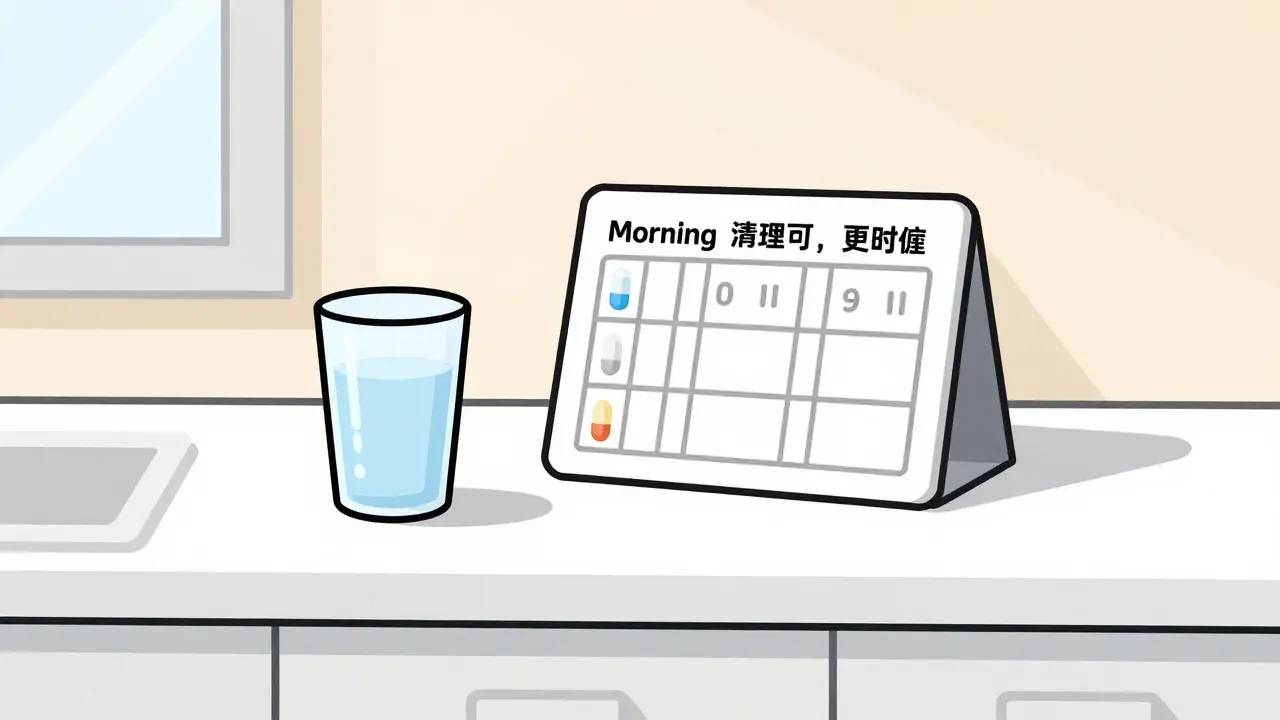
Taking a handful of pills every morning is more common than you might think. For those managing multiple chronic conditions, the challenge isn't just remembering to take the medicine-it's making sure the pills don't fight each other. When you're dealing with medication schedule management for five or more drugs, the risk of an interaction jumps significantly. In fact, some studies show that up to 82% of people in this group experience drug interactions. Whether it's a supplement blocking a prescription or two meds causing a dangerous drop in blood pressure, the stakes are high. The goal is to move from a confusing list of "twice daily" notes to a precise, foolproof system that keeps you safe.
The Danger of Vague Timing
Have you ever looked at a prescription label that says "take twice daily" and wondered, "When exactly?" You're not alone. Standard instructions are often too vague, leading to a 34% misinterpretation rate among patients. If you take one pill at 8 AM and the next at 2 PM, that's a very different biological impact than taking them at 8 AM and 8 PM.
To fix this, experts suggest using the Universal Medication Schedule (UMS), which is a standardized framework that replaces vague timing with specific time blocks. Instead of "morning" or "evening," the UMS breaks the day into four clear windows:
- Morning: 6 AM to 10 AM
- Noon: 10 AM to 2 PM
- Evening: 2 PM to 6 PM
- Bedtime: 8 PM to 12 AM
By slotting your meds into these windows, you eliminate the guesswork. Research shows this simple shift can reduce timing errors from 34% down to just 6%.
Mapping Out Your Medication Inventory
You can't organize what you haven't documented. The first step in avoiding interactions is a "brown bag review." This is where you literally put every single thing you swallow-prescriptions, over-the-counter painkillers, vitamins, and herbal teas-into a bag and bring them to your pharmacist or doctor. Why? Because verbal lists are notoriously inaccurate, missing about 40% of discrepancies.
When building your list, don't just write the name. You need specific attributes for every entity in your regimen:
- Exact Dosage: (e.g., 20mg, not just "one pill")
- Purpose: Why are you taking it? (e.g., Blood pressure, cholesterol)
- Food Requirements: Does it need an empty stomach or a fatty meal?
- Start/Stop Dates: Especially for antibiotics or steroids that change over time.
Once you have this list, your pharmacist can run it through professional tools like Lexicomp, which screens for hundreds of known interactions in minutes. This is where you'll discover if your calcium supplement is blocking the absorption of your thyroid medication, requiring them to be spaced at least two hours apart.
Choosing the Right Organization Tool
Depending on your tech comfort level and the complexity of your pills, different tools offer different levels of protection. A simple paper calendar is great for some, but for those with Polypharmacy (the concurrent use of multiple medications), more robust systems are needed.
| Tool | Best For | Key Benefit | Main Drawback |
|---|---|---|---|
| Pill Organizers (AM/PM) | Daily routine consistency | Reduces dosing errors by 45% | Doesn't prevent interaction timing |
| Digital Apps (e.g., Medisafe) | Tech-savvy users | 20-35% higher adherence | Harder for seniors (only 38% adoption) |
| Medication Calendars | Visual trackers | Improves adherence from 50% to 75% | No active reminders |
| Smart Dispensers (Hero) | High-risk polypharmacy | Up to 92% adherence rate | High cost and bulky size |
Strategies for High-Risk Interactions
Some drug combinations are more dangerous than others. For older adults, the Beers Criteria is the gold standard. This list identifies medications that are potentially inappropriate for seniors. For example, combining anticoagulants (blood thinners) with NSAIDs (like ibuprofen) can increase bleeding risks by as much as 60-70%.
To minimize these risks, implement these three professional strategies:
- Medication Synchronization: Ask your pharmacy about "90 x 4" prescribing. This aligns all your refills to happen on the same day four times a year, reducing the chance of missing a dose or taking a double dose during a pharmacy trip.
- The "Buffer Zone" Method: If two meds interact (like certain antacids and antibiotics), create a mandatory 2-hour buffer. Mark this clearly on your schedule with a red line or a gap in your pill box.
- Combination Therapy: Talk to your doctor about combination pills. Taking one pill that contains two medications is always safer and easier than managing two separate bottles.
Turning the Schedule into a Habit
A perfect plan on paper is useless if you don't follow it. The transition period usually takes 2 to 4 weeks to become a natural habit. The biggest hurdle? Forgetting to refill the pill organizer itself. To avoid this, set a "Refill Sunday" alarm on your phone.
Visual cues are your best friend here. Put a large version of your UMS chart on the fridge or right next to your water glass. If you're using a smartphone, use apps that offer "critical alerts" that bypass silent mode for essential medications. If you start feeling dizzy, nauseous, or notice unusual bruising, don't ignore it-these are common red flags for a drug interaction. Document the time it happened and contact your pharmacist immediately.
What is the best way to track medications if I can't use a smartphone?
A physical medication calendar or a 7-day segmented pill organizer is the most effective alternative. These tools improve adherence rates from 50% to 75% for chronic conditions by providing a clear visual confirmation that a dose has been taken.
How do I know if my vitamins are interacting with my prescriptions?
The only sure way is a comprehensive medication review. Bring all your supplements to your pharmacist. Many common supplements, such as calcium or St. John's Wort, can significantly alter how your body absorbs prescription drugs, such as thyroid hormones or antidepressants.
What does "take on an empty stomach" actually mean?
Generally, this means taking the medication at least 1 hour before eating or 2 hours after your last meal. Some medications, like levothyroxine, must be taken strictly on an empty stomach to be absorbed properly.
Can a pharmacist really find errors that my doctor missed?
Yes. Pharmacists are specialists in pharmacology and often use advanced software to check for interactions. "Brown bag" reviews typically identify an average of 3.2 discrepancies per patient that were missed during verbal histories with doctors.
Is the Universal Medication Schedule (UMS) available for my doctor to use?
Many modern electronic health record (EHR) systems, such as Epic, have integrated UMS-compatible e-prescribing. You can ask your provider to use these specific time-block instructions (Morning, Noon, Evening, Bedtime) on your printed medication list.
Next Steps for Different Needs
If you are a caregiver: Focus on the visuals. Use color-coded pill boxes (e.g., blue for morning, yellow for evening) and a large-print wall chart. Caregivers often find that the "morning/noon/evening/bedtime" system is the easiest to communicate to elderly parents.
If you have a complex regimen (10+ drugs): Request a clinical pharmacist-led Medication Therapy Management (MTM) session. These specialized reviews can reduce drug interactions by 32% and significantly lower the risk of emergency room visits.
If you are tech-savvy: Sync your pharmacy's app with a reminder tool like Medisafe. This ensures that when your refill is due, your schedule is automatically updated, preventing the gap in dosing that often leads to health flare-ups.



Sarah Mifsud
May 1, 2026 AT 07:09I've worked in healthcare for years and the brown bag review is a total lifesaver!! Most ppl dont realize how easy it is to forget that one random vitamin or a generic painkiller they take every day. Always double check with the pharamcist because they see the chemical side of things way better than we do.
Tallulah Sandison
May 2, 2026 AT 11:04This is so helpfull! Gatta get a pill box ASAP!!
Robert Cowley
May 3, 2026 AT 22:31Oh please, as if a "standardized framework" like UMS actually solves the systemic failure of the medical industry :-( Imagine thinking a time block fixes the biological chaos of human metabolism. It's purely a psychological placebo to make patients feel like they have control while the pharmaceutical companies just keep pumping out more scripts. Absolute joke. 🙄
Rebekah Korak
May 5, 2026 AT 15:11It is honestly fascinating how people cling to these rigid, clinical structures because they lack the intuitive connection to their own somatic existence, as if a calendar could ever replace the ancient wisdom of listening to one's own pulse. The obsession with "precision" is just a symptom of a society that has traded spiritual wellness for a checklist of dosages, and frankly, if you can't feel when your body needs a specific compound without a color-coded chart, you've already lost the battle with your own consciousness. I've spent a decade studying holistic rhythms and I can tell you that the rigid adherence to these "windows" often creates a stress response that counteracts the very medicine you're trying to optimize, which is a paradox that most medical professionals are too narrow-minded to acknowledge because they're blinded by their own degrees. We are not machines to be programmed with 8 AM and 8 PM slots; we are flowing entities of energy and chemistry that require a more nuanced, fluid approach to healing than a table in a blog post can provide. Most of you are just following the herd into a digital app-driven existence where your health is managed by an algorithm rather than an intuition, and that is a tragedy of the highest order in the modern age.
Srinivas Komakula
May 5, 2026 AT 17:01The reliance on Lexicomp and similar proprietary algorithms is deeply concerning...!!! These software-driven matrices are designed to overlook specific synergistic toxicity markers that benefit the corporate hegemony...!!! One must question if the "discrepancies" found during brown bag reviews are merely a curated facade to instill trust in a compromised pharmacological infrastructure...!!! The bio-accumulation of these compounds is rarely discussed in these sanitized guides...!!!
Leah Sentz
May 6, 2026 AT 18:41Only the USA has the best pharmacies in the world! 🇺🇸🇺🇸🇺🇸 Why are we even talking about this when our doctors are the top tier! 🌟 I just want everyone to be healthy and happy 💖✨😊
Halle Dagley
May 7, 2026 AT 03:10It is an absolute travesty that the American healthcare system permits such vague instructions to persist in the first place. The level of incompetence regarding patient education is utterly reprehensible and reflects a decline in our national standards. We must demand a more rigorous application of the UMS across all domestic clinics immediately.
Lando Neal
May 8, 2026 AT 20:54This is really great info!! I never knew about the buffer zone thing!! Thanks for sharing this...!!!
Christina Lancey
May 10, 2026 AT 19:11Using a physical calendar is a wonderful way for those who feel overwhelmed by technology to still maintain their health. It's all about finding the method that brings you the most peace.