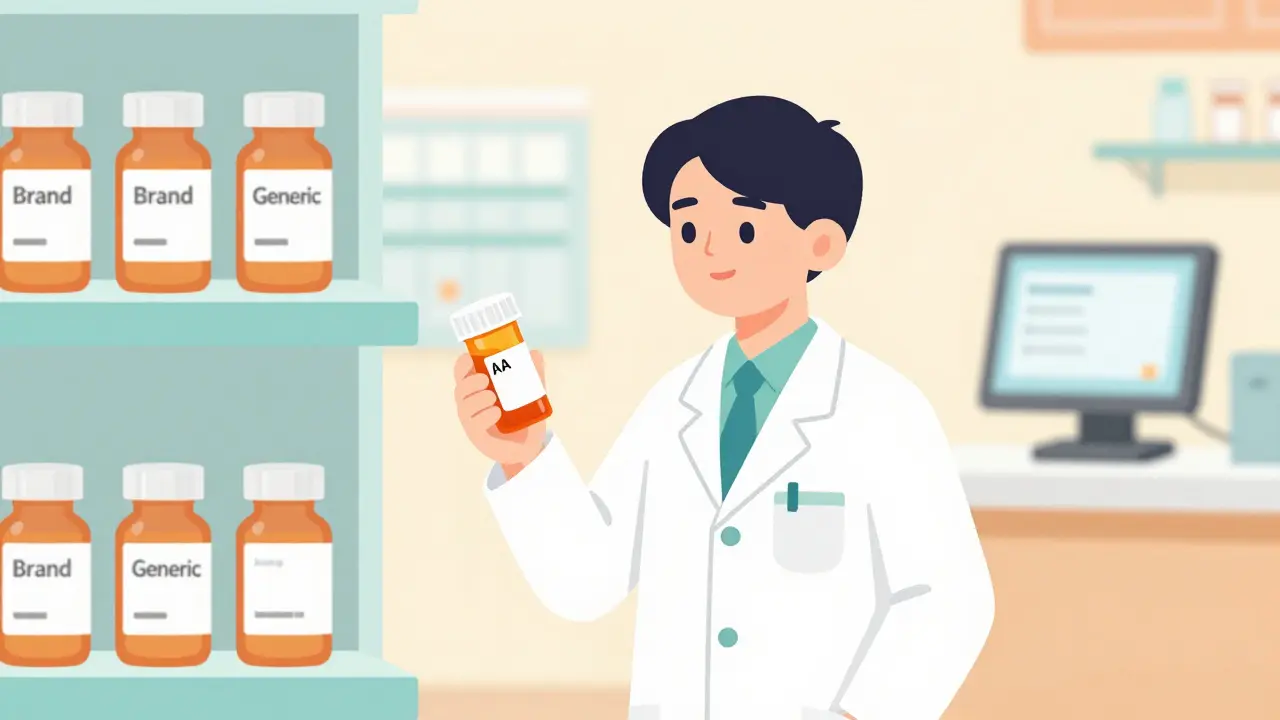
When you pick up a prescription, you might not realize that a small letter code on a government database is what decides whether you get the brand-name drug or a cheaper generic version. That code? It’s called a Therapeutic Equivalency (TE) Code. And it’s not just a technical detail-it’s the legal foundation that lets pharmacists swap one drug for another without asking your doctor again. This system exists because of a 1984 law, but today it’s more important than ever as drug costs keep climbing and generics make up nearly 90% of prescriptions filled in the U.S.
What Are Therapeutic Equivalency Codes and Why Do They Matter?
Therapeutic Equivalency Codes are assigned by the FDA to prescription drugs that have multiple versions on the market. These codes tell pharmacists and regulators whether a generic version is considered a safe and effective substitute for the brand-name drug. The system is published in the Approved Drug Products with Therapeutic Equivalence Evaluations, better known as the Orange Book. It’s updated every month and lists over 14,000 drug products with their TE ratings.
Here’s the key: just because two drugs have the same active ingredient doesn’t mean they’re interchangeable. A generic might have a different filler, coating, or release mechanism. The FDA doesn’t assume they work the same. They require hard proof-bioequivalence studies showing the generic delivers the same amount of medicine into your bloodstream at the same rate as the original. Only then does it get an ‘A’ code.
If a drug gets an ‘A’ rating, it means the FDA has determined that switching between the brand and the generic won’t change your treatment outcome. That’s why state laws allow pharmacists to substitute these drugs automatically, unless your doctor writes ‘dispense as written’ on the prescription.
The Letter Code System: A, B, and What They Really Mean
The TE code isn’t just one letter. It’s two. The first letter tells you the big picture. The second adds nuance.
- A means the product is therapeutically equivalent. It’s approved for substitution.
- B means the FDA hasn’t found enough evidence to say it’s equivalent. Substitution isn’t recommended-and in many states, it’s illegal.
Now for the second letter. It’s where things get detailed:
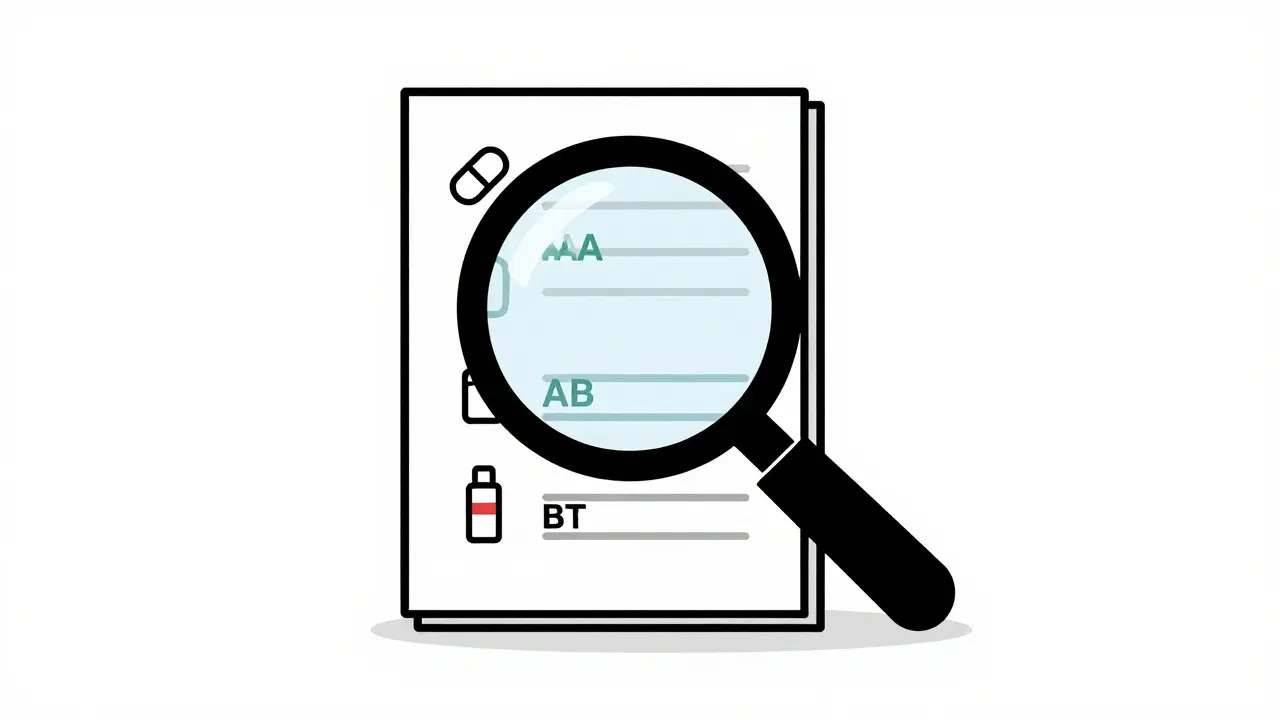
- AA: Immediate-release oral tablets or capsules. No bioequivalence issues. The gold standard.
- AB: Also equivalent, but these products had initial concerns. Later studies proved they work just as well.
- AB1, AB2, AB3, AB4: Used when multiple brand-name drugs exist as references for the same generic. Each number points to a different original product.
- BC: Extended-release tablets or capsules. Harder to test for equivalence, so these often get ‘B’ codes.
- BT: Topical creams or gels. Skin absorption varies wildly between brands, making substitution risky.
- BN: Nebulizer aerosols. Delivery systems matter here-small differences can change how much medicine reaches your lungs.
- BX: Not enough data to rate. These are often new generics or unusual formulations.
Here’s the reality: 8,742 products in the October 2023 Orange Book have an ‘A’ code. That’s 62% of all listed drugs. But 3,415 have a ‘B’ code-nearly a quarter of the list. These are mostly complex drugs: inhalers, injectables, topical creams, or extended-release pills. For these, the science of proving equivalence is still catching up.
How the Law Turns FDA Codes Into Pharmacy Rules
The FDA doesn’t force pharmacies to substitute. That power belongs to the states. But every state uses the Orange Book as the legal standard.
In California, the law says pharmacists can only substitute if the drug has an ‘A’ rating. Same in New York, Texas, and Florida. Some states require the pharmacist to notify the prescriber if they switch. Others let them swap without telling anyone-unless the patient objects.
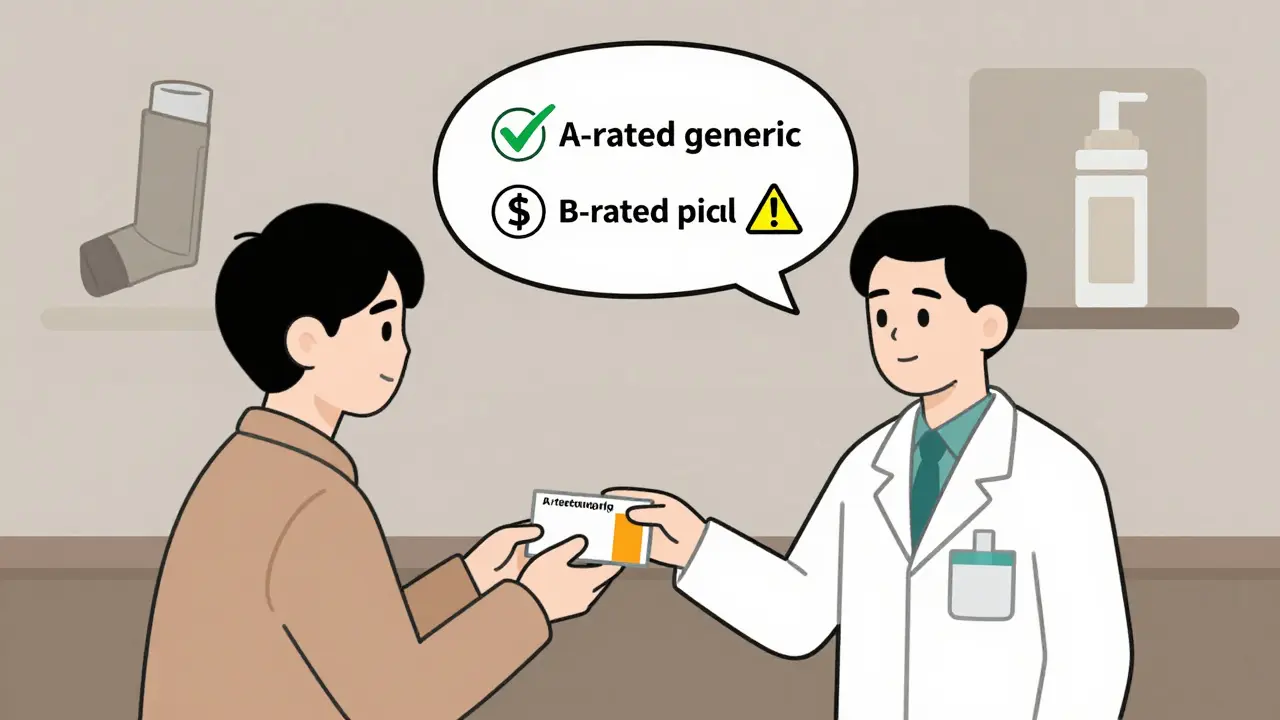
Here’s what that means in practice: if your prescription says ‘Lipitor 20 mg’ and the pharmacy has an ‘AA’-rated generic at half the price, they can give you that instead. But if the generic has a ‘BT’ code-say, a topical cream for eczema-they can’t substitute it without your doctor’s permission. Even if it’s the same active ingredient.
Why? Because for complex drugs, small differences in formulation can change how the medicine works in your body. A cream that absorbs slower might not control symptoms as well. An extended-release pill that releases too fast could cause side effects. The FDA’s TE codes exist to prevent exactly that.
Why Some Generic Drugs Still Get ‘B’ Codes
You might wonder: if a generic is approved by the FDA, why isn’t it automatically interchangeable? The answer lies in complexity.
Simple pills-like metformin or lisinopril-are easy to test. You swallow it, blood levels go up, and you can measure exactly how much gets into your system. But what about an inhaler? Or a patch? Or a gel that needs to penetrate skin layers? These don’t follow the same rules.
For inhalers (like albuterol), the particle size, spray pattern, and how deep the drug goes into your lungs all matter. Two products can have the same active ingredient but deliver different doses. The FDA is still developing reliable tests for these.
Same with topical products. A cream from one manufacturer might feel greasy. Another might absorb faster. These differences don’t show up in blood tests. They affect how patients use the drug-and whether it works.
That’s why over 68% of pharmacists say they hesitate to substitute ‘BT’-rated topical drugs, even if the FDA says they’re approved. They’ve seen patients have worse outcomes after switching.
The FDA knows this is a problem. In 2023, they launched the Complex Generic Drug Initiative to reduce the number of ‘B’ codes. They’ve cut review times for these drugs from 34 months in 2018 to 22 months in 2023. And they’ve allocated $28.7 million to develop better testing methods.
The Real-World Impact: Savings, Confusion, and Patient Safety
Therapeutic equivalency codes are one of the biggest reasons generic drugs save the U.S. healthcare system hundreds of billions each year. In 2022 alone, ‘A’-rated generics saved $298 billion. That’s 97% of all generic dispensing.
But the system isn’t perfect. A 2023 survey found that 42% of community pharmacists struggle to interpret some ‘B’ codes. Is ‘BC’ for extended-release tablets safe to swap? What about ‘BD’-a product with documented bioequivalence problems? Without clear guidance, pharmacists play it safe.
Brand-name drugmakers know this. In 2022, they filed 1,247 petitions challenging TE ratings-up 17% from the year before. Many are trying to block generics from getting ‘A’ codes, especially for complex drugs nearing patent expiration.
Patients don’t always know the difference. They might get a generic one month, then the brand the next, and wonder why they feel different. That’s why clear labeling and pharmacist counseling matter. If you’re switched to a new generic and notice side effects or reduced effectiveness, tell your pharmacist. They can check the Orange Book and see if it’s an ‘A’ or ‘B’ code.
What’s Next for Therapeutic Equivalency?
The FDA is pushing hard to bring more complex drugs into the ‘A’ category. By 2027, they aim to reduce ‘B’ code products from 24.3% to under 15%. That means more inhalers, patches, and creams will be interchangeable.
They’re also digitizing the Orange Book. Since January 2023, it’s available via API-meaning electronic health records and pharmacy systems can pull TE codes directly. No more manual lookups. That’s reducing errors and speeding up substitutions.
But the biggest change might be cultural. More doctors are learning to write ‘generic allowed’ instead of ‘brand name only.’ More pharmacists are trained to explain why a switch happened. And more patients are asking: ‘Is this the same?’
The system isn’t flawless. But it’s working. For the vast majority of drugs, the ‘A’ code means you get the same medicine at a lower price. And that’s the whole point.
Can a pharmacist substitute a generic drug without my doctor’s permission?
Yes-if the generic has an FDA therapeutic equivalency (TE) code of ‘A’ and your state allows substitution. Most states permit pharmacists to swap brand-name drugs for ‘A’-rated generics unless the prescription says ‘dispense as written’ or you object. But if the generic has a ‘B’ code, substitution is not allowed without explicit approval from your prescriber.
Are all generic drugs rated in the Orange Book?
No. Only multisource prescription drugs approved under the Hatch-Waxman Act are evaluated. Over-the-counter (OTC) medications, single-source brand drugs (505(b)(1) NDAs), and drugs without generic competitors are not assigned TE codes. Also, some complex generics with insufficient data receive a ‘BX’ rating, meaning they’re unclassified.
Why do some generics have different TE codes even if they’re the same drug?
Because TE codes are product-specific, not drug-specific. Two different manufacturers making the same drug can have different formulations-like different binders, coatings, or release mechanisms. Even small changes can affect how the drug behaves in your body. The FDA tests each version individually. One might get an ‘AA’ code, another an ‘AB,’ and a third a ‘B’ if bioequivalence isn’t proven.
Do TE codes apply to biologics or insulin?
No. TE codes only apply to small-molecule chemical drugs approved under the Hatch-Waxman Act. Biologics, including insulin, monoclonal antibodies, and vaccines, follow a different pathway under the BPCIA (Biologics Price Competition and Innovation Act). They use terms like ‘biosimilar’ and ‘interchangeable,’ not TE codes. The Orange Book does not rate these products.
How often is the Orange Book updated?
The Orange Book is updated monthly, usually on the first business day of each month. New generics, revised TE codes, and discontinued products are added or changed in each update. Pharmacists and healthcare systems rely on these monthly updates to ensure they’re using the most current substitution rules.


Ellie Stretshberry
December 27, 2025 AT 16:40So if my cream is BT rated and I switch generics and my eczema gets worse, it's not just me being dramatic? Good to know.
christian ebongue
December 28, 2025 AT 05:13Brand names pay lawyers to keep B codes alive. Pharma ain't here to save you money, sweetheart.
Joanne Smith
December 30, 2025 AT 01:00I once got a generic inhaler with a BC code. Felt like breathing through a sock for a week. My pharmacist didn't even blink. Now I always ask for the Orange Book code before they hand me anything.
jesse chen
December 31, 2025 AT 01:25It’s fascinating, really-how something as simple as a two-letter code can mean the difference between saving $200 or ending up in the ER because the cream didn’t absorb right… and yet, nobody talks about it. We just assume the system works. It’s like a silent contract between regulators, pharmacists, and patients.
Prasanthi Kontemukkala
January 1, 2026 AT 20:51As someone from India where generics are everywhere, I’m amazed at how detailed the U.S. system is. Here, we just take what’s cheapest. But this makes sense-especially for inhalers and creams. Small changes really do matter. Good job, FDA, for trying to improve.
Jody Kennedy
January 2, 2026 AT 20:01My grandma got switched to a generic insulin last year. She didn’t know it wasn’t even in the Orange Book. They told her it was ‘the same.’ She had three hypoglycemic episodes in two weeks. We switched back. No TE code for biologics? That’s a loophole waiting to hurt someone.
wendy parrales fong
January 3, 2026 AT 00:45Just read the Orange Book for the first time. It’s like a secret language only pharmacists and lawyers speak. But now I know why my pharmacist looked confused when I asked about my ‘AB3’ pill. Turns out, there are four different brand versions it could be copying. Wild.
Sarah Holmes
January 4, 2026 AT 09:34This entire system is a grotesque farce. The FDA, under political pressure, has diluted its standards to appease corporate interests. ‘A’ codes are handed out like candy to manufacturers who can afford the bioequivalence studies, while the truly complex drugs-those that need more rigorous testing-are left in bureaucratic limbo. Patients are the collateral damage in this profit-driven charade. And you call this ‘science’? It’s regulatory capture dressed in lab coats.