Most people think earwax is dirt that needs to be cleaned out. But your ears are designed to clean themselves. The real problem isn’t earwax-it’s when you try to remove it with cotton swabs, bobby pins, or those viral TikTok ear scoops. That’s when earwax turns from a natural protector into a painful blockage called earwax impaction.
What Exactly Is Earwax Impaction?
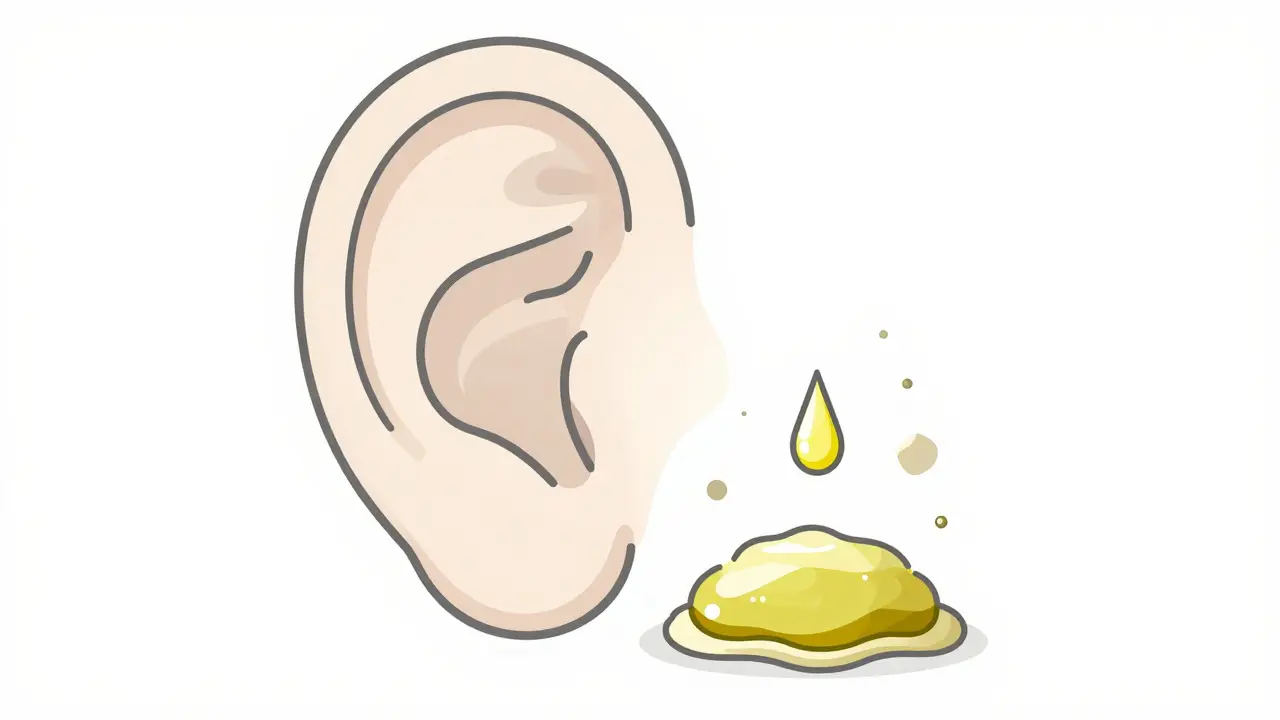
Earwax, or cerumen, isn’t gunk. It’s a natural mixture of oil, dead skin cells, and secretions that traps dust, bacteria, and tiny bugs before they reach your eardrum. In healthy ears, it slowly moves out on its own, like a conveyor belt. But when it builds up and hardens, it can block the ear canal completely. That’s impaction.It’s not rare. About 6 in every 100 people have it. For people over 65, that number jumps to 1 in 7. If you wear hearing aids, use earplugs often, or have curly ear hair, your risk goes up even higher. And here’s the kicker: most cases aren’t caused by poor hygiene. They’re caused by trying to clean your ears too much.
How Do You Know You Have a Blockage?
You don’t always feel it right away. Symptoms creep in slowly-over days or weeks. The most common signs:- Hearing sounds muffled or distant (65% of cases)
- A feeling of fullness or pressure in your ear (58%)
- Ringing in your ear (tinnitus) that comes and goes (29%)
- Dizziness or unsteadiness (18%)
- Earache or mild pain (42%)
- Itching inside the ear (33%)
- A strange cough (yes, really-7% of cases)
That cough? It’s because the nerve that runs through your ear also connects to your throat. When earwax presses on it, your brain misreads the signal as an itch in your throat. It’s weird, but it’s real.
If you notice drainage, bad odor, or sudden hearing loss, don’t wait. These could mean an infection or something more serious like a perforated eardrum.
Why Cotton Swabs Make It Worse
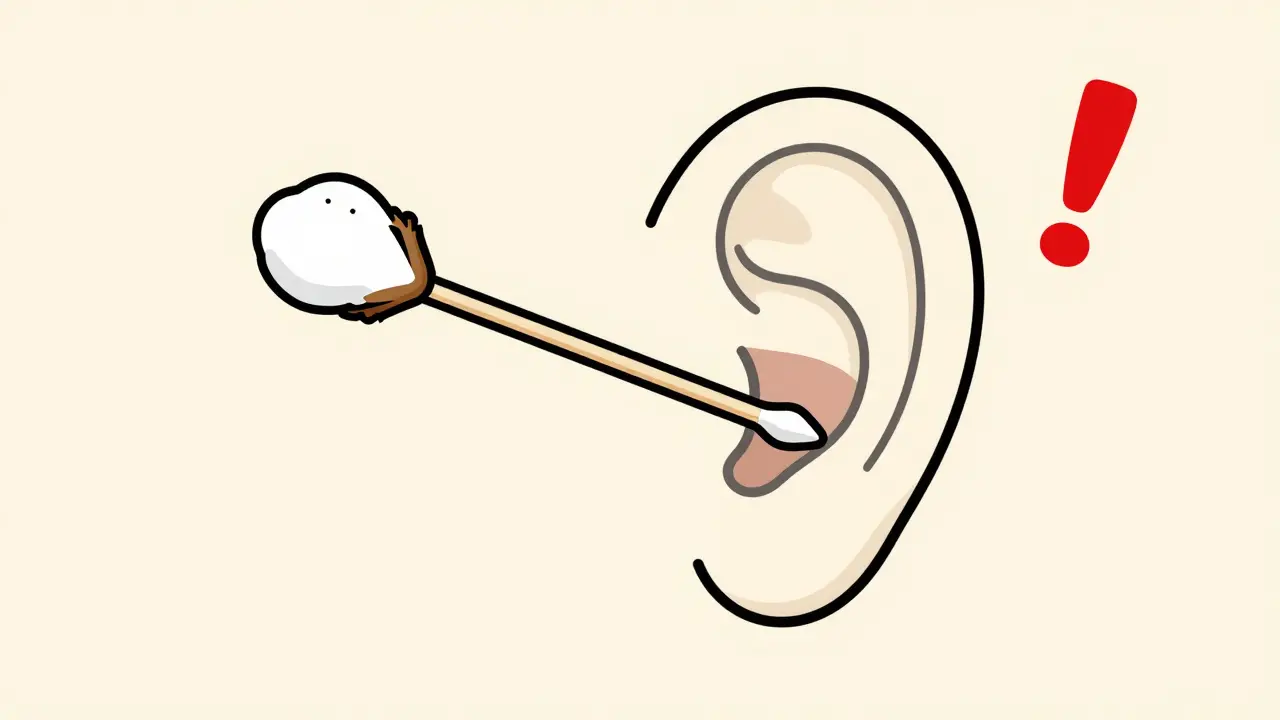
It’s the number one mistake. You stick a cotton swab in your ear to clean it. It feels good. But instead of pulling wax out, you’re pushing it deeper-like cramming a sponge into a drain. Studies show 60-70% of earwax blockages are caused by cotton swabs. The NHS calls it the most common cause of iatrogenic (doctor-caused) ear problems.And it’s not just swabs. People use hairpins, keys, toothpicks, even rolled-up paper towels. One Reddit user described trying to ‘dig out’ wax with a paperclip. Result? A ruptured eardrum and three months of vertigo. That’s not an outlier. The FDA reports over 12,500 ear injuries each year from DIY removal tools. About 3,000 of those are perforated eardrums.
There’s no safe depth for inserting anything into your ear canal. The rule of thumb? If it’s smaller than your elbow, don’t put it in.
What Doesn’t Work (And Why)
There are a lot of myths floating around. Let’s clear them up.- Ear candling: No, it doesn’t suck wax out. It’s a candle. The ‘wax’ you see in the cone after burning is just candle residue. The FDA banned it as a medical device in 2010. It’s dangerous-burns, eardrum punctures, and even fires have happened.
- Home suction devices: Those little vacuum kits you see online? They’re not regulated. They can create too much pressure and damage your eardrum. No medical organization recommends them.
- Hydrogen peroxide drops: They can help soften wax, but they also irritate the skin inside your ear. About 15% of users get painful inflammation. Use them only if your doctor says so.
And forget the ‘oil flush’ trend on TikTok. Pouring oil into your ear and then waiting? That’s not a solution. It’s a waiting game for infection.
What Actually Works: Safe Removal Methods
There are two paths: at-home softening and professional removal. One is for early signs. The other is for when it’s already stuck.At-Home Softening (For Mild Cases)
If you’ve had a feeling of fullness for a few days but no pain, try this NHS-recommended method:- Lie on your side with the affected ear facing up.
- Put 2-3 drops of olive oil, almond oil (if you’re not allergic), or mineral oil into the ear.
- Stay in that position for 5-10 minutes so the oil can soak in.
- Repeat 3-4 times a day for 3-5 days.
- After that, gently wipe the outer ear with a damp cloth. Don’t stick anything inside.
This works for about half the cases. It doesn’t remove wax-it just loosens it so your body can push it out naturally. If you don’t feel better after five days, stop. Don’t keep trying.
Professional Removal (For Stubborn Blockages)
If you have symptoms that won’t go away, or if you’ve tried oil and nothing changed, see a professional. Three methods are backed by science:- Microsuction: A tiny vacuum is used under a microscope. It’s quick, painless, and the most effective method-96% success rate. No water involved, so it’s safe even if you’ve had ear surgery.
- Ear irrigation: Warm water or saline is gently flushed into the ear. It’s 85% effective, but not for everyone. If you’ve ever had a ruptured eardrum, this is risky.
- Manual removal: An ENT specialist uses tiny tools under magnification to pick or scoop out the wax. It’s 92% effective and ideal for hard, dry wax.
Most people get relief in one visit. Recovery is immediate. Many say they feel like they’ve had a volume knob turned up in their head.
Who Should See a Doctor Right Away?
Don’t wait if you have:- History of ear surgery, tubes, or eardrum perforation
- Diabetes or a weakened immune system
- Swelling, redness, or pus coming from the ear
- Sudden hearing loss or severe dizziness
- Pain that gets worse after trying home remedies
These aren’t just ‘earwax issues.’ They could be signs of infection, cholesteatoma, or other conditions that need different treatment. A doctor will use an otoscope to look inside. That’s it. No needles. No pain. Just a quick check.
What About Hearing Aid Users?
If you wear hearing aids, you’re at higher risk. About 1 in 3 users develop impaction. Why? The device blocks the natural exit path for wax. It also traps moisture and heat, making wax harder.Tip: Clean your hearing aids daily with a dry brush. Don’t use water or alcohol near the ear canal. Visit your audiologist every 3-6 months for a check-up. Most clinics offer free wax checks for hearing aid patients.

What’s the Future of Earwax Care?
New tech is coming. In 2023, the FDA cleared the Eareto OtoSonic-a home device that uses low-frequency ultrasound to soften wax. Early results show 78% effectiveness. But it’s prescription-only, and not yet widely available.Telehealth is also changing things. A 2023 study showed doctors could accurately diagnose earwax blockage via video call 89% of the time. You can now send a selfie of your ear to a specialist and get advice without leaving home.
But the biggest threat? Social media. TikTok videos showing people digging wax out with metal tools have over 1.2 billion views. Each one is a potential emergency room visit.
Final Rule: Let Your Ears Clean Themselves
Your ears don’t need you to clean them. They’ve been doing it fine for millions of years. Wax is not a problem. Blockage is. And blockage is almost always caused by trying to fix something that wasn’t broken.If you feel something’s off-muffled hearing, pressure, ringing-don’t poke. Don’t pour. Don’t YouTube it. Use oil drops for a few days, then see a professional. It’s safer. It’s faster. And it won’t cost you your hearing.
Can earwax cause permanent hearing loss?
No, earwax impaction doesn’t cause permanent hearing loss. The hearing loss it causes is temporary and fully reversible once the blockage is removed. However, if you ignore symptoms and keep inserting objects into your ear, you risk damaging the eardrum or inner ear, which can lead to permanent damage. That’s why prompt, safe removal is so important.
Is it normal to have earwax every day?
Yes. Everyone produces earwax daily. It’s a sign your ears are working normally. You only need to worry if it builds up and blocks your ear canal. Most people never notice it-it just moves out on its own. Only about 6% of adults ever develop a true impaction.
Can I use baby oil to remove earwax?
Yes, baby oil is a safe, effective option for softening earwax at home. It’s gentle and doesn’t irritate the skin like hydrogen peroxide can. Use 2-3 drops twice a day for 3-5 days. Lie on your side, wait 10 minutes, then wipe the outer ear. Don’t pour it in and then try to flush it out-that’s not how it works.
Why does my ear feel blocked even after cleaning it?
Because you didn’t clean it-you pushed wax deeper. Cleaning with swabs doesn’t remove wax from the canal. It just compresses it against the eardrum. That’s why it feels blocked. The only way to fix it is to soften the wax with oil or have it removed professionally. Don’t try again with another swab.
How long does professional earwax removal take?
Typically 15-20 minutes per ear. Microsuction is often faster-sometimes under 10 minutes. Most people feel immediate relief. You can drive home right after. No downtime. No recovery. Just better hearing.
Are earwax removal kits from the pharmacy worth it?
The drops (like Debrox or Murine) can help soften wax, but they’re only effective about 65% of the time. They’re not a solution for a full blockage. The irrigation kits? Avoid them. They’re not controlled like professional tools and can push wax further in or cause injury. Stick to oil drops or see a professional.
Can children get earwax impaction?
Yes, especially kids who use earbuds or have narrow ear canals. But they’re less likely to use cotton swabs. If your child complains of hearing issues, ear pain, or balance problems, don’t try to clean it yourself. Take them to a pediatrician or ENT. Kids’ ears are more delicate, and improper cleaning can cause serious damage.
Will earwax come back after removal?
Yes, your ears will keep making wax. That’s normal. But if you avoid inserting anything into your ear canal, it won’t build up to dangerous levels. For most people, wax clears naturally. If you’re prone to buildup (hearing aid users, older adults), a check-up every 6-12 months is all you need.
What to Do Next
If you think you have earwax impaction:- Stop using cotton swabs or any tool in your ear.
- Try olive oil drops for 3-5 days.
- If no improvement, book an appointment with your GP or an audiologist.
- Ask about microsuction-it’s the safest, fastest option.
- Don’t wait until you’re in pain. Early treatment is easier and prevents complications.
Your ears don’t need you to fix them. They just need you to stop interfering.