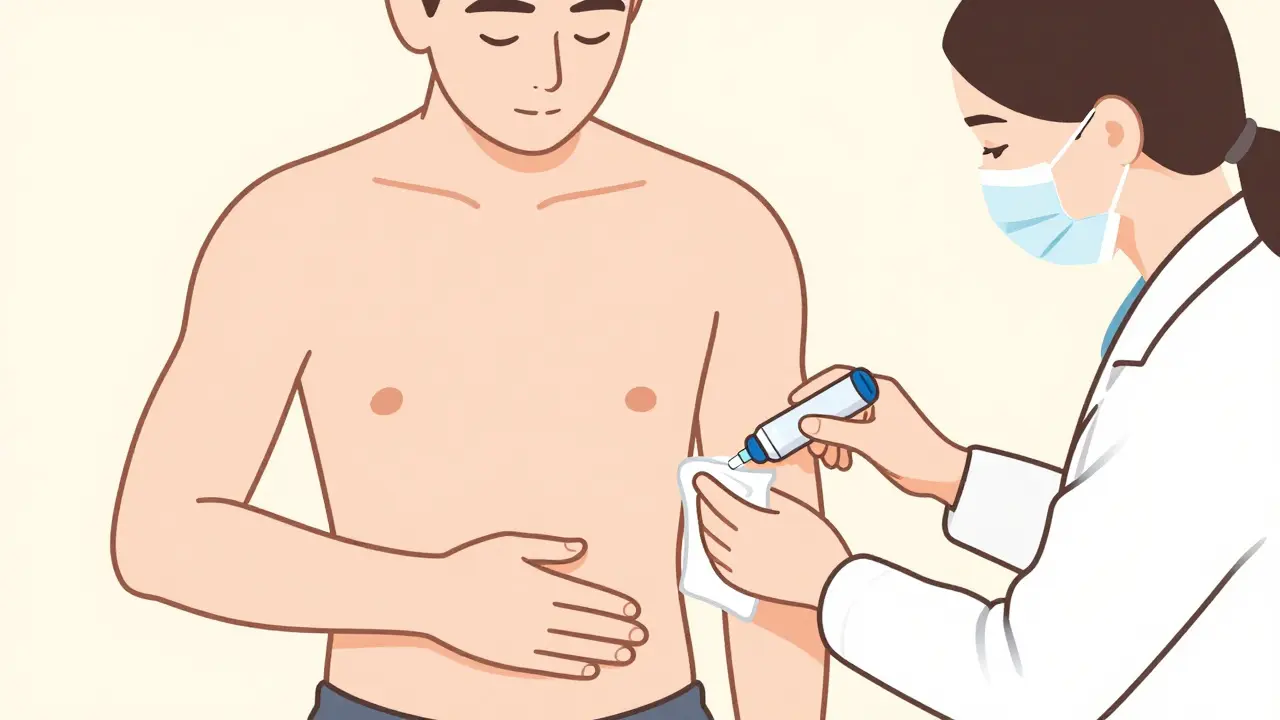
When you start a biologic therapy, you’re not just getting a new drug-you’re taking on a new responsibility. These powerful treatments, used for conditions like rheumatoid arthritis, psoriasis, and Crohn’s disease, come in pre-filled pens or syringes you’re expected to inject yourself. Sounds simple? It’s not. And skipping proper training can put you at risk-not just for treatment failure, but for serious infections.
Why Injection Training Isn’t Optional
Biologic therapies are made from living cells, not chemicals. That means they’re delicate, expensive, and highly effective-but also unforgiving if injected wrong. The FDA requires manufacturers to include training materials with every self-injectable biologic. But here’s the problem: most patients get just one 30-minute session, if that. A 2022 study found that 91.7% of patients said they received training. But when you dig deeper, nearly one in three got nothing more than verbal instructions. Some didn’t even get that. And without hands-on practice, you’re guessing your way through your first injection. That’s how mistakes happen. Poor technique doesn’t just mean you miss the target. It means you might not fully deliver the dose. It means you might contaminate the needle. And worst of all, it means you might introduce bacteria into your skin, leading to an infection that could land you in the hospital.The Three-Step Training Model Most Patients Miss
Effective training isn’t about watching a video or reading a pamphlet. It’s about doing. And it needs three parts:- Tell - The provider explains the steps: where to inject, how to prepare the skin, how to activate the device.
- Show - The provider demonstrates using a training device (no needle, no medicine). This isn’t optional. It’s essential.
- Try/Do - You practice. With supervision. While they watch. And correct you.
Infection Risks: It’s Not Just About Clean Hands
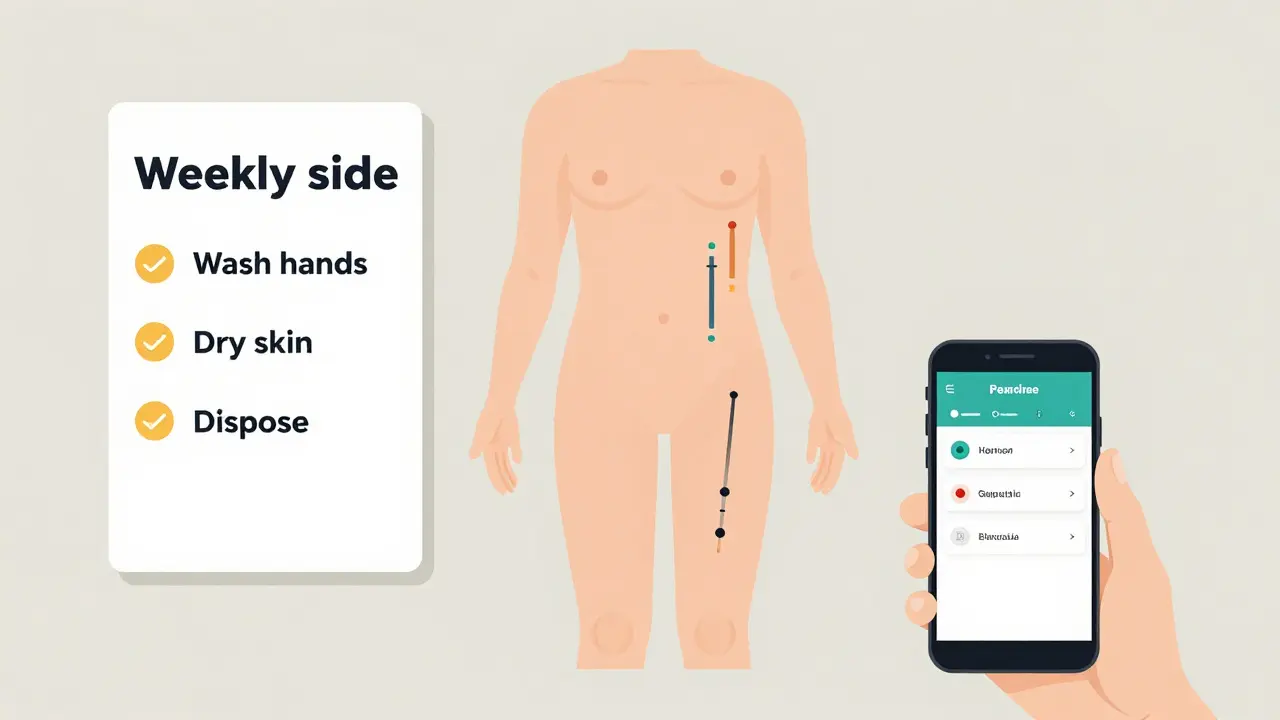
The CDC says improper injection technique increases infection risk by 37%. That’s not a small number. It’s not a guess. It’s based on real-world data from outpatient clinics. Most infections from biologic injections are skin and soft tissue infections. They start small-a red spot, a little warmth, maybe a bump. But because biologics suppress your immune system, those tiny infections can spread fast. You might think it’s just irritation. It’s not. Here’s what you need to do to lower your risk:- Wash your hands for at least 20 seconds with soap and water. No hand sanitizer substitute.
- Choose the right spot: abdomen (2 inches from the belly button), thigh, or upper arm. Rotate sites. Never inject in the same spot twice within a week.
- Let the skin dry after cleaning with alcohol. Don’t wipe it off. Don’t fan it. Just wait. Wet skin = higher infection risk.
- Never reuse needles or syringes. Even if it looks clean. Even if you’re out of medication.
- Dispose of sharps properly. Use a FDA-approved sharps container. Don’t throw needles in the trash.
Why One Training Session Isn’t Enough
You wouldn’t expect to learn to drive a car in 30 minutes and then be trusted on the highway. Why do we expect you to master a biologic injection that way? Studies show that spreading training over multiple short sessions boosts retention by 62%. One session? You forget half the steps by day three. Two sessions? You’re solid. Three? You’re confident. And here’s the kicker: most errors happen during the first 10 home injections. That’s when anxiety hits. That’s when distractions creep in-kids, noise, stress. That’s when you rush. That’s when you skip the alcohol wipe. That’s when you inject too fast. Follow-up visits aren’t a luxury. They’re a safety net. Patients who had three or more supervised practice sessions kept 94% of their technique correct after six months. Those with only one session? Only 52% got it right.The Hidden Problem: Anxiety and Rituals
It’s not just about the mechanics. It’s about the fear. A 2021 study found that 68% of technique errors happen because of anxiety-not lack of skill. You’re scared of the needle. You’re scared of doing it wrong. You’re scared of pain. So you fumble. You rush. You skip steps. The solution? Rituals. Successful patients don’t just inject. They have a routine. They pick the same time. Same chair. Same music. Same order: wash hands, open kit, wipe skin, prepare device, breathe, inject, dispose. One patient in a study said: “I play the same song every time. It’s my signal that it’s time. I don’t rush. I don’t panic.” That’s not fluff. That’s science. Rituals reduce anxiety. And lower anxiety means fewer mistakes. If your training didn’t include this part, ask for it. Write down your own routine. Stick to it.What You Should Ask Your Provider
Don’t wait for them to offer. Ask. Here’s what to say:- “Can I practice with a training device today?”
- “Will you watch me do it before I leave?”
- “Can I get a video or app to review at home?”
- “What should I do if I see redness or swelling after an injection?”
- “Can I schedule a follow-up in two weeks to go over it again?”
What’s Changing in 2026
The FDA released new draft guidance in March 2023 pushing for standardized training. More manufacturers are building digital platforms-like Adbry’s portal-with video demos, virtual coaching, and injection trackers. Pharmacists are stepping in, too. They’re trained in counseling. They can walk you through the process, answer questions, and even send reminders. Ask if your pharmacy offers biologic training support. And here’s the biggest shift: training is no longer seen as a one-time event. It’s part of ongoing care. Just like checking your blood pressure or taking your pills, injection safety is a habit.What to Do If You’re Already Injecting
If you’ve been injecting for months and never got proper training:- Call your doctor’s office. Say: “I’d like to schedule a training review.”
- Watch a video from a trusted source-FDA, CDC, or your drug manufacturer.
- Practice with a training device. Many pharmacies give them out for free.
- Start tracking your injection sites. Use a notebook or app. Note any redness, pain, or swelling.
- Set a reminder to check your skin before every injection.
Signs of Infection: Don’t Wait
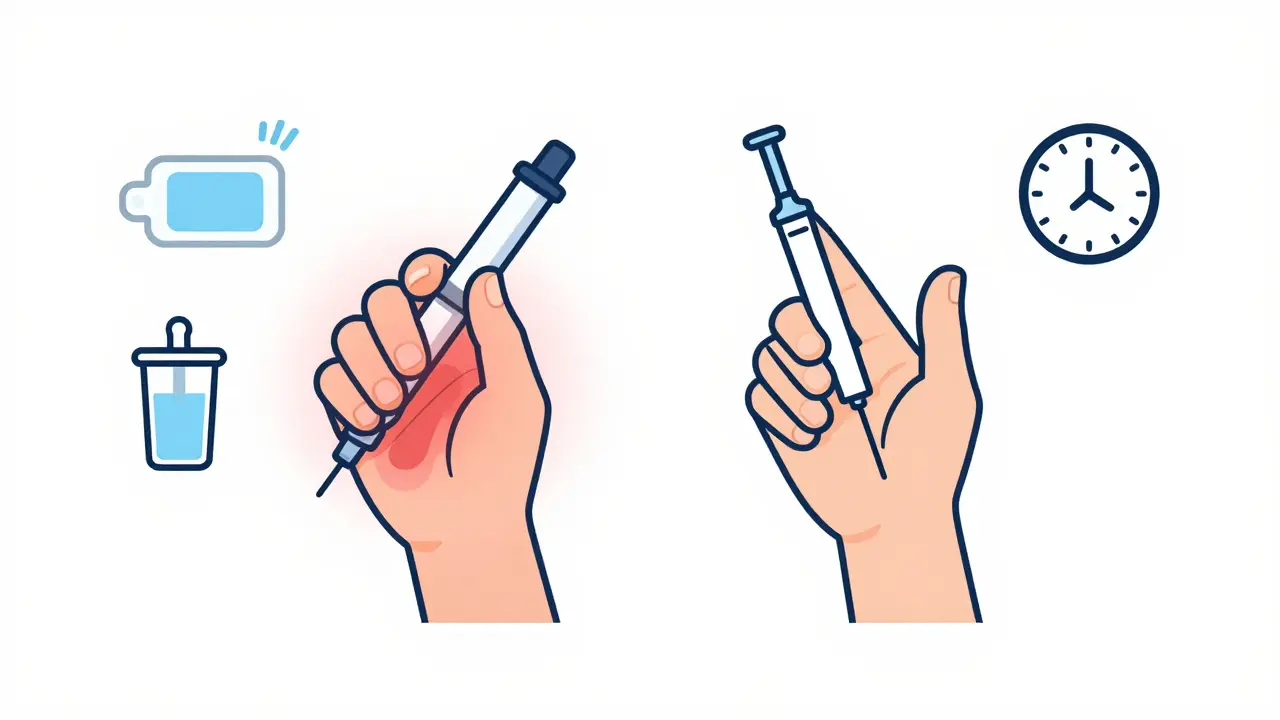
If you notice any of these after an injection, call your provider immediately:- Redness larger than 2 inches across
- Warmth or heat radiating from the site
- Swelling that gets worse after 24 hours
- Pus or drainage
- Fever above 100.4°F (38°C)
- Chills or feeling unwell
Biologic therapies change lives. But they only work if you use them safely. Training isn’t a box to check. It’s your shield. And you deserve to be fully prepared.
Do I really need training if I’ve used insulin before?
Yes. Even if you’ve used insulin, biologic injections are different. The devices look similar but often have different activation mechanisms, safety features, and injection depths. What worked for insulin might not be safe or effective for your biologic. Always get device-specific training.
Can I use hand sanitizer instead of soap and water?
No. The CDC recommends washing with soap and water for at least 20 seconds before injecting. Hand sanitizer doesn’t remove dirt, oils, or bacteria as effectively as soap and water. If soap and water aren’t available, use sanitizer as a backup-but clean with soap as soon as you can.
What if I accidentally inject into a vein?
It’s extremely rare with subcutaneous biologic injections because the needles are short and designed for fat tissue, not veins. But if you see blood in the syringe or pen after inserting, stop. Remove the device, apply pressure, and call your provider. Do not inject the medication. You’ll need to use a new dose and get guidance on proper technique.
Is it okay to inject in the same spot if I rotate weekly?
No. Even if you rotate weekly, you need to space injections at least 1 inch apart within the same general area. Reusing the exact same spot too often can cause tissue damage, scarring, and increased infection risk. Use a chart or app to track your injection sites.
Can I travel with my biologic and still stay safe?
Yes. Always carry your medication and training device in your carry-on. Bring alcohol wipes, a sharps container, and a printed copy of your injection instructions. If you’re injecting in a hotel room, clean the surface with disinfectant first. Never inject in the bathroom-too many germs. Choose a clean, quiet space like the bed or a table.
What if I feel dizzy or faint during an injection?
This is common, especially early on. Sit down before you start. Take slow breaths. Hold onto something steady. If you feel lightheaded, stop and wait. Don’t try to finish while standing. Many patients find it helps to look away from the needle or focus on a calming thought. If it happens often, talk to your provider about anxiety support.
Are there apps or tools to help me track my injections?
Yes. Many drug manufacturers offer free apps with injection reminders, site trackers, and video tutorials. For example, Adbry and Humira have apps that let you log your injections and see which sites you’ve used. You can also use a simple calendar app or notebook. Tracking helps you avoid repeats and spot problems early.



Brendan F. Cochran
January 3, 2026 AT 15:05ps: if you’re worried about infections, maybe don’t live in a trailer park with 3 cats and no soap.
jigisha Patel
January 5, 2026 AT 09:46Ethan Purser
January 6, 2026 AT 11:25They call it therapy. I call it surrender. I don’t inject to live. I inject because I’m too afraid to die. And if that’s not a tragedy, I don’t know what is. 😭
Doreen Pachificus
January 6, 2026 AT 22:03Cassie Tynan
January 7, 2026 AT 02:00Rory Corrigan
January 8, 2026 AT 15:40Connor Hale
January 9, 2026 AT 23:11Charlotte N
January 10, 2026 AT 07:41Catherine HARDY
January 10, 2026 AT 17:52melissa cucic
January 11, 2026 AT 12:30