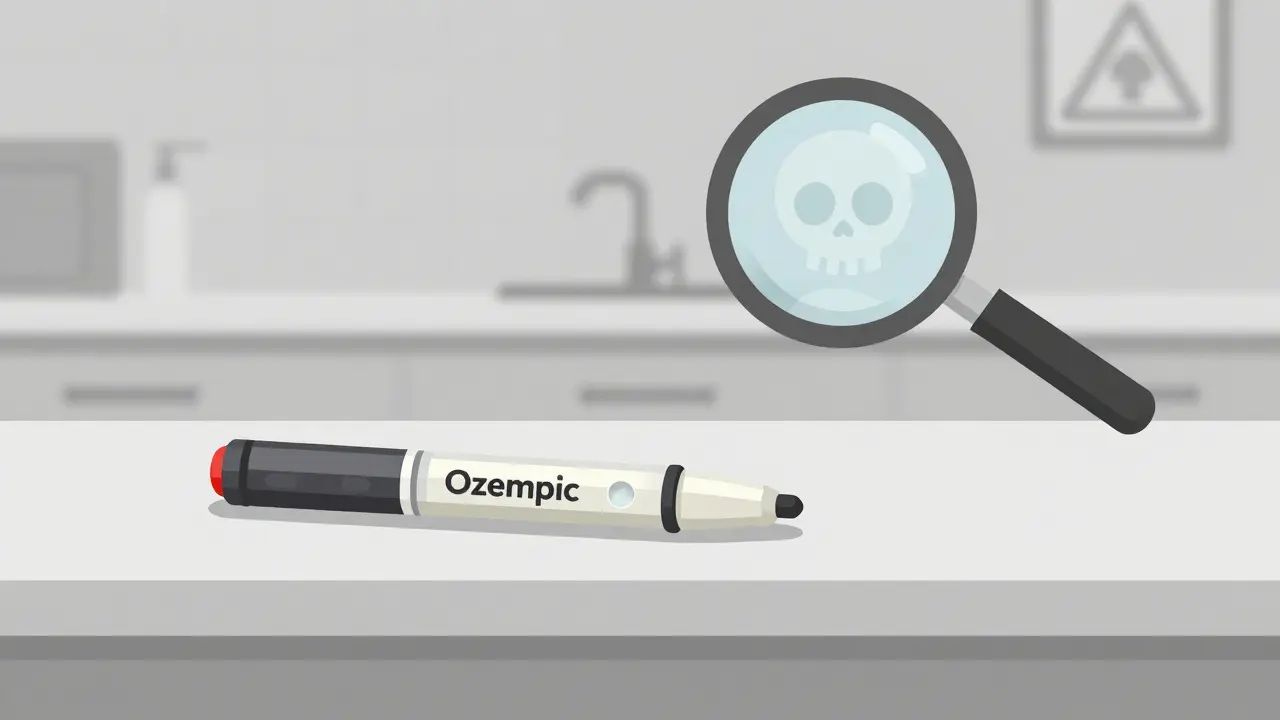
Every year, millions of fake pills, injectables, and vials end up in the hands of people who think they’re getting real medicine. These aren’t cheap knockoffs of designer handbags-they’re life-or-death fakes. In 2025, law enforcement around the world seized over 50 million doses of counterfeit medications in a single global operation. That’s not a number from a movie. It’s real. And behind every dose is a person who might have taken it thinking it would help them live longer, lose weight, or manage a chronic illness. Instead, they could be poisoning themselves.
What’s Being Counterfeited-and Why
Counterfeiters aren’t just copying aspirin. They’re targeting the most expensive, in-demand drugs. The biggest targets in 2024 and 2025 were weight-loss medications like Ozempic, Wegovy, and the newer ones like Retatrutide and Tirzepatide. Why? Because they sell for hundreds of dollars a pen, and the demand is skyrocketing. People are desperate. Criminals know that. But it’s not just weight-loss drugs. Fake Botox, dermal fillers, HIV treatments, and erectile dysfunction pills are flooding the market. In August 2025, U.S. Customs seized over 16,700 counterfeit pre-filled injectable pens. Most came from Hong Kong, China, Colombia, and South Korea. These weren’t just poorly made. Many had no active ingredient at all. Others contained industrial solvents, heavy metals, or even fentanyl-sometimes mixed in deliberately. The fake HIV meds are especially dangerous. One U.S. Department of Justice case uncovered a network that sold $3 million in counterfeit HIV drugs through online marketplaces. Patients taking these fakes aren’t just wasting money-they’re risking drug resistance, disease progression, and death.Where the Fake Drugs Come From
Most counterfeit medications don’t show up in pharmacies. They’re sold online. The National Association of Boards of Pharmacy found that nearly half (47%) of fake GLP-1 drugs are sold on platforms like Etsy, where sellers disguise them as "cosmetic injectables" or "wellness products." Another 31% come straight from illegal manufacturers, often in China or India. The rest arrive through foreign websites that look legitimate but aren’t licensed anywhere. What’s worse, counterfeiters are getting smarter. Instead of shipping fully assembled products, they’re sending parts-vials, labels, pens, packaging-separately to be assembled near the final market. This makes it harder for customs to catch them. In some cases, fake packaging is so good that even trained pharmacists struggle to tell the difference without lab testing. The OECD reported that 65% of counterfeit medicines arrive in small parcels through the mail. That’s because customs scanners focus on big shipments. Tiny packages slip through. And once they’re in the country, they’re sold through social media DMs, Instagram ads, or Telegram channels with no oversight.Real Cases That Shook the System
In Cincinnati, U.S. Customs seized $3.5 million worth of fake drugs in one shipment in August 2025. In Iowa, a local pharmacy was fined $25,000 for selling counterfeit Ozempic-yes, a pharmacy. Not a shady website. A licensed business. In South Africa, police in Gqeberha found R2.2 million ($118,000) in fake insulin, antibiotics, and cancer drugs hidden in a warehouse. In Nigeria, NAFDAC shut down an illegal herbal medicine factory in Kaduna that was mixing unknown chemicals into pills labeled as "natural HIV cures." These aren’t isolated incidents. They’re symptoms of a broken system. The U.S. Food and Drug Administration’s MedWatch database saw a 43% jump in adverse events linked to suspected counterfeit drugs in the first half of 2025. Most were from weight-loss and cosmetic injectables. One Reddit post from a nurse described treating a patient who developed severe cellulitis after injecting a fake dermal filler. The product looked authentic. The packaging had the right logo, batch number, and hologram. But inside? Unknown particulates. The patient needed surgery.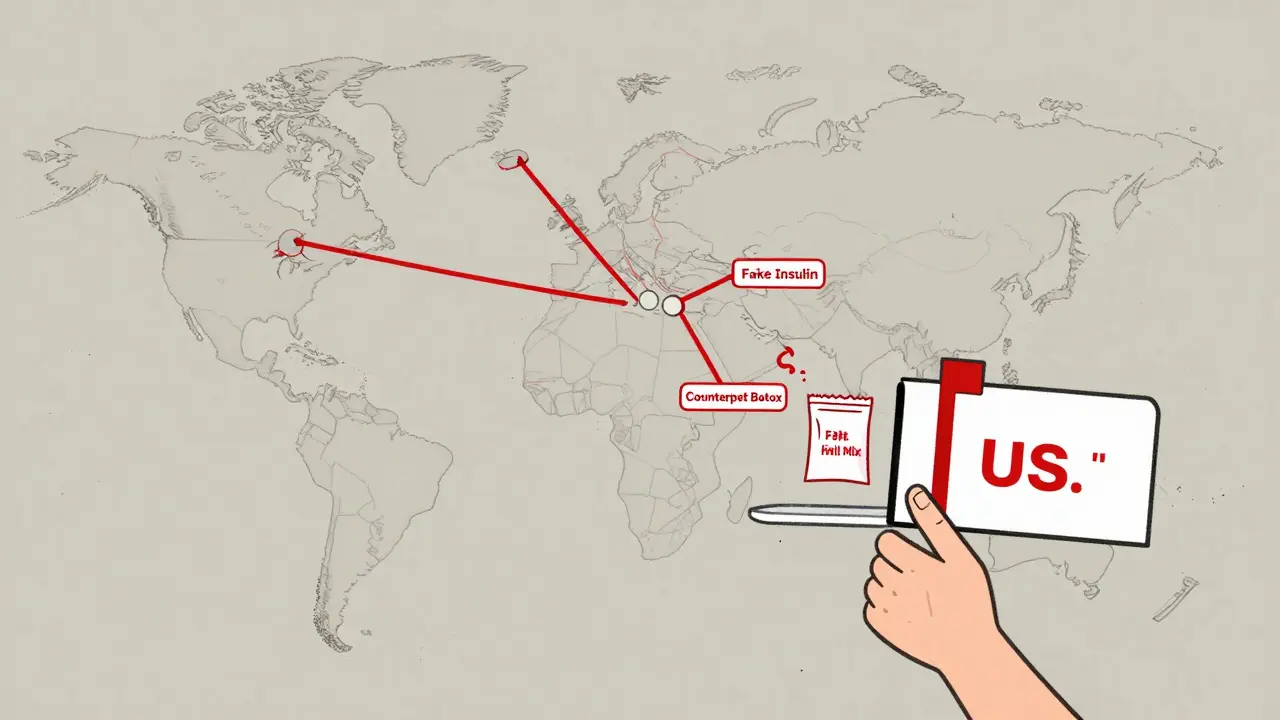
The Enforcement Gap
Here’s the uncomfortable truth: U.S. Customs can’t seize every fake drug. They can only act if the product is a true counterfeit-meaning it’s falsely labeled, falsely branded, or falsely manufactured. If a drug is real but imported illegally (say, a prescription drug bought from Canada without a U.S. license), customs can’t touch it, even if it’s unsafe. That’s a loophole Dr. Carmen Catizone of the NABP called out in 2025: "CBP cannot seize medications that violate only the FDCA-they must be counterfeit to be seized." That means thousands of dangerous, unapproved drugs slip through every day. And because the legal definition of "counterfeit" is so narrow, regulators are playing catch-up. Pharmaceutical companies like Pfizer have trained over 180 countries on how to spot fakes-checking for mismatched fonts, wrong cap colors, missing security seals. But criminals adapt. They now use QR codes that link to fake verification sites. They replicate holograms with laser printers. They copy digital batch tracking systems. It’s a high-stakes arms race.What’s Being Done-and What’s Not
Interpol’s Pangea XVI operation in 2025 was the largest global crackdown ever. Ninety countries participated. Over 700 arrests. 123 criminal groups dismantled. 13,000 illegal websites shut down. It was impressive. But the scale of the problem is bigger. Some companies are fighting back with technology. Blockchain tracking systems, used in pilot programs by major drugmakers, reduced counterfeit incidents by 37%. These systems let patients scan a code to verify the drug’s journey from factory to pharmacy. But these tools aren’t mandatory. Only a handful of companies use them. Most don’t. Governments are slow to act. The U.S. government’s next review of "notorious markets" for counterfeiting isn’t until fall 2025. India and China remain the top sources of counterfeit pharmaceuticals entering the U.S., yet trade policies haven’t changed significantly. Meanwhile, the OECD warns that without stronger international cooperation and tech upgrades, counterfeit medication incidents could rise 15-20% per year.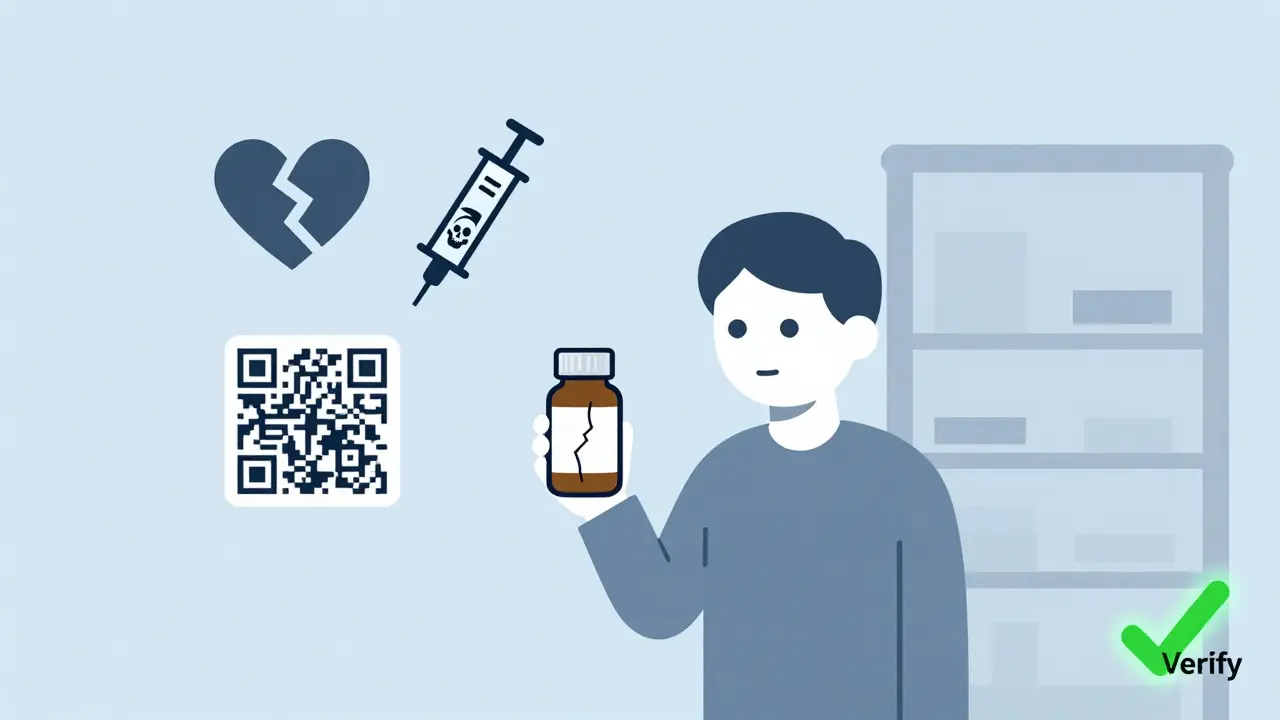
What You Can Do
If you’re buying medication online, you’re playing Russian roulette. Here’s how to protect yourself:- Only buy from pharmacies licensed by your country’s regulatory body. In the U.S., look for the VIPPS seal on websites.
- Never buy injectables from Etsy, Instagram, or Telegram. No legitimate provider sells them there.
- Check the packaging. Mismatched fonts, blurry logos, or missing batch numbers are red flags.
- If the price seems too good to be true, it is. A real Ozempic pen costs over $1,000. If you’re paying $150, it’s fake.
- Report suspicious products. Contact your national drug agency. In the U.S., use the FDA’s MedWatch system.
The Bigger Picture
Counterfeit drugs aren’t just a crime. They’re a public health emergency. They erode trust in medicine. They kill. In 2024, over 2,400 different medicines were identified as counterfeit across 153 countries. That includes treatments for cancer, diabetes, epilepsy, and heart disease. The criminals behind this aren’t petty thieves. They’re organized networks with ties to human trafficking, drug cartels, and money laundering. They don’t care if you live or die. They care about profit. The good news? Awareness is growing. More pharmacists are being trained. More customs officers are equipped with handheld scanners that can detect fake ingredients. More patients are asking questions. But progress won’t come from one big raid. It’ll come from vigilance-from patients, from doctors, from regulators, from tech companies, and from governments that finally treat this like the crisis it is.How to Spot a Fake Medication
You don’t need a lab to spot a fake. Look for these signs:- Packaging looks slightly off-colors, fonts, or spacing don’t match the real product.
- There’s no batch number, expiration date, or serial code.
- The pill or liquid looks different-wrong color, texture, or smell.
- The medication comes without a prescription or comes with a "doctor’s note" that looks copied.
- The website has poor grammar, no physical address, or no contact info.
How common are counterfeit medications?
Extremely common. In 2024, law enforcement documented over 6,400 incidents of counterfeit drug seizures across 136 countries. Over 2,400 different medicines were identified as fake, including cancer drugs, insulin, and HIV treatments. The World Health Organization estimates that 1 in 10 medical products in low- and middle-income countries is counterfeit-and the problem is growing in wealthy nations too.
Can fake drugs be deadly?
Absolutely. Fake medications have caused deaths worldwide. Some contain no active ingredient, so a diabetic taking fake insulin can go into ketoacidosis. Others contain toxic substances like fentanyl, heavy metals, or industrial solvents. In 2025, the FDA reported a 43% spike in adverse events tied to suspected counterfeit drugs, mostly from weight-loss and cosmetic injectables.
Where do most counterfeit drugs come from?
China, India, and Hong Kong are the top sources of counterfeit pharmaceuticals seized at the U.S. border. In 2024, India became the leading country of origin for fake drugs entering the U.S., surpassing China. Most shipments arrive via small mail parcels from unregulated factories. Criminals use these countries because they have weak enforcement and large manufacturing capacity.
Are online pharmacies safe?
Only if they’re verified. Look for the VIPPS seal (Verified Internet Pharmacy Practice Sites) in the U.S., or equivalent national certifications. Over 96% of online pharmacies are not legitimate. Sites on Etsy, Instagram, or Telegram selling injectables or prescription pills are almost always fake. Never buy from them.
What should I do if I think I’ve taken a fake drug?
Stop taking it immediately. Contact your doctor or pharmacist. Report it to your national drug agency-in the U.S., use the FDA’s MedWatch system. Save the packaging and any receipts. If you feel unwell, seek medical help right away. Even if you feel fine, a fake drug can have delayed effects, especially if it contains toxins.

Arlene Mathison
January 20, 2026 AT 13:06Okay but have you seen the Instagram ads for ‘Ozempic glow’? Like, it’s literally just a guy in a bathrobe holding a pen with glitter on it. People are paying $80 for that and thinking it’s real. I had a cousin take one and ended up in the ER with a heart palpitation. No joke. 🤯
Emily Leigh
January 22, 2026 AT 04:50So… let me get this straight. The FDA can’t seize fake drugs unless they’re ‘counterfeit’? But if it’s just illegally imported but real? That’s fine? 😑 Like, what even is the point of regulations if the loophole is this big? Someone’s getting paid to write these laws and it ain’t me.
clifford hoang
January 24, 2026 AT 04:27They’re not just selling fake meds… they’re selling FOMO. 🧠💥 You think this is about profit? Nah. It’s about control. The pharma giants *want* you scared. They *want* you buying $1,000 pens so you’ll never question the system. And the government? They’re in on it. Think about it: if everyone knew how easy it is to fake a QR code… what then? The whole ‘trust the label’ illusion collapses. And then… what? We all just start growing our own insulin in the basement? 😏
They’re not stopping the fakes because they’re *profitable* fakes. The real drugs? They’re overpriced. The fakes? They’re the cheap alternative. But if you get sick from the fake? Well… that’s just collateral damage for the corporate machine. 🤖💉
And don’t even get me started on the holograms. I saw a video of someone using a $10 laser printer to replicate the Pfizer seal. It looked better than the real thing. The real thing? The font’s off by 0.2mm. That’s it. That’s the whole security system.
They’re not fighting criminals. They’re fighting *us*. Because if we stop buying… the whole pyramid crumbles. And who’s gonna pay for your diabetes meds then? Huh? 😏
Next thing you know, your thyroid med is being shipped in a ‘wellness candle’ box. And you’ll thank them for it. 🕯️🩺
Carolyn Rose Meszaros
January 25, 2026 AT 07:26I just posted about this on my Instagram story and got 47 DMs from people asking where to buy ‘the real thing’… 😔 I had to reply to everyone with the VIPPS link and a crying emoji. It’s terrifying how many people just Google ‘cheap Ozempic’ and click the first result. We need a public service campaign. Like, ‘Don’t be the person who dies for a $150 pen.’
Greg Robertson
January 25, 2026 AT 23:32My aunt bought some ‘generic’ Botox off Etsy last year. Said it was ‘for her skin.’ She’s fine now, but she had a rash for three weeks. She still doesn’t believe it was fake. I showed her the FDA warning page and she just shrugged and said, ‘Well, it looked real.’
I don’t know what to do anymore.
Paul Barnes
January 26, 2026 AT 12:47Correction: the OECD report states that 65% of counterfeit medicines arrive via small parcels-not ‘most.’ Also, the 43% spike in adverse events was specifically for suspected counterfeits reported to MedWatch, not confirmed. Precision matters.
Nadia Watson
January 26, 2026 AT 13:48As someone who works in global health, I’ve seen the toll this takes in rural clinics. In Ghana, a woman died because her HIV meds were laced with chalk and sugar. She trusted the label. She trusted the packaging. She trusted the system. We don’t have scanners. We don’t have labs. We have hope. And hope doesn’t stop fentanyl.
Technology like blockchain helps-but only if it’s mandated. Not optional. Not a ‘nice-to-have.’ We can’t wait for the next death to act. We need international binding standards. Not just ‘awareness campaigns.’
And yes-this is a human rights issue. Access to safe medicine is not a privilege. It’s a right. And right now, the market is stealing it.
thomas wall
January 27, 2026 AT 09:23It is profoundly dismaying that society has reduced pharmaceuticals to a commodity of dubious origin, purchased through social media like a pair of discounted sneakers. The moral decay is palpable. One does not gamble with one’s life for the sake of convenience or cost-saving. The very notion that a person would trust a Telegram bot over a licensed physician is not merely irresponsible-it is an abdication of personal dignity.
And yet, we continue to enable it. We enable it with our silence. We enable it with our clicks. We enable it with our refusal to demand accountability from those who profit from this chaos.
It is not enough to ‘report suspicious products.’ We must shame them. We must expose them. We must burn the platforms that host them to the ground.
Courtney Carra
January 28, 2026 AT 10:15Think about it: if you could print a fake hologram with a $50 printer, and the government can’t tell the difference… then what’s the point of any certification? It’s all theater. The whole system is a magic trick. The pharma companies are the magicians. The regulators are the audience. And we’re the ones holding the rabbit. 🐇
Also, if the FDA can’t seize unapproved but real drugs… then why are we even pretending this is about safety? It’s about patents. It’s about control. It’s about money. Always money.