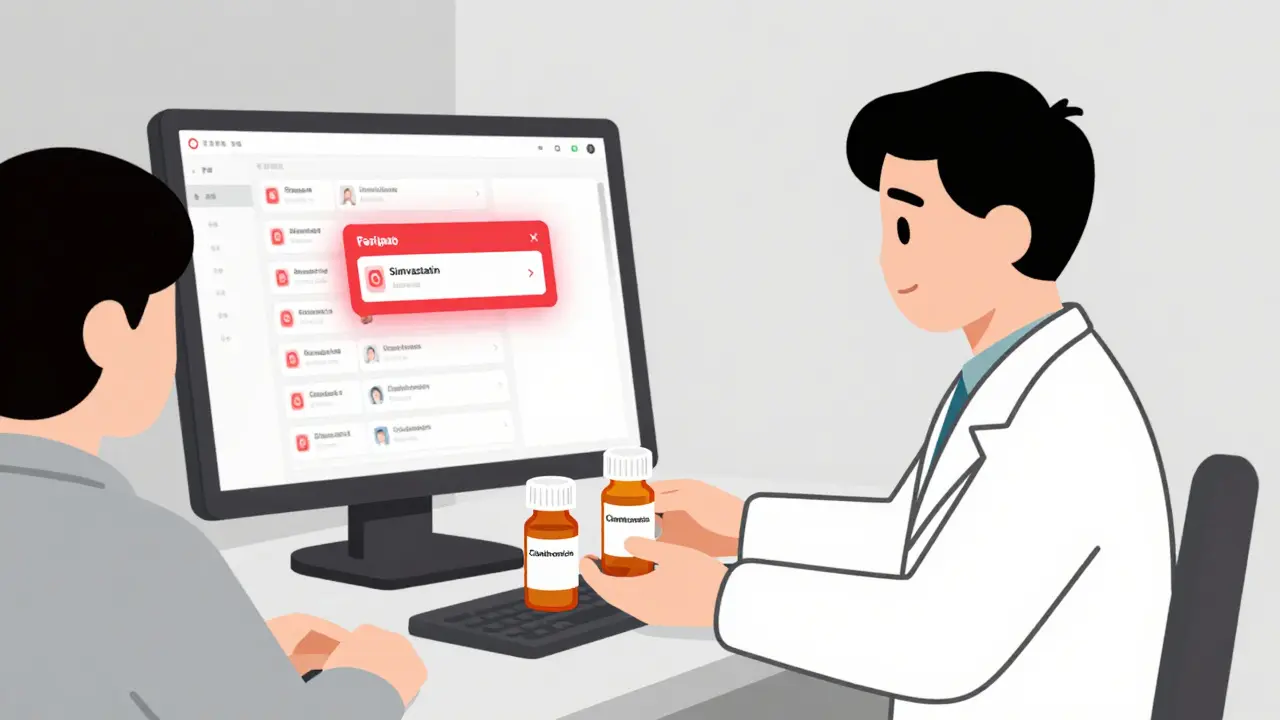
Drug Interaction Checker
Check Your Medications for Dangerous Interactions
This tool identifies high-risk drug combinations mentioned in the article. Always consult your pharmacist or doctor for medical advice.
How This Works
The tool checks for combinations identified in the article as "silent killers" that require immediate pharmacist intervention.
When dangerous combinations are detected, the tool shows:
- CRITICAL Immediate stop required - risk of organ failure
- DANGEROUS High risk - requires pharmacist consultation
Every year, tens of thousands of people in the U.S. end up in the hospital because of drug interactions that should have been caught. Not because they took too much, or because they didn’t follow instructions - but because two perfectly legal prescriptions, when taken together, created a silent, deadly cocktail. And too often, the person meant to catch it - the pharmacist - didn’t see it coming.
Why Some Drug Combos Are Silent Killers
Not all drug interactions are the same. Some cause mild nausea or dizziness. Others? They shut down your kidneys, stop your heart, or trigger uncontrolled bleeding. The most dangerous ones happen when one drug blocks or speeds up how your body breaks down another. This isn’t guesswork - it’s chemistry, and it’s predictable.Take simvastatin (a common cholesterol drug) and clarithromycin (an antibiotic). Alone, they’re safe. Together? They can cause rhabdomyolysis - a condition where muscle tissue breaks down so badly that it floods your bloodstream with toxins, leading to kidney failure. Studies show creatine kinase levels can spike over 10,000 U/L in severe cases. That’s 100 times higher than normal. And it can happen fast - within days.
Another deadly combo: colchicine (for gout) and verapamil (for high blood pressure). Verapamil blocks the transporter that removes colchicine from your body. The result? Colchicine builds up to toxic levels. Symptoms? Severe vomiting, diarrhea, muscle weakness, and sometimes death. The FDA has issued warnings about this one for years. Yet, it still happens.
The 5 Red Flags Every Pharmacist Must Flag
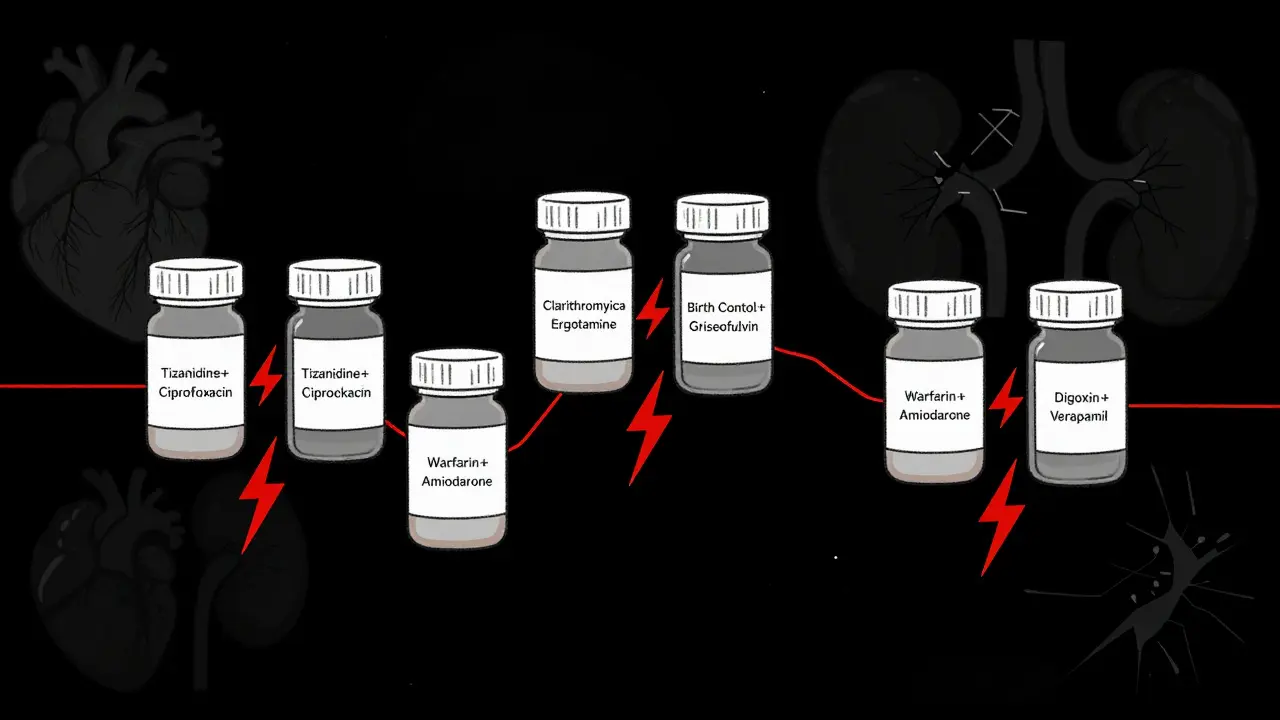
Based on real-world investigations and clinical data, here are five combinations that should trigger an immediate pharmacist intervention - not a pop-up alert you click through without thinking.- Tizanidine + Ciprofloxacin: Tizanidine relaxes muscles. Ciprofloxacin blocks the enzyme (CYP1A2) that clears it. Result? Extreme drowsiness, fainting, even loss of consciousness. This isn’t a "be careful" warning - it’s a "don’t mix" rule.
- Clarithromycin + Ergotamine: Ergotamine treats migraines. Clarithromycin stops its breakdown. The result? Ergotism - a condition that causes blood vessels to constrict so tightly that fingers, toes, or even limbs can turn black and die. This combo has killed people.
- Norgestimate/ethinyl estradiol (birth control) + Griseofulvin (antifungal): Griseofulvin speeds up how fast your liver breaks down estrogen. Birth control fails. Pregnancy rates jump to over 30%. And if pregnancy happens? Risk of birth defects increases. This interaction is well-documented - yet still slips through.
- Warfarin + Amiodarone: Warfarin thins blood. Amiodarone (used for irregular heartbeat) blocks its metabolism. Bleeding risk spikes. Doctors often cut warfarin doses by 30-50% when starting amiodarone - but if the pharmacist doesn’t catch it, the patient could bleed internally without warning.
- Digoxin + Verapamil: Verapamil reduces how fast digoxin leaves your body. Serum levels can rise 60-75%. Result? Dangerous slow heart rate, heart block, or sudden cardiac arrest. Monitoring is required - but only if someone checks.
Why Pharmacists Miss These Warnings
You might think pharmacies have computers that catch everything. They don’t. Not really.A 2016 investigation by the Chicago Tribune sent undercover testers to 255 pharmacies across Chicago with prescriptions for these five deadly combos. The result? 52% of pharmacies failed to warn patients. Not because pharmacists were careless - because they were overwhelmed.
Computer systems flood pharmacists with alerts. Dozens per shift. Most are low-risk - "avoid alcohol with this pill," or "take with food." These aren’t life-or-death. But the system doesn’t know the difference. So pharmacists start ignoring them. This is called "alert fatigue." And it’s killing people.
At one Evanston CVS, a pharmacist dispensed clarithromycin and simvastatin together - no warning. The patient was 72. He didn’t know he was at risk of kidney failure. He just wanted his antibiotics and cholesterol pill.
Who’s Most at Risk?
It’s not just older adults - though they’re the most vulnerable. People over 65 take an average of 4.5 prescription drugs daily. That’s not unusual. That’s normal. But with each added pill, the risk grows exponentially.Children, pregnant women, and those with liver or kidney disease are also at higher risk. Why? Their bodies don’t process drugs the same way. A dose that’s safe for a healthy 30-year-old can be toxic for someone with reduced kidney function.
And it’s not just about quantity. It’s about combinations. A 70-year-old on warfarin, amiodarone, and simvastatin? That’s a triple threat. Each drug affects the others. The system doesn’t always see the full picture - especially if the patient gets prescriptions from different doctors.
What’s Being Done - And What’s Not
After the Tribune report, major chains like Walgreens and CVS promised change. Some updated their systems. Some trained staff. Some even added mandatory pharmacist verification for high-risk combos.At 12 major health systems, Professor John Horn’s team redesigned alert systems to filter out low-risk warnings. They kept only the dangerous ones. Result? Alerts dropped by 78%. But critical interactions caught? Jumped from 48% to 89%.
That’s the solution: smarter alerts, not more alerts.
But here’s the problem: 30% of community pharmacies still don’t have systems that can do this. Many still use outdated software that throws up every possible interaction - no matter how small. And pharmacists? They’re rushed. The average prescription takes 2.3 minutes to fill in chain pharmacies. That’s not enough time to review a patient’s full medication list.
What You Can Do
You can’t control the pharmacy’s system. But you can control what you do.- Bring a full list - every prescription, OTC pill, supplement, and herbal remedy - to every pharmacy visit. Don’t assume they know what you’re taking.
- Ask directly: "Are there any dangerous interactions between these?" Don’t wait for them to tell you. Say it out loud.
- Know your high-risk meds: If you’re on warfarin, digoxin, statins, or blood pressure meds, know which antibiotics or antifungals can cause trouble.
- Use one pharmacy: If you get prescriptions from multiple doctors, use one pharmacy for all of them. That way, they can see the full picture.
- Speak up if something feels off: Unusual dizziness, muscle pain, dark urine, or unexplained bruising? Call your pharmacist. Don’t wait for your next appointment.
The Bigger Picture
This isn’t just about one bad combo or one negligent pharmacist. It’s about a system built for volume, not safety. The U.S. pharmacy industry is worth $476 billion. But patient safety is still an afterthought.Every year, 1.3 million people visit the ER because of drug interactions. 350,000 are hospitalized. Half a million preventable injuries. $528 billion in costs.
And it’s getting worse. By 2030, adverse drug events could rise 27% as more people take more drugs. AI tools are being tested to predict interactions based on your full health profile - not just two pills. That’s promising. But until pharmacists have time, better tools, and fewer distractions, people will keep getting hurt.
Medication safety isn’t a tech problem. It’s a human problem. And it starts with asking the right questions - and refusing to accept "it’s fine" as an answer.
What are the most dangerous drug combinations I should ask my pharmacist about?
The most dangerous combinations include simvastatin with clarithromycin (risk of muscle breakdown and kidney failure), colchicine with verapamil (toxic buildup leading to organ failure), tizanidine with ciprofloxacin (risk of fainting), clarithromycin with ergotamine (can cause tissue death), and birth control with griseofulvin (risk of pregnancy and birth defects). Warfarin with amiodarone and digoxin with verapamil are also high-risk. Always ask specifically about these if you’re prescribed any of these drugs.
Why do pharmacists sometimes miss dangerous drug interactions?
Pharmacists often face "alert fatigue" - their computer systems generate dozens of warnings per shift, most of which are low-risk (like "take with food"). Over time, they start ignoring alerts, even critical ones. Many pharmacies still use outdated software that doesn’t prioritize life-threatening interactions. Without customized systems that filter out noise, even the best pharmacist can miss a deadly combo.
Are over-the-counter meds and supplements safe to mix with prescriptions?
No. Supplements like St. John’s wort can reduce the effectiveness of birth control and antidepressants. Garlic, ginkgo, and ginger can increase bleeding risk when taken with warfarin. Even common OTC painkillers like ibuprofen can raise blood pressure or harm kidneys when combined with certain heart or kidney meds. Always tell your pharmacist about everything you take - even if you think it’s "natural" or "harmless."
Can I trust my pharmacist to catch all dangerous interactions?
You can trust them to try - but don’t rely on them to catch everything. A 2016 study found that nearly half of pharmacies missed life-threatening interactions. Pharmacists are overworked, under-supported, and often using flawed systems. Your job is to be your own advocate: bring a full list, ask direct questions, and speak up if something feels wrong.
What should I do if I think I’m having a bad drug reaction?
Stop taking the medication immediately and call your pharmacist or doctor. If you have severe symptoms - chest pain, trouble breathing, dark urine, unexplained bruising, muscle weakness, or confusion - go to the ER. Don’t wait. Many fatal reactions happen because people assume the side effect is "just normal." It’s not. Trust your body. It’s giving you a warning.

Skye Kooyman
January 27, 2026 AT 19:12My grandma took simvastatin and clarithromycin together and ended up in the ICU. No one warned her. She just trusted the system. Now I carry a laminated card with all my meds everywhere.
Kipper Pickens
January 29, 2026 AT 16:16The pharmacovigilance infrastructure in the U.S. is fundamentally misaligned with clinical risk stratification. CYP450 enzyme inhibition kinetics are well-characterized, yet alert thresholds remain binary and unweighted. This is systemic cognitive load mismanagement at scale - not individual pharmacist negligence.
Peter Sharplin
January 30, 2026 AT 02:53I’ve been a pharmacist for 18 years. We’re not lazy. We’re drowning. I had 47 alerts in one shift yesterday. Three were actually dangerous. The rest? "Don’t drink grapefruit juice with this." We’ve learned to scroll. It’s not that we don’t care - it’s that we’re trained to survive the firehose.
When we finally get a system that filters by severity - not just by mechanism - things change. I’ve seen it. But most pharmacies still run on software from 2008. We need funding. We need time. We need to stop blaming the people on the front lines.
James Nicoll
January 31, 2026 AT 16:16So let me get this straight - we’ve got AI that can predict if you’ll like a rom-com, but we can’t build a system that tells a pharmacist "this combo will kill your patient" without making it one of 50 pop-ups about coffee and aspirin? Classic America. We optimize for profit, not survival.
Next up: automated toaster that screams "YOU’RE GOING TO DIE IF YOU USE THIS BREAD WITH THAT BUTTER" but only after you’ve already eaten three slices.
John Wippler
February 2, 2026 AT 00:04Look - I’m not a doctor, but I’ve sat across from people who’ve lost their parents to this exact thing. It’s not about being paranoid. It’s about being prepared. Your body doesn’t care if your meds were prescribed by different doctors. It just reacts. And it doesn’t ask for permission.
I started carrying a folded paper with every pill I take - brand, dose, why I take it. I hand it to every pharmacist. Sometimes they sigh. Sometimes they thank me. But every time? I sleep better knowing I didn’t leave my safety to a computer that’s been trained to ignore me.
And yeah - I know about the 2.3-minute rule. I’ve waited in line. I’ve seen the rush. But if you’re on warfarin and amiodarone? That’s not a queue. That’s a countdown. Don’t wait for them to catch it. Catch it yourself.
We’re taught to trust the system. But the system wasn’t built for people. It was built for volume. And right now? Volume is winning.
So ask. Bring the list. Say it out loud. Even if they roll their eyes. Even if they’re tired. Even if they’ve heard it a hundred times. Your life isn’t a statistic. It’s yours. And no algorithm gets to decide if you live or die.
shivam utkresth
February 2, 2026 AT 14:13Bro, in India we don’t even have proper pharmacy records half the time. I saw a guy get prescribed amiodarone and simvastatin at a roadside clinic - no lab, no history, just a scribble on a napkin. He survived. Lucky bastard.
But here’s the thing - we’re not better. We’re just less regulated. In the U.S., you’ve got the tech, the data, the knowledge. You just don’t have the will to use it right. It’s not about the system failing. It’s about the system being designed to fail quietly.
My cousin’s aunt died from colchicine + verapamil. No one knew. No one asked. Just another "natural death" on the death certificate.
Stop waiting for the pharmacy to save you. Save yourself. Write it down. Say it out loud. Make them look at it. They’re humans too - but they’re drowning. Don’t let them sink alone.
Uche Okoro
February 4, 2026 AT 06:45It is imperative to acknowledge that the pharmacokinetic interactions delineated herein are mediated predominantly by cytochrome P450 isoenzyme inhibition, particularly CYP3A4 and CYP1A2, which are responsible for the metabolic clearance of statins, macrolides, and calcium channel blockers. The resultant elevation in plasma concentrations exceeds therapeutic thresholds, precipitating myotoxicity, nephrotoxicity, and cardiotoxicity. This is not anecdotal - it is pharmacodynamically deterministic.
Moreover, the absence of pharmacogenomic screening in community pharmacy practice exacerbates interindividual variability in drug metabolism, rendering standardized alerts insufficient. Precision medicine must be integrated into dispensing workflows - not as an add-on, but as a mandatory protocol.
Furthermore, the economic disincentives for independent pharmacies to upgrade to AI-driven CDS platforms are structural and systemic. Regulatory mandates coupled with reimbursement reform are the only viable pathways to systemic change.
Aurelie L.
February 6, 2026 AT 04:43My mom died from this. No one said a word.