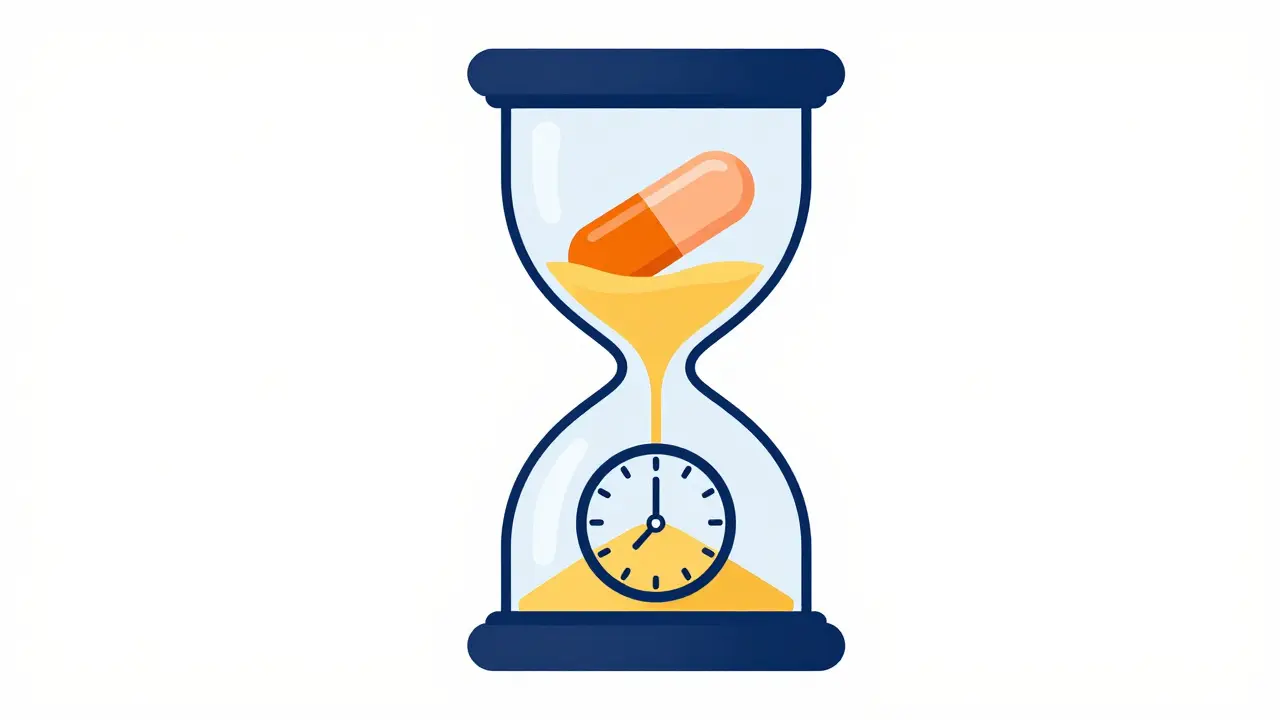
Bringing a new drug to market is a massive gamble. By the time a company finishes clinical trials and gets the green light from the FDA, a huge chunk of their 20-year patent life has already vanished. If you've spent eight years in development, you've effectively lost 40% of your protected window before selling a single pill. This is where patent term restoration is a legal mechanism that allows patent holders to recoup time lost during the regulatory review process for pharmaceuticals and medical devices . Without it, the financial risk of innovation would be too high for most companies to bear.
The Foundation of the Hatch-Waxman Act
The whole system is built on the Hatch-Waxman Act is a 1984 law designed to balance the need for new drug innovation with the public's need for affordable generic alternatives . It essentially created a deal: innovator companies get to extend their patents to make up for the time the government spent reviewing their application, but in exchange, the path for generic drugs to enter the market was streamlined.
It's not just for human medicine. In 1988, the framework expanded to include animal drug products. Today, the FDA is the U.S. Food and Drug Administration, which oversees the regulatory review period used to calculate patent extensions processes roughly 150 to 200 of these applications every year. For most biotech and pharma firms, this isn't just a legal "bonus"-it's a critical part of their business model to ensure a return on investment.
How the Restoration Period is Calculated
You don't just get a flat extension. The math is specific, and the USPTO doesn't hand out years without a strict formula. The maximum extension you can get is 5 years, but there are hard ceilings you need to know about.
The calculation generally follows this logic: Half of the testing phase (the time from when you first submit an Investigational New Drug application to when you submit the New Drug Application) plus the entire approval phase (the time from NDA submission to FDA approval).
However, there is a catch: the total patent life cannot exceed 14 years from the date the drug was approved. If you're dealing with a patent issued before 1984, you're capped at a 2-year extension. Also, you can only extend one patent per product. If you have five different patents covering one drug, you have to pick the one that gives you the best strategic advantage.
| Mechanism | Purpose | Max Duration | Trigger |
|---|---|---|---|
| Patent Term Restoration (PTR) | Regulatory review delays | 5 Years | FDA Approval |
| Patent Term Adjustment (PTA) | USPTO prosecution delays | Variable | Patent Grant |
| Data Exclusivity (NCE) | Protection of clinical data | 5 Years | New Chemical Entity |
| Orphan Drug Exclusivity | Rare disease incentives | 7 Years | Orphan Designation |

The High Stakes of Due Diligence
One of the biggest headaches for IP lawyers is the "due diligence" requirement. The government won't give you time back if they think you dragged your feet during the clinical trials. If you spent six months failing to recruit patients for a study, the FDA can subtract that time from your restoration period.
This creates a massive opening for competitors. Generic companies often file "due diligence petitions" to argue that the innovator wasn't working hard enough, hoping to shrink the extension and move their own launch date up. In fact, about 73% of approved extensions face some kind of third-party challenge. If your documentation is sloppy, a planned 14-month extension can easily be slashed to just a couple of months.
Strategic Pitfalls and Implementation
Applying for restoration is a race against the clock. You have a strict 60-day window after FDA approval to submit your application. Miss that deadline, and you've just thrown away millions in potential revenue. Industry data shows that nearly 40% of denied applications happen simply because the company missed this window.
Another common mistake is picking the wrong patent. Since you can only extend one, you have to analyze which patent provides the widest protection for the approved use of the drug. If you extend a patent that covers a broad chemical structure but the FDA only approved the drug for one specific niche use, your extended protection only applies to that approved use, not the whole patent scope.
To avoid these errors, many firms now use specialized software like the Patexis PTR Calculator. When you're dealing with a drug that might generate billions, guessing the math isn't an option.

The Economic Impact of Extended Exclusivity
Why does this matter so much? Because the numbers are staggering. Research indicates that patent restoration can increase the net present value of a drug's development by 11-15%. For the top 100 selling drugs, roughly 87% utilize this mechanism to keep generics off the shelf for an extra few years.
But this comes with a social cost. The Congressional Budget Office has estimated that these extensions cost Medicare billions annually because they delay the arrival of cheaper generic versions. This has led to a growing political push to limit extensions, especially for high-cost drugs used by millions of seniors. Despite the pressure, the industry argues that without these extensions, the return on investment for risky new research would drop significantly, potentially stalling the development of life-saving cures.
What is the difference between PTR and PTA?
PTR (Patent Term Restoration) compensates for time lost during the FDA's regulatory review process after a patent is filed. PTA (Patent Term Adjustment) compensates for delays caused by the USPTO during the actual patent application and granting process. One is about the drug's approval; the other is about the patent's processing.
Can I extend multiple patents for one drug?
No. Under 35 U.S.C. § 156(d)(1), only one patent can be extended per product. If your drug is covered by multiple patents, you must strategically select the single most valuable one to apply for restoration.
What happens if I miss the 60-day filing window?
If you fail to submit the application to the FDA within 60 days of the product's approval, you generally lose the right to seek patent term restoration for that product. This is one of the most common reasons for application denial.
Does restoration cover every use of the patented invention?
No. The protection during the extended period is limited to the specific use that the FDA approved. If the patent covers ten different uses but the FDA only approved one, the extension only protects that one approved use.
How long is the maximum extension?
The absolute maximum extension is 5 years. However, the total remaining patent term cannot exceed 14 years from the date of FDA approval.
Next Steps for IP Strategy
If you are managing a portfolio of regulated products, your first move should be a gap analysis. Compare your current patent expiration dates against your projected FDA approval timelines. If you see a significant overlap where the drug will be approved late in the patent's life, start documenting your clinical trial milestones now to defend against future due diligence challenges.
For those in the generic space, monitor the Federal Register. When the FDA publishes its regulatory review period calculation, you have a 60-day window to request revisions. This is your best opportunity to challenge the extension and accelerate your own market entry.


Srikanth Makineni
April 9, 2026 AT 09:17math is too strict man
Brady Davis
April 10, 2026 AT 01:40Oh sure, because nothing says "innovation" like spending millions to hire a team of lawyers to exploit a loophole for an extra few months of monopoly pricing. Truly heartwarming stuff. I'm sure the people who can't afford their meds are just thrilled by this strategic masterclass in maximizing net present value. Just absolutely shocking that companies want to hoard cash. Who could have possibly predicted this scenario?
It is just so inspiring to see how the system is designed to help the richest companies get even richer while everyone else just prays for a generic to hit the market before they go bankrupt. Simply brilliant.
Jay Vernon
April 10, 2026 AT 11:08This is a lot of hard stuff to read! 😵 But thanks for sharing. 👍
Windy Phillips
April 11, 2026 AT 19:57It is truly fascinating... and slightly tragic... how some people believe this system is "fair"!!! The level of corporate greed is simply breathtaking... isn't it? Imagine thinking a 60-day window is the only thing standing between a company and billions in profits... it's almost comical... if it weren't so depressing... 🙄
Timothy Burroughs
April 13, 2026 AT 19:44USA keeps the best IP laws for a reason we lead the world in biotech because we protect the money and the inventions unlike other places that just steal everything. If you cant handle the 60 day window you dont deserve the money. Its survival of the fittest in the American market and that is why we win
Jitesh Mohun
April 15, 2026 AT 06:10stop complaining about the money and look at the logic. if you dont protect the investment nobody builds the drugs. you want cheap meds but you dont want the R&D risk. pick one. the hatch-waxman deal is the only way this works so stop pretending there is a better way without killing innovation
Ruth Swansburg
April 16, 2026 AT 05:14The strategic planning involved here is impressive. It truly highlights the intersection of law and science. Keep sharing these insights!
Dhriti Chhabra
April 16, 2026 AT 13:23It is perhaps beneficial to consider the ethical implications of these extensions. While the legal framework is clear, the balance between corporate profitability and public health remains a delicate matter that requires our utmost consideration and diplomatic approach to resolve.
Nikhil Bhatia
April 16, 2026 AT 19:01too long didnt read basically just says lawyers make money