Workplace Medication Safety Risk Assessor
Safety Checklist
Section 1: Personal Medication & Impairment
Check if you take any of the following medications that may affect cognitive or physical performance.
Section 2: Hazardous Drug Exposure
Select the controls currently in place at your workplace for handling hazardous drugs (e.g., chemotherapy).
Complete the checklist to see your risk profile.
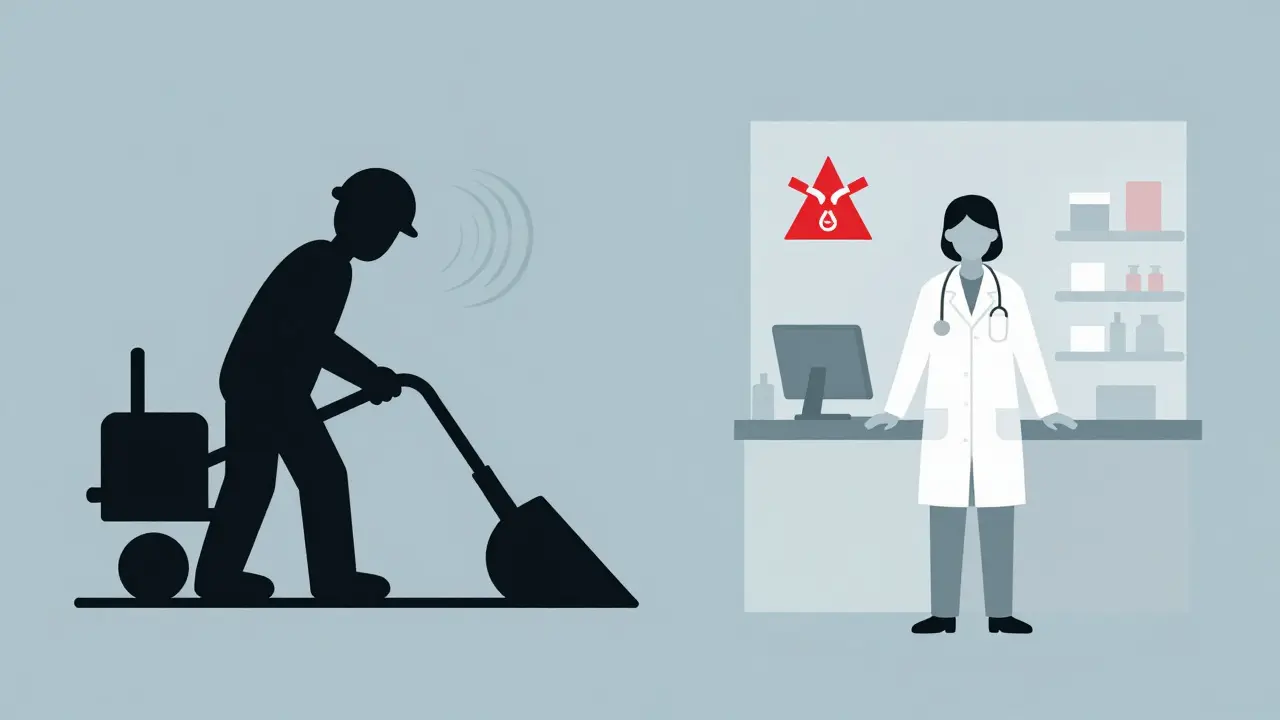
Imagine starting your shift with a prescription opioid for back pain or preparing chemotherapy drugs in a hospital pharmacy. One scenario risks impairing your ability to operate machinery safely; the other exposes you to carcinogens that could harm your long-term health. These are not hypothetical edge cases-they represent two distinct but critical sides of occupational medication safety, which involves managing both the performance impacts of medications workers take and the physical dangers of handling hazardous substances at work.
The stakes are high. According to data from the National Institute for Occupational Safety and Health (NIOSH), workers taking prescription opioids face a 2.1 times higher risk of workplace injuries compared to those who do not. Meanwhile, healthcare workers handling antineoplastic agents face a 3.4 times higher risk of developing certain cancers. Understanding these dual risks is essential for protecting yourself and your colleagues.
Understanding Medication-Induced Impairment
When we talk about safety at work, we often think of slippery floors or faulty equipment. But one of the most significant variables is the human element-specifically, how medications affect cognitive and physical performance. This isn't just about illegal substances; it heavily involves legal prescriptions.
Opioids and benzodiazepines are the primary culprits here. A 2018 study by NIOSH found that 18.7% of U.S. workers with musculoskeletal disorders were prescribed opioids, while 7.2% of workers experiencing workplace stress used benzodiazepines. The danger spikes when these classes are combined. Research published in the Journal of Occupational and Environmental Medicine in 2017 revealed that using both opioids and benzodiazepines increases the risk of falls by 84%. For jobs involving heights, heavy machinery, or driving, this statistic is terrifying.
Dr. Laura Welch, Medical Director of the Center for Construction Research and Training, testified before the Senate Committee on Health, Education, Labor, and Pensions in March 2022, noting that combined use of these drugs is associated with 2.7 times higher disability rates. The economic impact is also severe, with healthcare costs per worker rising by 38% annually. If you are taking these medications, it is crucial to understand their side effects-drowsiness, slowed reaction times, and impaired judgment-and discuss potential accommodations with your employer or doctor.
Hazardous Drug Exposure in Healthcare Settings
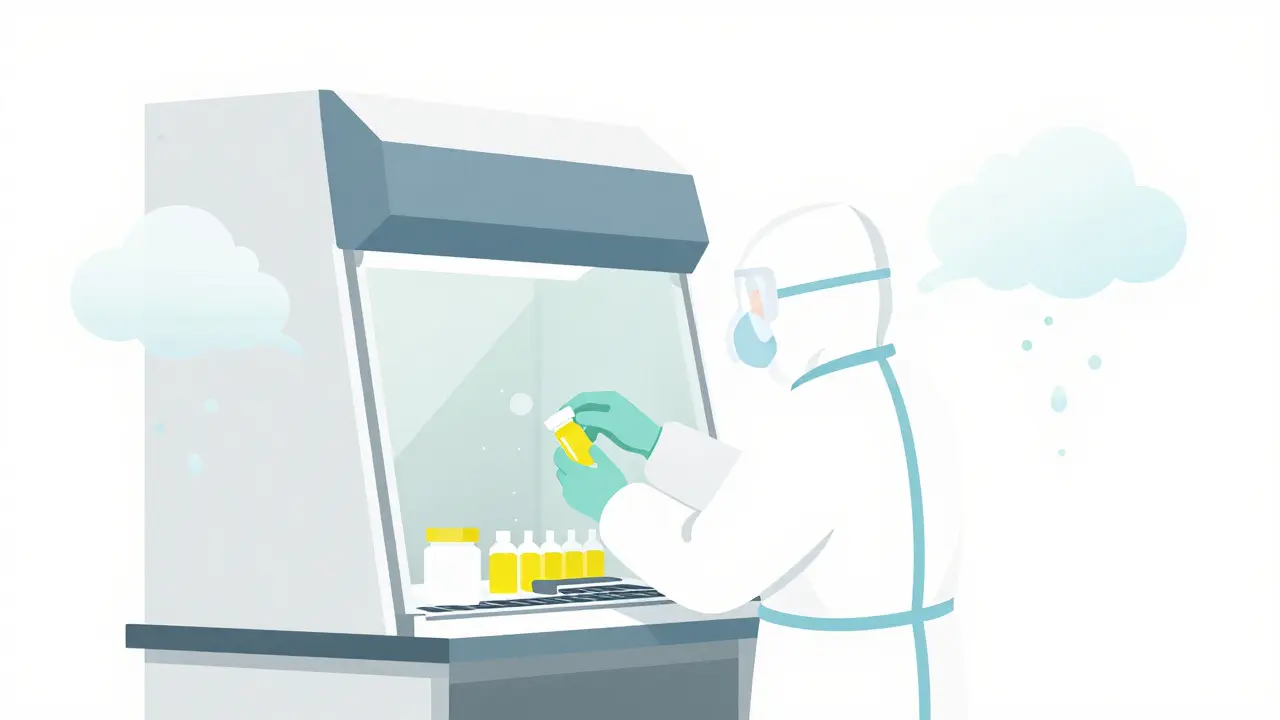
On the flip side, many workers are not taking the drugs but are exposed to them as part of their job. This is particularly prevalent in healthcare settings where workers handle antineoplastic agents, commonly known as chemotherapy drugs. These drugs are designed to kill rapidly dividing cells, which makes them effective against cancer but highly toxic to healthy tissue upon accidental exposure.
The National Institute for Occupational Safety and Health (NIOSH) updated its List of Hazardous Drugs in Healthcare Settings in January 2024. This comprehensive list identifies 370 hazardous drugs, categorized into:
- Antineoplastic agents: 267 drugs used primarily for cancer treatment.
- Non-antineoplastic hazardous drugs: 78 drugs with other systemic toxicities.
- Drugs with reproductive effects only: 25 drugs that pose risks to fetal development.
Exposure happens through various routes. An analysis by WorkSafeBC in 2022 showed that inhalation of aerosols and vapors accounts for 38% of exposures, while skin contact through splashing or contaminated surfaces makes up another 51%. Ingestion via poor hygiene habits contributes to 7%, and sharps injuries account for 4%. The consequences can be acute, such as nausea and skin rashes, or chronic, including increased cancer risk and adverse reproductive outcomes. A CDC meta-analysis from 2022 indicated that chronic exposure correlates with a 2.3 times higher risk of adverse reproductive outcomes.
Regulatory Frameworks and Standards
Navigating the rules around medication safety requires understanding several key regulatory bodies and standards. The landscape is complex because different agencies oversee different aspects of the problem.
| Entity/Standard | Primary Focus | Key Requirement or Impact |
|---|---|---|
| OSHA (Occupational Safety and Health Administration) | General workplace safety and hazard communication | Enforces Hazard Communication Standard (29 CFR 1910.1200), requiring labels and safety data sheets for hazardous chemicals. |
| NIOSH (National Institute for Occupational Safety and Health) | Research and recommendations on occupational health | Publishes the annual List of Hazardous Drugs and recommends engineering controls like closed-system transfer devices. |
| USP Chapter 800 (U.S. Pharmacopeial Convention) | Handling of hazardous drugs in pharmacies | Mandates specific containment strategies, ventilation, and training for compounding pharmacies (implemented Dec 2019). |
| FDA (Food and Drug Administration) | Drug labeling and safety communications | Requires boxed warnings on labels for 27 antineoplastic drugs regarding occupational exposure risks (2023 update). |
A critical gap exists in current regulations. OSHA’s Hazard Communication Standard covers approximately 6.2 million U.S. facilities, but an estimated 1.8 million healthcare workers in non-covered settings may lack adequate protection. USP Chapter 800 provides more comprehensive guidance but applies strictly to compounding pharmacies, covering only about 58,000 workers according to the National Community Pharmacists Association. This leaves many frontline healthcare workers relying on voluntary best practices rather than enforceable mandates.
Practical Risk Mitigation Strategies
Whether you are dealing with personal medication impairment or environmental exposure, proactive measures are vital. Here is how organizations and individuals can reduce risks effectively.
For Handling Hazardous Drugs
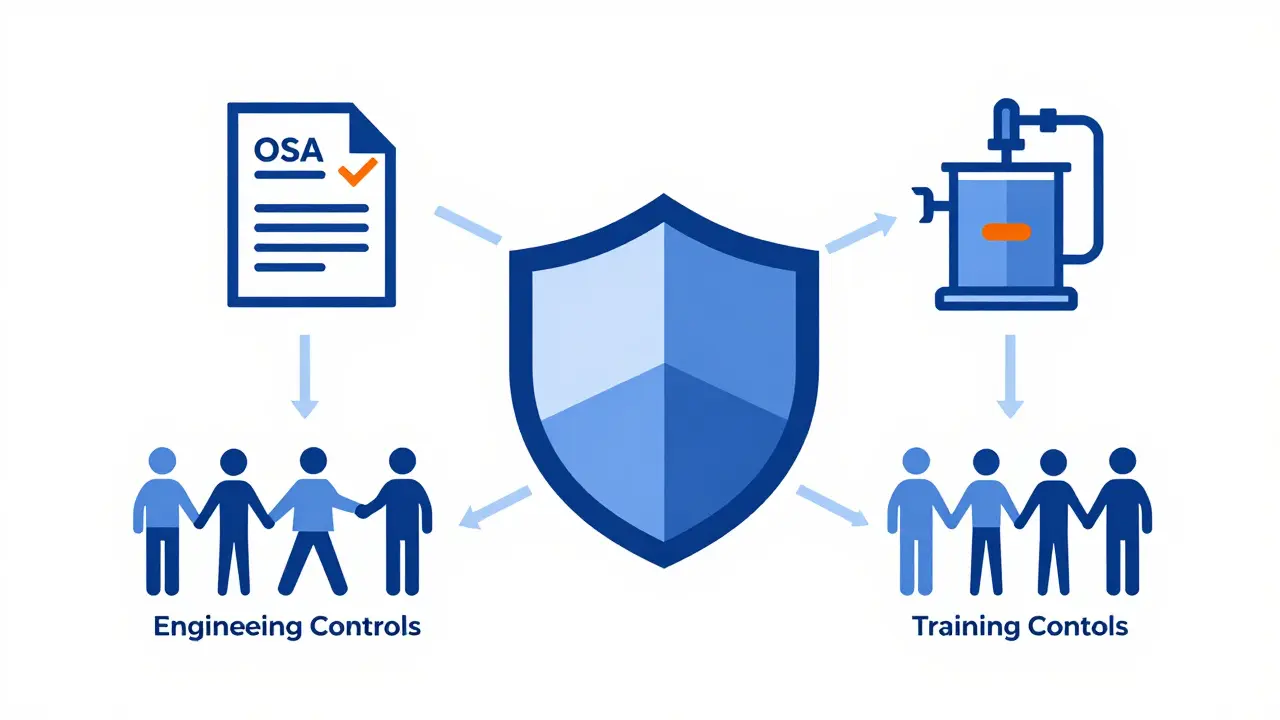
Engineering controls are the most effective way to prevent exposure. Closed-system transfer devices (CSTDs) have been shown to reduce surface contamination by 94.7%, according to field tests by WorkSafeBC in 2021. Additionally, proper ventilation systems and biological safety cabinets are essential. However, technology alone isn’t enough. Professor Margaret Brandt from the University of Cincinnati College of Nursing highlighted in a 2020 study that poor communication and inadequate training account for 76% of preventable exposures.
Training must be thorough. USP Chapter 800 mandates 16-24 hours of initial training plus annual refreshers. Workers need to learn proper donning and doffing of personal protective equipment (PPE). NIOSH validation studies show that after 8 hours of targeted training, PPE usage success rates jump to 92%. Regular monitoring, including air and surface sampling, helps verify that controls are working. Mayo Clinic’s 2020 program, which combined engineering controls with behavioral interventions, reduced hazardous drug exposures by 89%.
For Managing Prescription Medication Use
Employers should implement clear, fair drug-free workplace policies that distinguish between illicit use and legitimate medical needs. Dr. Robert Gotlin argued in the Journal of Occupational Rehabilitation (2021) that overly strict policies disproportionately impact workers with valid prescriptions, with 32% reporting job loss despite no safety incidents. Instead, focus on functional fitness. Encourage open dialogue between employees and healthcare providers about side effects. SureHire’s 2023 analysis of 1,287 workplaces found that well-structured drug-free policies reduced prescription medication-related incidents by 42%.
Economic and Human Costs
The cost of ignoring medication safety is staggering. The National Safety Council reported in 2023 that occupational medication incidents total $4.7 billion annually in the U.S. This breaks down into:
- $2.1 billion in direct healthcare costs
- $1.8 billion in lost productivity
- $0.8 billion in workers' compensation claims
Beyond the numbers, there is the human toll. Healthcare workers report chronic skin rashes, hair loss, and anxiety about long-term health effects. On Reddit’s r/nursing forum, a chemotherapy nurse shared her experience of developing chronic skin issues despite following protocols, highlighting that even with precautions, residual risks exist. Conversely, positive changes are visible. A pharmacy technician noted that after implementing NIOSH’s 2024 guidelines, surface contamination in their facility dropped from 42% to 4.7% in just six months.
Future Trends and Emerging Challenges
The landscape of occupational medication safety is evolving. In February 2024, NIOSH removed liraglutide and pertuzumab from its hazardous drugs list due to improved safety profiles, showing that guidelines adapt to new evidence. Meanwhile, the FDA now requires boxed warnings for 27 antineoplastic drugs, emphasizing transparency.
Technology is playing a growing role. Johns Hopkins Hospital is piloting AI-powered exposure monitoring systems that predict high-exposure scenarios with 92% accuracy in Phase 1 trials. Looking ahead, OSHA is considering proposing a Permissible Exposure Limit (PEL) for hazardous drugs at 0.1 ng/cm² for surface contamination, which would set a concrete benchmark for cleanliness.
However, challenges remain. Forty-two percent of new oncology drugs approved in 2023 lack established occupational exposure limits, creating uncertainty for workers handling these newer therapies. As biologics and targeted therapies become more common, continuous research and updated guidelines will be necessary to keep pace.
What are the most common ways healthcare workers are exposed to hazardous drugs?
According to WorkSafeBC's 2022 analysis, the most common exposure routes are inhalation of aerosols and vapors (38%), skin contact through splashing (29%), and skin contact with contaminated surfaces (22%). Ingestion through poor hygiene and sharps injuries account for smaller percentages.
How does taking prescription opioids affect workplace safety?
Workers taking prescription opioids face a 2.1 times higher risk of workplace injuries compared to non-users, according to NIOSH data from 2018. When combined with benzodiazepines, the risk of falls increases by 84%, significantly impacting safety in roles requiring physical coordination or alertness.
What is the NIOSH List of Hazardous Drugs?
The NIOSH List of Hazardous Drugs in Healthcare Settings, updated in January 2024, identifies 370 drugs classified based on criteria like carcinogenicity, teratogenicity, and organ toxicity. It serves as a critical reference for healthcare facilities to implement appropriate safety controls.
Are there legal requirements for handling hazardous drugs in the workplace?
Yes, several standards apply. OSHA’s Hazard Communication Standard (29 CFR 1910.1200) requires labeling and safety data sheets. USP Chapter 800 mandates specific handling procedures for compounding pharmacies. While OSHA does not currently have a specific permissible exposure limit for all hazardous drugs, enforcement actions and proposed rules are increasing regulatory pressure.
How can employers reduce medication-related safety risks?
Employers can reduce risks by implementing engineering controls like closed-system transfer devices, providing comprehensive training (16-24 hours initially), enforcing proper PPE usage, and fostering open communication about prescription medication use. Fair drug-free workplace policies that focus on functional fitness rather than blanket bans are also effective.