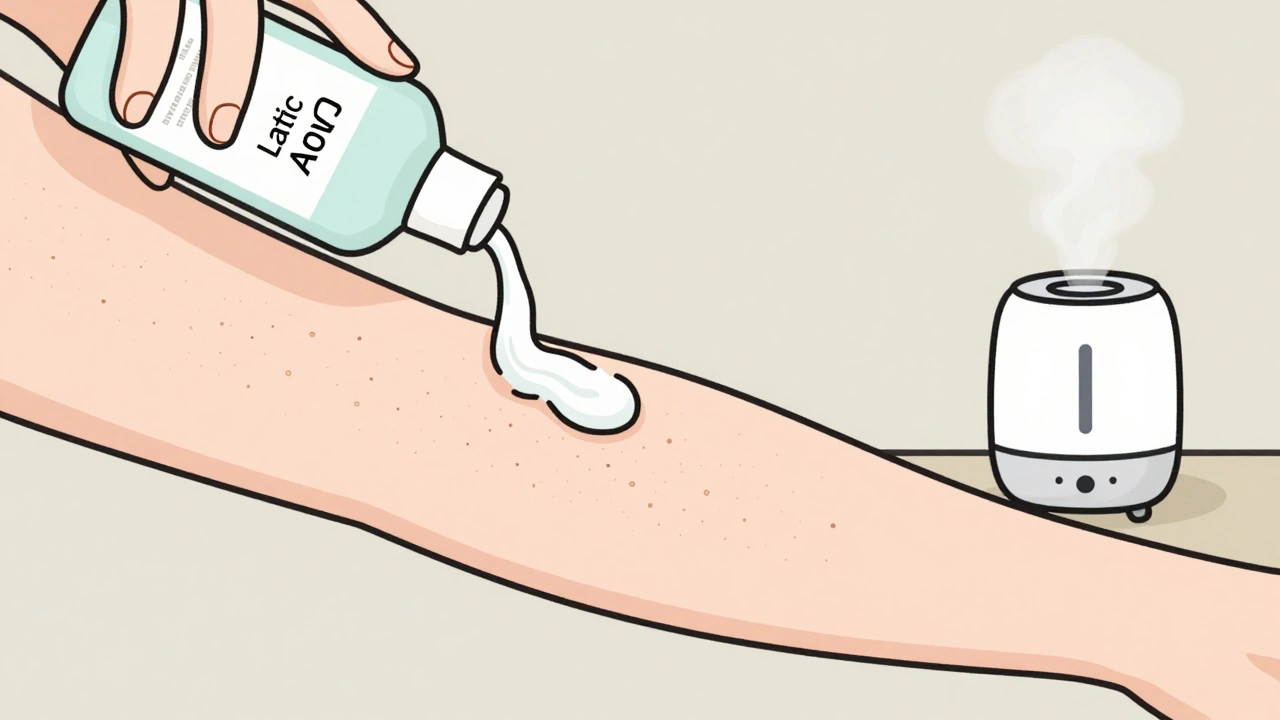
Ever looked at your arms and felt like your skin has tiny goosebumps that never go away? You’re not alone. Keratosis pilaris - often called "chicken skin" - affects up to 70% of teens and 40% of adults. It shows up as small, rough bumps on the upper arms, thighs, or buttocks. They’re not acne. They’re not an allergy. And they’re not contagious. But they can be frustrating, especially when they get worse in winter or after a hot shower.
What Exactly Is Keratosis Pilaris?
Keratosis pilaris happens when your skin makes too much keratin - the same protein that makes up your nails and hair. Instead of shedding normally, this keratin plugs up hair follicles, creating those little bumps. Each one is about the size of a pinhead, and they feel like sandpaper under your fingers.
The most common spots? Upper arms (in 92% of cases), followed by thighs and buttocks. Less often, it shows up on the cheeks or chest. It usually starts in childhood and gets worse during puberty. For many, it fades by age 30, but for others, it sticks around.
It’s not dangerous. No one’s going to get sick from it. But it can make people self-conscious. A 2023 survey found that 68% of people with KP worry about how their skin looks in shorts or swimsuits.
Why Does It Get Worse in Winter?
If your KP flares up when the air turns dry, you’re not imagining it. Low humidity - below 40% - dries out your skin’s natural barrier. That makes keratin build-up worse. Cold weather, indoor heating, and long hot showers all strip moisture from your skin, making bumps more noticeable.
Studies show that keeping your home humidity between 40-50% can reduce winter flare-ups by 60%. Using a humidifier in your bedroom isn’t just for comfort - it’s part of the treatment.
It’s Not Acne, Eczema, or Psoriasis
People often mistake KP for other skin problems. But here’s the difference:
- Acne is inflamed, often red or pus-filled, and linked to oil glands.
- Eczema is itchy, flaky, and tends to crack or bleed.
- Psoriasis has thick, silvery scales and is autoimmune.
- KP is dry, bumpy, painless, and doesn’t itch unless irritated.
Dr. Adam Friedman, a leading dermatologist, says: "KP is a follicular hyperkeratosis - meaning it’s about blocked follicles, not inflammation. Treat it like a clogged drain, not an infection."
What Actually Works to Smooth the Bumps?
There’s no cure. But you can make a big difference with the right routine. The goal isn’t perfect skin - it’s smoother, softer skin that feels better and looks less noticeable.
1. Use Lactic Acid or Urea Creams
Lactic acid and urea are the most proven ingredients for KP. They gently dissolve the keratin plugs.
- Lactic acid (10-12%): Products like AmLactin or The Ordinary Lactic Acid 10% show 40-60% improvement in 4-6 weeks. Users report smoother skin after 8 weeks of daily use.
- Urea (10-20%): Found in Eucerin and CeraVe SA Lotion. Works even better for very dry skin. In clinical tests, 65% of users saw less scaling after 8 weeks.
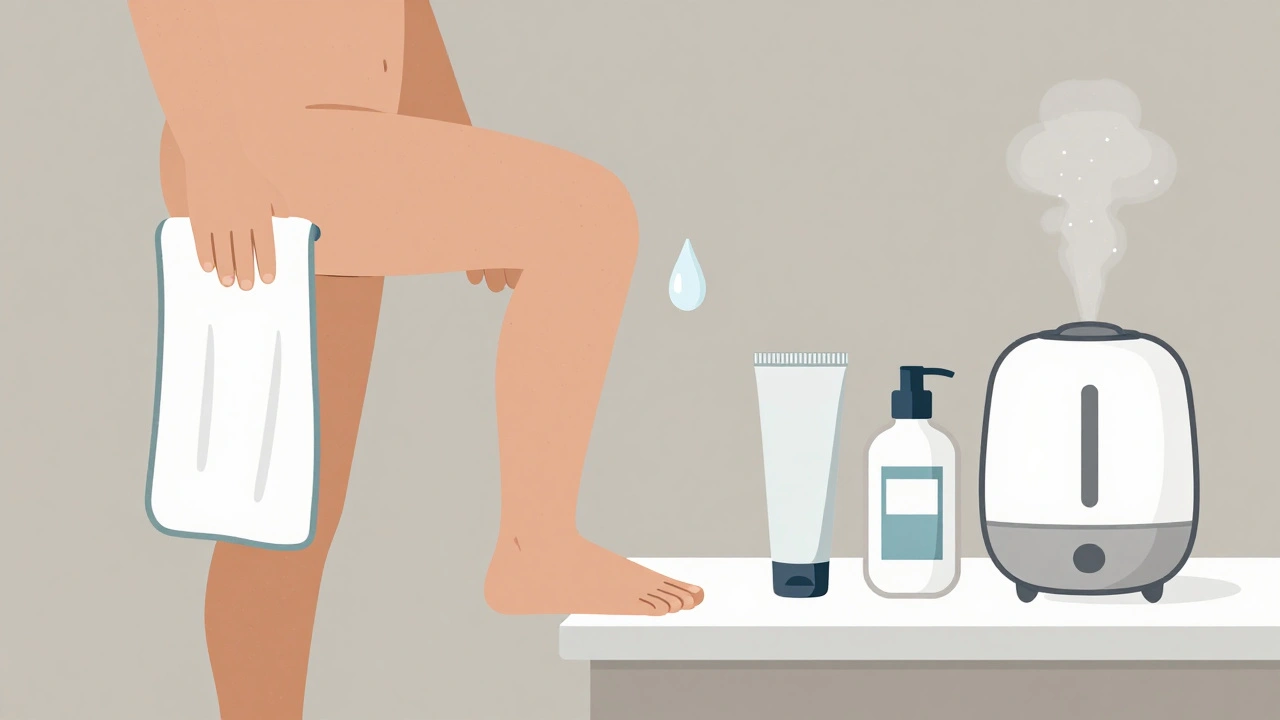
Apply these at night. Your skin absorbs them best when it’s slightly damp - right after a shower. Wait 3 minutes, then follow with a moisturizer.
2. Moisturize with Ceramides
Exfoliating alone isn’t enough. You need to repair the skin barrier. Ceramides are lipids your skin naturally makes - but KP patients often have less of them.
Dr. Hadley King says: "Ceramide moisturizers give 30% better long-term results than exfoliants alone." Look for products with ceramide NP, AP, or EOP listed on the label. CeraVe Moisturizing Cream and Vanicream are affordable, fragrance-free options that work.
3. Try Salicylic Acid (For Oily Skin)
If your skin tends to be oily, salicylic acid (a beta-hydroxy acid) can help. It penetrates deeper into pores. Paula’s Choice 2% BHA Liquid Exfoliant is popular for KP on the back or chest. Use it 2-3 times a week to avoid over-drying.
4. Avoid Harsh Scrubs and Loofahs
This is a big mistake many people make. Rubbing, scrubbing, or using rough loofahs doesn’t remove KP - it irritates it. A 2022 study found that 68% of people who scrubbed their bumps ended up with more redness and dark spots.
Instead of scrubbing, use gentle chemical exfoliants. Your skin doesn’t need abrasion - it needs dissolution.
5. Consider Retinoids (With Caution)
Prescription retinoids like tretinoin (0.025-0.1%) can help by speeding up skin cell turnover. They work in about 70% of users - but only after 3-6 months.
Here’s the catch: 40% of people quit because of redness, peeling, or burning. Start with a pea-sized amount every other night. Mix it with your moisturizer to reduce irritation. Don’t use it if you’re pregnant or breastfeeding.
What About Laser Treatments?
Some clinics offer pulsed-dye laser therapy for red, inflamed KP. It targets the blood vessels under the bumps, reducing redness by 50-75% after 3-4 sessions.
But here’s the reality: NHS England doesn’t fund it. Private clinics charge £300-£500 per session. And the results fade if you stop moisturizing. It’s not a magic fix - it’s a cosmetic touch-up.
Real People, Real Results
On Reddit’s r/SkincareAddiction, 62% of users said AmLactin made their arms noticeably smoother after 12 weeks. One person wrote: "I stopped wearing short sleeves for 8 years. After 3 months of lactic acid and ceramide cream, I wore a tank top to the beach. I cried."
But 73% of users on MySkinTrack quit retinoids within 6 weeks because of irritation. When they returned to gentle exfoliation and moisturizing, their results improved.
On DermStore, CeraVe SA Lotion has 4.5 stars from over 2,100 reviews. The top comment: "Best results when I use it right after my shower, while my skin is still damp."
How to Build a Simple Daily Routine
You don’t need 10 products. Just stick to this:
- Morning: Wash with lukewarm water. Pat dry. Apply a ceramide moisturizer.
- Evening: Wash again. While skin is still damp, apply lactic acid or urea cream. Wait 3 minutes. Follow with thicker moisturizer.
- Weekly: Skip exfoliation 1 day a week to let skin rest.
Pro tip: Wear loose cotton clothes. Tight fabrics rub against bumps and make them worse. One study found 72% of people felt less irritation after switching to cotton.

Why Most People Give Up - And How to Stay Consistent
Here’s the truth: KP treatment is a marathon, not a sprint. Only 22% of people stick with their routine after 6 months. Why? Because results take 8-12 weeks. And if you stop, the bumps come back in 2-4 weeks.
Think of it like brushing your teeth. You don’t stop because your teeth aren’t perfect. You do it because it keeps things healthy.
Set a reminder on your phone. Keep your exfoliant and moisturizer next to your toothbrush. Make it part of your daily ritual. You’re not treating a disease - you’re maintaining your skin’s natural balance.
What’s New in 2025?
Science is moving forward. In early 2024, a new liposomal lactic acid formula hit the market - it’s gentler and absorbs better. Also, FDA-cleared LED light devices are now available for home use. They don’t remove bumps, but they reduce redness and improve texture in 8 weeks.
Genetic testing for filaggrin mutations (linked to KP) is in development. Companies like 23andMe are working with dermatologists to match treatments to your DNA. But that’s still years away from being widely available.
For now, stick with what works: gentle exfoliation, hydration, and patience.
What to Expect Long-Term
A 2023 study of over 2,000 KP patients found:
- 28% cleared completely by age 30
- 41% had major improvement
- 31% still needed ongoing care
That means most people don’t need to live with rough skin forever. But if you’re in the 31%, that’s okay. You’re not broken. You just need a routine that fits your life.
Dr. Caroline Robinson says it best: "The goal isn’t flawless skin. It’s skin you don’t have to hide."
Is keratosis pilaris contagious?
No, keratosis pilaris is not contagious. It’s a genetic skin condition caused by keratin buildup in hair follicles. You can’t catch it from touching someone or sharing towels.
Can keratosis pilaris go away on its own?
Yes, for many people, KP improves with age. About 28% clear completely by age 30, and 41% see major improvement. But for 31%, it persists and needs ongoing care. It’s not a disease - it’s a skin trait that fades slowly.
What’s the best over-the-counter product for keratosis pilaris?
CeraVe SA Lotion (with salicylic acid and ceramides) and AmLactin (12% lactic acid) are the most recommended by users and dermatologists. Both are affordable, fragrance-free, and work best when applied right after bathing.
Why does my KP get worse in winter?
Dry air lowers your skin’s moisture levels, making keratin harder to shed. Indoor heating and hot showers strip natural oils. Keeping humidity at 40-50% and using moisturizers right after showers can reduce winter flare-ups by up to 60%.
Should I use a loofah or scrub on my KP bumps?
No. Scrubbing irritates the skin and can cause redness, dark spots, or even infection. KP is caused by a keratin plug - not dirt. Use chemical exfoliants like lactic acid or urea instead. They dissolve the plug gently without damage.
Do I need to see a dermatologist for keratosis pilaris?
Not unless your skin is painful, infected, or not improving after 3 months of consistent care. Most people manage KP perfectly with OTC products. A dermatologist can prescribe stronger treatments like retinoids, but they’re not necessary for most cases.
Next Steps: Start Today
Grab a bottle of AmLactin or CeraVe SA Lotion. Buy a simple ceramide moisturizer. Turn down your shower temperature. Put a humidifier in your room. Apply the exfoliant after your next shower - while your skin is still damp.
You don’t need to fix everything at once. Just start. One week from now, you’ll notice your skin feels softer. In three months, you might feel confident wearing a sleeveless top again. That’s the goal - not perfection. Just comfort.


Jay Everett
December 3, 2025 AT 07:04Bro this is the most comprehensive KP guide I’ve ever read 😍 I’ve been using AmLactin for 6 months and honestly? My arms feel like silk now. No more hiding in long sleeves. Also humidifier = game changer. I got one for my bedroom and my skin stopped feeling like sandpaper by 3am. 🌬️💧
Arun kumar
December 4, 2025 AT 16:01so i tried the lactic acid thing and it burned like hell at first but after 2 weeks my bumps got way less red. not perfect but i can wear shorts now. also i dont shower with hot water anymore. small wins 🤷♂️
मनोज कुमार
December 5, 2025 AT 12:12OTC products are band-aids. Real solution is genetic modulation. Filaggrin mutation is the root. You’re treating symptoms not cause. Urea creams? Pathetic. Retinoids are the only real tool. Stop wasting time on moisturizers.
Joel Deang
December 5, 2025 AT 18:42yo i used ceramide cream and my mom said i look like a new person 😭 she cried when i wore a tank top to thanksgiving. i thought i’d never be confident again. also i spelled ceramide wrong 7 times while typing this. sorry not sorry.
Roger Leiton
December 6, 2025 AT 15:27Wait so is KP like a version of eczema but with more keratin? Or is it more like a blocked follicle thing? I’ve been mixing lactic acid with my moisturizer but I’m not sure if I’m doing it right. Also can you use it on your face? I have little bumps on my cheeks and I’m scared to touch them 😅
Laura Baur
December 7, 2025 AT 03:34It’s fascinating how society pathologizes natural skin variation. You call it ‘rough bumps’ as if it’s a flaw, when in reality, it’s just a genetic quirk - like curly hair or freckles. The obsession with ‘smooth skin’ is a capitalist construct. Why are we so terrified of texture? Why must every inch of our body conform to an unrealistic ideal? This article, despite its helpful tips, still reinforces the notion that your skin must be ‘fixed.’
Jack Dao
December 7, 2025 AT 22:53Wow. So you’re telling me that people with KP are just too lazy to scrub harder? 😒 I used a loofah with sea salt for 20 minutes every day for a year. My skin’s basically leather now. You don’t need creams. You need discipline. And maybe a power washer.
dave nevogt
December 9, 2025 AT 03:08I’ve had KP since I was 12. It’s been 22 years. I used to hate my arms. I wore long sleeves in summer. I avoided mirrors. But over time, I stopped fighting it. The creams help, sure. But what changed me was accepting that my skin doesn’t need to be perfect to be worthy. I don’t use lactic acid every day anymore. I use it when I feel like it. And that’s okay. Skin isn’t a project. It’s a companion.
Zed theMartian
December 9, 2025 AT 07:23Let me guess - this article was sponsored by CeraVe. 🤨 The FDA-cleared LED devices? Please. That’s just a fancy heat lamp with a $300 price tag. And ‘genetic testing for filaggrin mutations’? That’s not coming anytime soon - it’s vaporware dressed up as science. You’re selling hope, not solutions. And I’m not buying it.
Ella van Rij
December 9, 2025 AT 21:16Wow. So you just… moisturize? And that’s it? I thought we were in 2025. Not 2012. I mean, if you’re going to treat KP, why not just get a chemical peel? Or a laser? Or at least stop using products with ‘ceramide’ in the name - it sounds like a rejected Pokémon. 🤦♀️