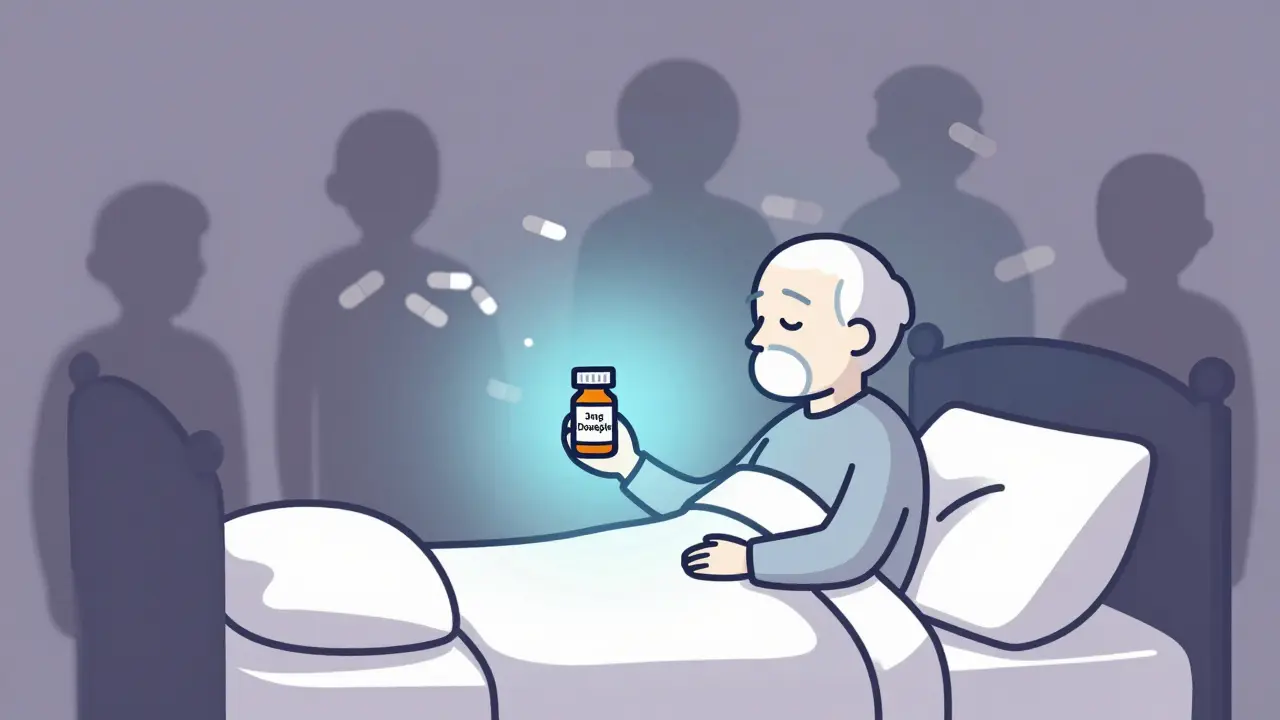
More than one in three adults over 65 struggles with insomnia. It’s not just about tossing and turning-it’s about waking up exhausted, confused, or unsteady on their feet. For older adults, poor sleep isn’t just annoying; it’s dangerous. Every night of disrupted sleep raises the risk of falls, memory problems, and even long-term disability. And while many turn to sleep pills, the ones they’ve been taking for years might be doing more harm than good.
Why Old-School Sleep Meds Are Risky for Seniors
Benzodiazepines like diazepam and triazolam were once the go-to for insomnia. But they’re no longer safe for older adults. These drugs slow down brain activity so much that balance and reaction time suffer. A 2022 study found that seniors on benzodiazepines had a 50% higher chance of breaking a hip after a fall. That’s not a small risk-it’s life-changing.
Even the so-called "z-drugs" like zolpidem (Ambien) and eszopiclone (Lunesta) aren’t much better. They might help you fall asleep faster, but they often leave you groggy the next day. One in three older adults taking zolpidem reports feeling foggy or unsteady. Worse, some have woken up doing strange things-driving, eating, even talking-without remembering it later. These "sleep-related behaviors" are rare but terrifying when they happen.
And it’s not just the pills themselves. Most older adults take multiple medications for high blood pressure, arthritis, or heart issues. Many sleep drugs interact badly with these, increasing side effects. For example, if you’re on a common antibiotic like clarithromycin, your body can’t break down zolpidem properly. That means the drug builds up to dangerous levels. That’s why doctors now say: avoid these meds if you can.
What Actually Works-Without the Danger
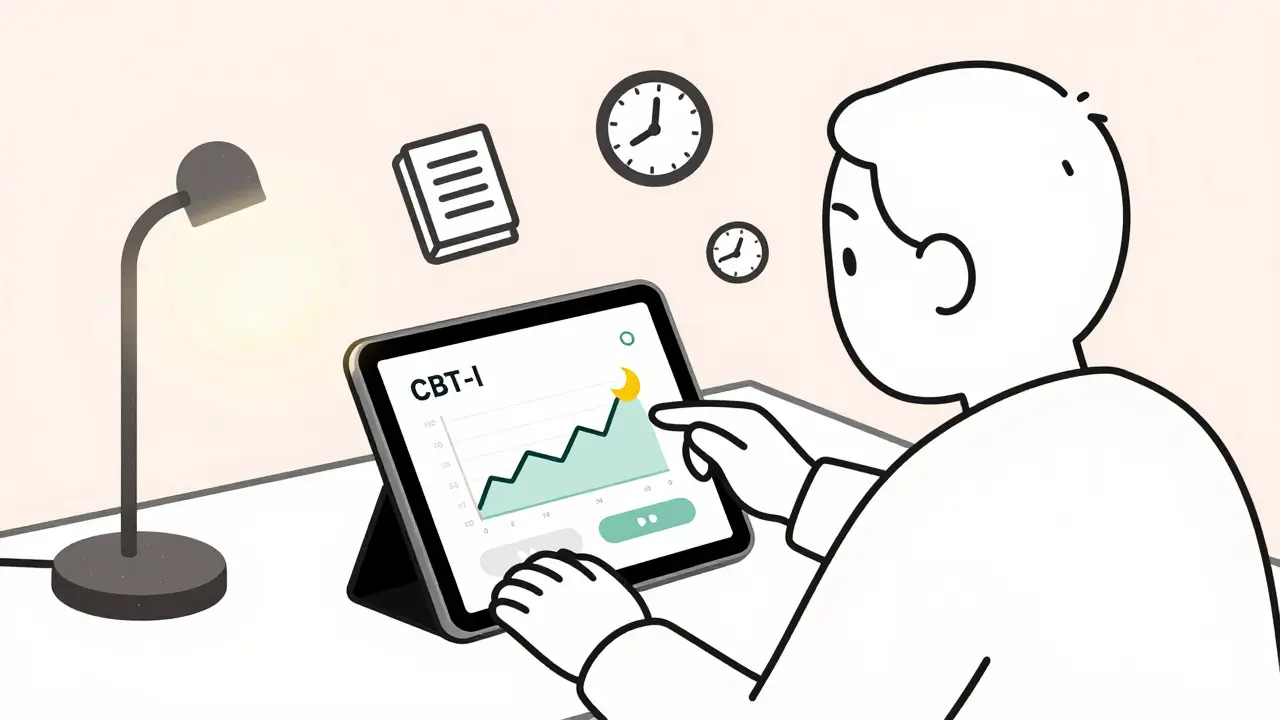
The best treatment for insomnia in older adults isn’t a pill at all. It’s Cognitive Behavioral Therapy for Insomnia (CBT-I). This isn’t talk therapy-it’s a structured program that teaches you how to fix sleep habits. Studies show it works better than any medication, and the benefits last long after treatment ends. Yet, fewer than 5% of seniors get referred to it. Why? Because it takes time. And doctors are busy. But if you’re willing to try, it’s the most powerful tool you have.
If CBT-I isn’t available, or if you need something faster, there are safer medications. Three stand out:
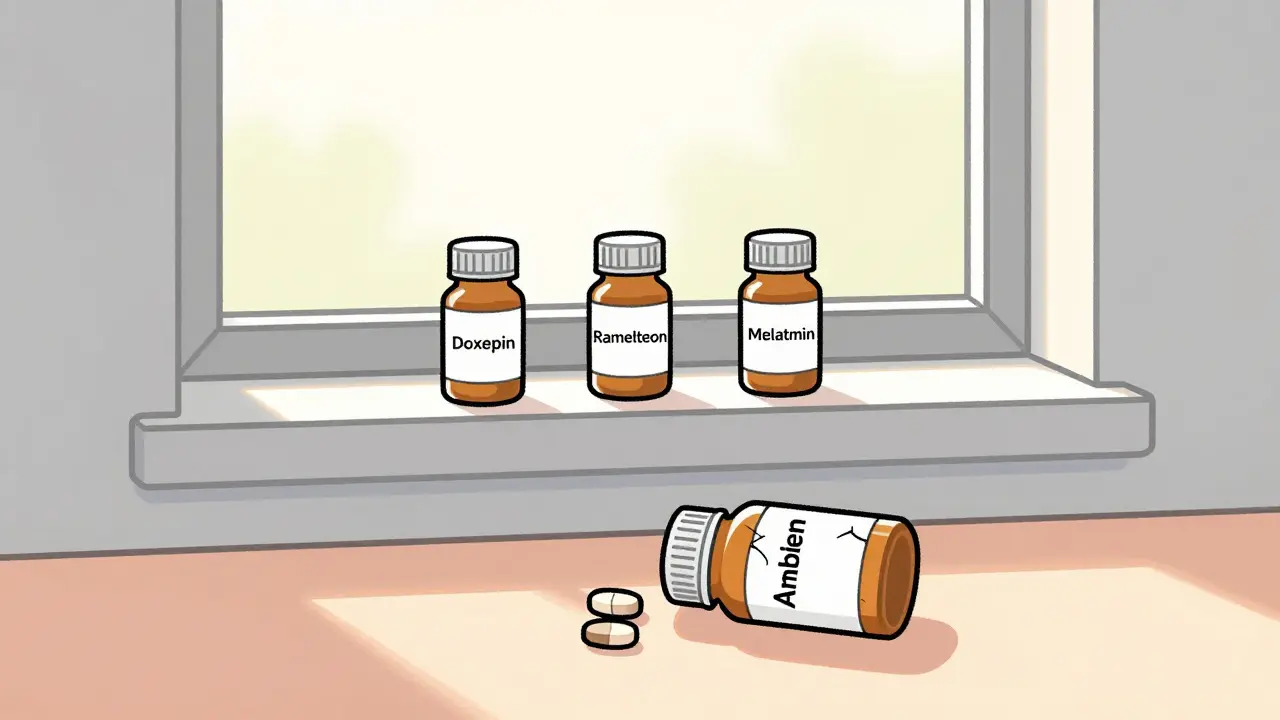
- Low-dose doxepin (3-6 mg): Originally an antidepressant, this drug at tiny doses blocks histamine receptors that keep you awake. It doesn’t make you drowsy the next day. A 2024 analysis showed it improved sleep efficiency more than any other drug tested. Seniors using it report fewer morning hangovers than with Ambien.
- Ramelteon (8 mg): This mimics melatonin, your body’s natural sleep signal. It doesn’t cause dependence or next-day grogginess. It won’t help you stay asleep all night, but if you struggle to fall asleep, it’s one of the safest options.
- Lemborexant (5-10 mg): A newer drug that blocks orexin, the brain chemical that keeps you alert. It helps you fall asleep faster and stay asleep longer. In trials, seniors on lemborexant gained over 40 extra minutes of sleep per night. And unlike older drugs, it doesn’t increase fall risk. The downside? It costs around $750 a month without insurance.
Controlled-release melatonin (2 mg) is another option. It’s not a magic bullet, but it’s cheap, safe, and widely available. It won’t fix deep sleep problems, but it can help reset your internal clock if you’re waking up too early.
Real Stories From Real Seniors
One 72-year-old from Ohio switched from zolpidem to 3 mg of doxepin after a fall. "I used to wake up feeling like I’d been hit by a truck," she said. "Now I wake up feeling like I actually slept." She’s been on it for over a year with no side effects.
A man in Florida tried lemborexant after his doctor insisted. "I thought it was too expensive," he admitted. "But I stopped taking Ambien and started using this. No more sleepwalking. No more morning fog. I’d pay it if I could afford it." He’s now on a patient assistance program to keep it affordable.
On Reddit, a common theme emerges: "I wish my doctor had tried this first." Many seniors say they were pushed toward z-drugs without ever being told about safer alternatives. That’s changing slowly-but not fast enough.
How to Talk to Your Doctor About Safer Sleep
If you’re on a sleep med right now, don’t quit cold turkey. Talk to your doctor first. Here’s what to ask:
- "Is this medication still right for me, given my other health issues?"
- "Have you considered low-dose doxepin or ramelteon?"
- "Can we try CBT-I before adjusting my meds?"
- "What’s the plan if I want to stop this drug?"
Doctors need to know you’re open to change. Many are still prescribing benzodiazepines out of habit. A 2024 study found that nearly half of seniors on sleep meds were never told about non-drug options. That’s not just oversight-it’s a gap in care.
Ask for a sleep diary. Write down when you go to bed, wake up, and how rested you feel. Bring it to your next visit. It gives your doctor real data-not just your word.
What to Watch For-Red Flags in Sleep Meds
Even "safer" meds can cause problems. Here’s what to watch:
- Feeling dizzy or unsteady when you stand up
- Forgetting things more than usual
- Waking up confused or disoriented
- Feeling groggy past noon
- Having trouble walking or holding objects
If any of these happen, call your doctor. Don’t wait. These aren’t "side effects"-they’re warning signs.
Also, check your pill bottles. If you’re taking more than one sleep aid, or if you’re mixing them with alcohol, painkillers, or anxiety meds, you’re at higher risk. Combine even one of these with a sleep drug, and your fall risk jumps by 70%.
Cost, Access, and the Future of Sleep Care
Low-dose doxepin costs about $15 a month as a generic. Ramelteon is around $50. Lemborexant? Around $750. Insurance often won’t cover it without a prior authorization-and even then, it’s a battle. Many seniors give up because they can’t afford it.
But here’s the truth: the most expensive drug isn’t always the best. A 2025 cost analysis found that low-dose doxepin and melatonin delivered better long-term value. They reduce hospital visits, prevent falls, and improve quality of life-all at a fraction of the price.
The future is moving toward combining meds with digital tools. Apps like reSET-O, approved by the FDA in 2023, deliver CBT-I right on your phone. These aren’t just for addicts-they’re being tested for older adults too. In five years, you might get a sleep plan that includes a daily app session, a weekly check-in with a sleep coach, and a low-dose med if needed.
For now, the best thing you can do is ask. Ask for safer options. Ask for non-drug help. Ask for a plan to get off the pills if you’re ready. Your sleep-and your safety-depends on it.
Are benzodiazepines still prescribed for insomnia in older adults?
Yes, but they shouldn’t be. Despite clear guidelines from the American Geriatrics Society since 2012 warning against their use, nearly 7.2 million older adults in the U.S. still receive benzodiazepines for sleep each year. These drugs increase fall risk by 50% and are linked to memory decline. They’re not banned, but they’re no longer considered safe first-line treatment.
Is melatonin safe for seniors?
Controlled-release melatonin (2 mg) is one of the safest options for older adults. It doesn’t cause dependence, doesn’t impair balance, and has minimal side effects. It’s best for people who wake up too early or have trouble falling asleep due to a misaligned body clock. Avoid high-dose melatonin (10 mg or more)-it can cause headaches and next-day grogginess.
Can I stop my sleep medication cold turkey?
No. Stopping benzodiazepines or z-drugs suddenly can cause rebound insomnia, anxiety, or even seizures. Always work with your doctor to taper off slowly-usually over several weeks. Your doctor may switch you to a safer alternative like low-dose doxepin during the transition.
Why isn’t CBT-I used more often for seniors?
Most doctors don’t know where to refer patients, and insurance often doesn’t cover it. There are also long waitlists for specialists. But digital CBT-I apps are changing that. Some are now covered by Medicare Advantage plans. Ask your doctor if they can refer you to a program-or if you can access one online.
What’s the best sleep med for someone with liver or kidney problems?
Ramelteon and low-dose doxepin are the safest choices. They’re metabolized differently than z-drugs or benzodiazepines, which rely heavily on liver function. For those with reduced kidney or liver function, these two drugs require no dose adjustments and have lower risk of buildup. Always get your liver and kidney function tested before starting any new sleep medication.
Mohammed Rizvi
January 25, 2026 AT 23:37They still prescribe benzodiazepines like they’re giving out candy at a funeral. I’ve seen grandpas on diazepam so zoned out they forgot their own grandchildren’s names. And yet the script keeps getting renewed because the doctor’s too busy to ask, ‘Hey, have you tried not turning your brain into molasses?’
Curtis Younker
January 27, 2026 AT 12:58Guys, I just want to say this is one of the most important posts I’ve read in years. I’m 68, been on Ambien for 12 years, and I didn’t even realize I was sleepwalking until my dog started barking at me at 3 a.m. because I was making peanut butter sandwiches in my pajamas. Switched to low-dose doxepin last month-no more midnight snack raids, no more morning fog, and I actually remember my wife’s birthday this year. CBT-I is the real MVP, but if you can’t get it right away, doxepin is like a gentle hug for your nervous system. Don’t wait until you fall and break something to make the change. Your future self will thank you. Seriously. I cried when I woke up normal. That’s not an exaggeration.
TONY ADAMS
January 29, 2026 AT 07:05Why do we even bother with all this? Just take a pill and shut up. Everyone’s got problems. My uncle took Lunesta for 20 years and never fell once. He died of heart failure at 84. Coincidence? Maybe. But he slept like a baby. End of story.
George Rahn
January 30, 2026 AT 21:44The erosion of personal responsibility in modern medicine is nothing short of catastrophic. We have replaced discipline with pharmacology, wisdom with algorithms, and resilience with chemical crutches. The ancients slept on stone floors and rose with the sun. We, in our decadence, demand pharmaceutical solace for our digital-induced insomnia. Lemborexant at $750 a month? A fitting monument to our collective spiritual bankruptcy.
Karen Droege
January 31, 2026 AT 18:09I’m a geriatric nurse and I’ve seen too many seniors on z-drugs-falling, forgetting, wandering into strangers’ houses at 2 a.m. I’m screaming this from the rooftops: DOXEPIN IS A GEM. 3 mg. That’s it. It’s dirt cheap, it doesn’t knock you out, and it doesn’t turn you into a sleep-eating zombie. And CBT-I? It’s not ‘therapy’-it’s sleep hygiene on steroids. I’ve had patients who went from 4 hours of broken sleep to 7 solid hours without a single pill. If your doctor doesn’t know about this, fire them. Or better yet, send them this post. I’m not being dramatic-I’m being lifesaving.
Shweta Deshpande
February 2, 2026 AT 13:23This made me cry. My mom was on Ambien for five years after my dad passed. She never told me she was waking up in the kitchen, trying to make tea at 3 a.m., then forgetting where she was. When we switched her to melatonin and a sleep schedule, she started laughing again. She remembered our wedding photos. She remembered my name. I wish someone had told us this sooner. To anyone reading this: don’t wait until someone gets hurt. Talk to your doctor. Ask for doxepin. Ask for CBT-I. Don’t let fear or shame keep you silent. Sleep is not a luxury-it’s survival.
Simran Kaur
February 3, 2026 AT 16:44In India, most older folks don’t even have access to these meds. They drink warm milk, chant mantras, or sit in silence. No pills. No apps. Just patience. But here’s the thing-they sleep better. Not because of tradition, but because they’ve learned to live with the quiet. Maybe we don’t need more drugs. Maybe we need less noise. Less screens. Less hurry. I’m not saying ditch the science-I’m saying don’t forget the soul.
Neil Thorogood
February 5, 2026 AT 10:31Low-dose doxepin? YES. Ramelteon? YES. Lemborexant? Only if you’re rich or have a saint for an insurance agent 😤
CBT-I? The only thing that actually works. I did a 6-week digital program. No therapist. Just my phone and a stubborn will. I slept like a newborn. No more nightmares. No more 4 a.m. panic. My wife said I stopped snoring. (She’s probably lying. But I’ll take it.)
Jessica Knuteson
February 6, 2026 AT 01:58Medication is a bandaid. CBT-I is the surgery. But neither fixes the root cause: modern life is designed to keep you awake. Phones. Work. Anxiety. Capitalism. The system is broken. You’re not broken. Stop blaming yourself for needing a pill. But also stop pretending a pill is a solution.
Robin Van Emous
February 6, 2026 AT 23:53I appreciate the nuance here. Honestly, I was skeptical about CBT-I until my mom tried it. She was so resistant-said it was ‘just talking.’ But after three weeks, she started sleeping through the night. And she didn’t need to be ‘fixed.’ She just needed someone to help her relearn how to rest. That’s what this post is: not a list of drugs, but a roadmap to dignity. We need more of this. Not more prescriptions. More patience. More listening. More care.
Ashley Porter
February 8, 2026 AT 15:40Pharmacokinetic profiles of non-benzodiazepine hypnotics in elderly populations demonstrate significantly reduced hepatic clearance of z-drugs due to CYP3A4 downregulation, whereas histaminergic antagonism by low-dose doxepin exhibits favorable pharmacodynamic stability. Ramelteon’s MT1/MT2 agonism avoids GABAergic modulation entirely, thus mitigating fall risk. Lemborexant’s dual orexin receptor antagonism offers superior sleep maintenance with minimal next-day residue. However, cost-effectiveness models remain suboptimal in fee-for-service systems.