You might think a glass of fresh grapefruit juice is just a healthy way to start your morning. But for people taking certain prescriptions, that same glass can turn a standard dose of medicine into a dangerous overdose. It isn't about the fruit itself being "bad," but rather how it hijacks your body's internal chemistry. If you're on medication, knowing whether grapefruit is off-limits isn't just a dietary choice-it's a safety requirement.
| Quick Fact | Details |
|---|---|
| The Culprit | Furanocoumarins (chemicals in grapefruit) block a key metabolism enzyme. |
| The Result | Drug levels in the blood rise, potentially reaching toxic levels. |
| Timing | Effects can last 24 to 72 hours; spacing the dose and the juice doesn't work. |
| Risk Level | Varies by person, but some interactions can be life-threatening. |
Why Grapefruit Changes How Your Meds Work
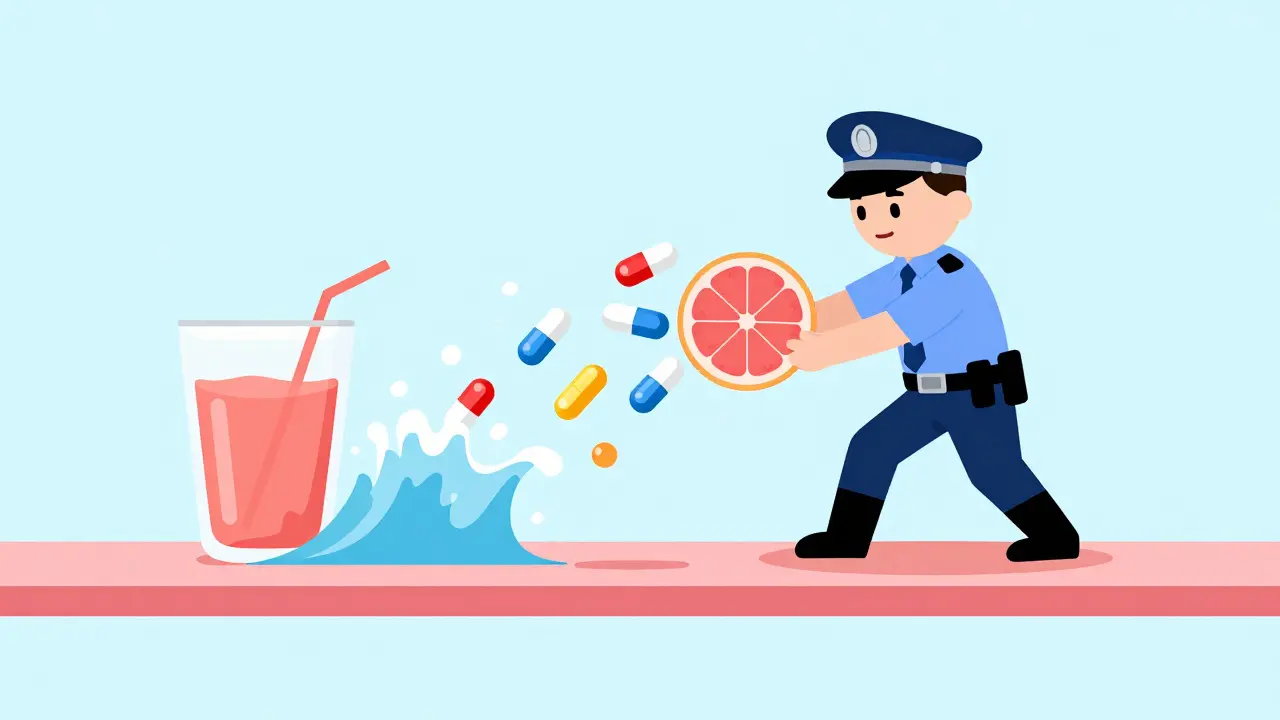
To understand this, we have to look at how your body processes drugs. Most oral medications are filtered by the CYP3A4 is a critical enzyme system found in the intestinal wall and liver that metabolizes roughly 50% of all administered drugs. Think of this enzyme as a security guard that breaks down a portion of the medicine before it ever hits your bloodstream. This ensures that only the right amount of the drug reaches your organs.
Grapefruit contains compounds called furanocoumarins, specifically bergamottin. These chemicals don't just "disturb" the enzyme; they essentially disable it. When the CYP3A4 "security guard" is knocked out, the medicine floods into your blood without being filtered. As the U.S. Food and Drug Administration explains, this means more of the drug stays in your body longer than intended, which can lead to toxicity.
Crucially, this isn't a temporary block. The body has to actually synthesize new enzymes to replace the ones grapefruit destroyed. This is why a single 200-milliliter glass of juice can suppress your enzyme activity by nearly 47% within four hours, and the effect can linger for up to three days. If you think you can just "wait a few hours" between your pill and your breakfast juice, you're mistaken-the enzyme is already gone.
The Danger Zone: High-Risk Medication Groups
Not every drug is affected, but the ones that are often fall into critical categories. The grapefruit juice medication interactions are most severe in these three areas:
Cholesterol Medications (Statins)
This is where the risk is most prominent. Some statins are heavily dependent on the CYP3A4 pathway. For instance, with simvastatin, drinking grapefruit juice can triple the amount of drug in your blood. This massively spikes the risk of rhabdomyolysis-a severe condition where muscle tissue breaks down and can cause kidney failure. Interestingly, not all statins are created equal. Drugs like pravastatin and rosuvastatin don't rely on this specific enzyme, making them much safer alternatives for grapefruit lovers.
Blood Pressure and Heart Meds
Calcium channel blockers used for hypertension can react violently. felodipine can see a five-fold increase in blood concentration. This can lead to dangerously low blood pressure, dizziness, or a rapid heart rate. Similarly, the antiarrhythmic drug amiodarone can see plasma levels jump by 30-40%, which might trigger the very heart rhythm issues the drug is meant to treat.
Immune System Suppressants
For transplant patients taking cyclosporine, the stakes are incredibly high. Grapefruit can increase drug exposure by 50-60%. In this case, "more medicine" isn't better; it can lead to nephrotoxicity, which means the drug starts damaging the kidneys.
| Drug Name | Drug Class | Interaction Level | Potential Effect |
|---|---|---|---|
| Simvastatin | Statin | Very High | Muscle breakdown (Rhabdomyolysis) |
| Felodipine | Calcium Channel Blocker | Very High | Severe hypotension (Low BP) |
| Amiodarone | Antiarrhythmic | Moderate | Heart rhythm instability |
| Atorvastatin | Statin | Low/Moderate | Mild increase in side effects |
| Rosuvastatin | Statin | Negligible | Generally safe |
Wait, Is it Only Grapefruit?
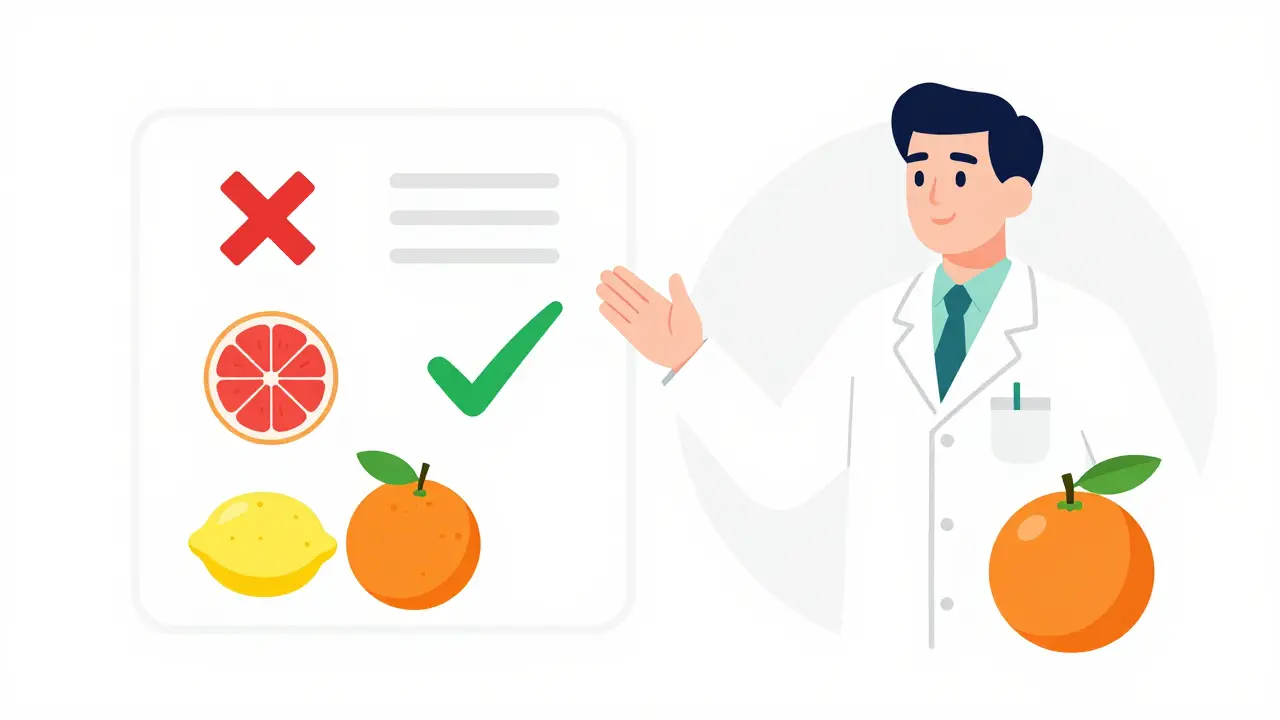
If you're avoiding grapefruit but reaching for other citrus, be careful. The furanocoumarins aren't exclusive to grapefruits. Seville oranges-the bitter kind often used in marmalades-and pomelos contain similar compounds and can trigger the same dangerous interactions. If your doctor told you to avoid grapefruit, you should likely avoid these as well.
The good news? Sweet oranges (like Navel or Valencia) and lemons don't contain these specific inhibitors. You can generally enjoy your morning orange juice or a squeeze of lemon in your water without worrying about your CYP3A4 enzymes being shut down.
How to Manage Your Risk Safely
The most important thing to remember is that the severity of these interactions varies. Some people have naturally higher levels of the enzyme, while others have very few. Because you can't know your baseline without expensive clinical tests, the safest bet is a "blanket avoidance" approach if your medication is on the risk list.
Here is a practical checklist for staying safe:
- Audit your cabinet: Look at the prescribing leaflets for every drug you take. Look for "avoid grapefruit" or "CYP3A4" warnings.
- Talk to your pharmacist: Pharmacists are often the best resource for these interactions. Ask them specifically, "Does this medication interact with grapefruit or Seville oranges?"
- Don't assume timing matters: Do not try to space the medication and the juice. The enzyme inhibition lasts for days, not hours.
- Request alternatives: If you absolutely cannot live without grapefruit, ask your doctor about switching to a different drug in the same class. For example, switching from simvastatin to pravastatin can eliminate the risk entirely.
For older adults, this is especially critical. Many seniors take three to five different medications, and the risk of a "cocktail effect" where multiple interactions happen at once is much higher. Always maintain a complete list of everything you take-including over-the-counter antihistamines like fexofenadine, which can also be affected.
Can I eat a whole grapefruit instead of drinking the juice?
Yes, the risk remains. The furanocoumarins are present in the fruit pulp as well as the juice. In fact, fresh-squeezed grapefruit often has a stronger effect than pasteurized juice because the compounds are more potent and less processed.
If I take my pill in the morning and drink juice at night, is it safe?
No. Because grapefruit juice irreversibly inhibits the enzymes in your gut, the effect lasts for 24 to 72 hours. The "security guard" (CYP3A4) is gone regardless of when you take the pill, so the medication will still enter your bloodstream at dangerously high levels.
Does this apply to all types of grapefruit?
Generally, yes. However, some research suggests that white grapefruit may actually contain higher levels of furanocoumarins than red grapefruit. To be safe, avoid all varieties unless your doctor tells you otherwise.
What happens if I accidentally have some grapefruit juice?
Don't panic, but be vigilant. Depending on the drug and your body chemistry, you might feel nothing, or you might experience intensified side effects. If you notice sudden dizziness, extreme muscle pain, or a racing heart, contact your healthcare provider immediately.
Are there any grapefruit products that are safe?
Currently, almost all natural grapefruit products are risky. However, scientists are working on CRISPR-edited grapefruit varieties that have 90% fewer furanocoumarins. These aren't widely available yet, so stick to the current safety guidelines.
Next Steps and Troubleshooting
If you've discovered a potential interaction, your first step should be a medication review. Don't stop taking your prescribed medicine abruptly, as this can cause "rebound" effects (especially with blood pressure meds) that are even more dangerous than the grapefruit interaction.
For those who are confused by their labels, remember that the FDA requires warnings for affected drugs. If you see a warning about "citrus
Nikita Shabanov
April 22, 2026 AT 20:14It is worth noting that pharmacists are trained specifically in pharmacokinetics, so they are your best bet for a quick check on any new prescription you start.
Sharyl Foster
April 23, 2026 AT 08:07Actually, people act like this is some secret medical mystery when it's basically common knowledge in any health circle. Just because you read a table doesn't mean you're suddenly an expert on liver enzymes, but whatever.
Vijay AGarwal
April 24, 2026 AT 09:59OH MY GOODNESS! This is absolutely critical information! Imagine the sheer HORROR of accidentally taking a statin and then sipping some juice, only to find your muscles literally disintegrating in your body! It is a complete chemical nightmare happening right inside your veins! Please, for the love of everything, check your labels before you commit a catastrophic medical error!
Michael Deane
April 24, 2026 AT 20:44Honestly it's just typical that our great American pharmaceutical industry makes these meds but then we gotta worry about some fruit that probably isn't even grown in the heartland anyway because we've become too dependent on global trade and we should be focusing on making things right here at home where we can actually control the quality and the safety warnings instead of relying on some vague FDA leaflet that looks like it was printed in a basement somewhere in DC while the real workers are just trying to get by in the Midwest with their blood pressure meds and a decent breakfast without having to worry if their juice is gonna kill them.
Carol Yang
April 26, 2026 AT 14:09Glad we have a way to switch to safer statins like rosuvastatin, keep it positive everyone!
Daniel Runion
April 28, 2026 AT 06:16Wow... just wow!!! Why is this even a guide??? It's so obviously basic... like, really??? Everyone knows about the CYP3A4 pathway if they have half a brain!!! This is just fluff... total fluff!!!
James Harrison
April 29, 2026 AT 14:32It's interesting how a small biological mechanism can completely shift our relationship with nature. We try to heal ourselves with chemistry, yet a simple fruit can dismantle that process, reminding us that our bodies are complex systems that require a gentle, balanced approach rather than just forcing pills down our throats.
William Zhigaylo
May 1, 2026 AT 06:30The level of negligence displayed by individuals who ignore these warnings is nothing short of abhorrent. It is a profound failure of intellectual discipline to consume a substance that is explicitly contraindicated by medical professionals. I find it utterly exhausting to witness the general public's blatant disregard for basic biochemical principles, and it is frankly insulting to the medical community that such a basic guide is even necessary in a civilized society.
Ben Jima
May 1, 2026 AT 23:51If you're feeling overwhelmed by these restrictions, just remember that you have the power to advocate for your health! Reach out to your doctor and ask for those alternatives like pravastatin mentioned here. Taking a proactive step today ensures a healthier tomorrow, so let's get those medication reviews scheduled and stay safe out there!