When you take a blood thinner like warfarin, apixaban, or clopidogrel, you’re managing a delicate balance. Too much thinning, and you risk dangerous bleeding. Too little, and clots can form. Now add garlic supplements into the mix - and things get much riskier than most people realize.
Garlic Isn’t Just a Spice - It’s a Blood Thinner
Garlic has been used for centuries to fight infections and lower blood pressure. But when taken as a supplement, it doesn’t just support health - it actively interferes with how your blood clots. The key compound responsible is ajoene, a sulfur-based chemical found in crushed or aged garlic. Ajoene doesn’t just slow down platelets; it shuts them down permanently for days. That’s why even a single dose of a high-potency garlic supplement can have lasting effects.
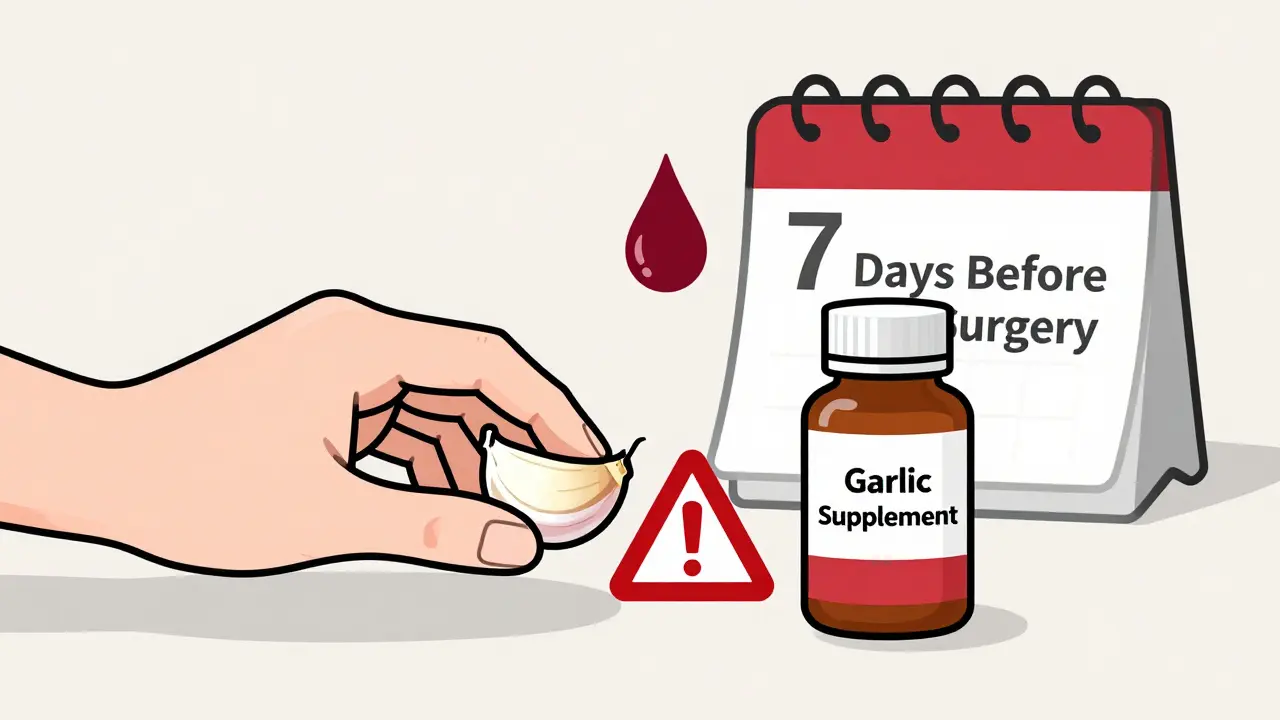
Unlike aspirin, which wears off in a day or two, ajoene binds irreversibly to platelets. Once a platelet is affected, it stays that way until your body makes new ones - which takes about 7 to 10 days. This is why doctors tell you to stop garlic supplements at least a week before surgery. It’s not a suggestion. It’s a safety rule backed by real cases.
Real Cases: When Garlic Almost Killed Someone
In 2012, two patients scheduled for routine colon surgery ended up in emergency open procedures because their bodies wouldn’t stop bleeding. Neither had a history of clotting issues. Neither was on prescription blood thinners. But both had been taking garlic supplements daily - one as high as 1,200 mg. The surgeons had to abandon minimally invasive techniques, create temporary ileostomies, and transfuse blood to save them.
This wasn’t an accident. It was predictable. The same thing happened to a patient undergoing heart valve replacement who took ginseng and garlic together. The bleeding was so severe, it triggered coagulopathy - a full-body failure to clot. These aren’t rare anecdotes. They’re documented in medical journals and reported to the NIH’s Adverse Event Reporting System.
How Much Garlic Is Too Much?
There’s a big difference between eating garlic and taking garlic supplements.
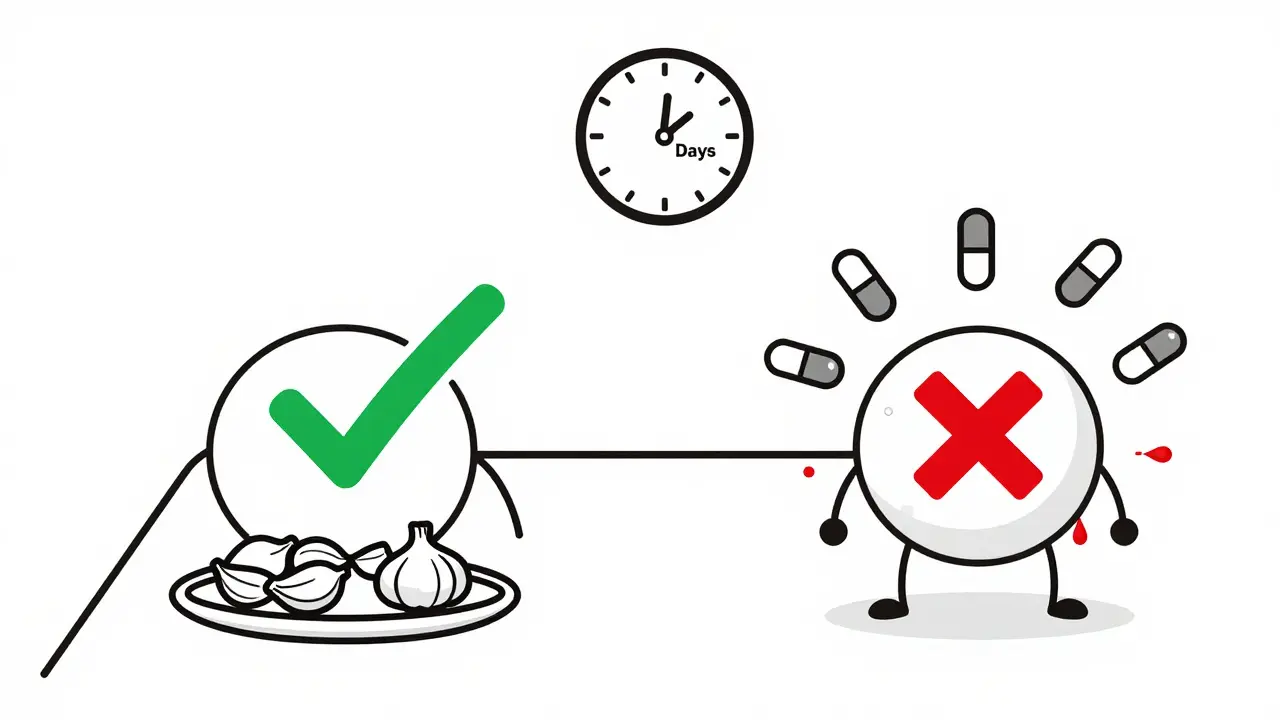
- One to two cloves of fresh garlic (about 3-6 grams) in your food? Generally safe.
- Aged garlic extract at 240 mg twice daily? Shown to prolong bleeding time by nearly 50% in clinical trials.
- A 600-1,200 mg daily supplement? That’s where the danger kicks in.
Studies show that patients taking these doses while on anticoagulants had more than double the risk of bruising, nosebleeds, or internal bleeding. One 2021 trial found that people on garlic supplements had an average bleeding time of 14.3 minutes - compared to 9.7 minutes in those who didn’t take it. That’s not just a number. That’s a life-threatening delay in clotting.
Which Blood Thinners Are Most at Risk?
Garlic interacts with nearly all anticoagulants - but some are more dangerous than others.
- Warfarin (Coumadin): Garlic can spike INR levels unpredictably. Patients in one study needed dose adjustments of 10-25% within days of starting or stopping garlic.
- Apixaban, Rivaroxaban, Dabigatran: These newer drugs don’t have as much data - but they still carry warnings. The European Medicines Agency lists garlic as a confirmed risk.
- Aspirin and Clopidogrel: Combining garlic with these antiplatelet drugs led to thrombocytopenia (low platelets) in 22.4% of users - compared to 8.7% in non-users.
The American Heart Association now explicitly warns: "Garlic supplements should be avoided in patients receiving anticoagulant therapy due to potential for serious bleeding complications." They cite 12 documented cases of brain bleeds linked to garlic-anticoagulant combos.
What About Other Supplements?
Garlic isn’t alone. It’s part of a dangerous group known as "natural blood thinners."
- Feverfew
- Fish oil
- Ginger
- Ginkgo
- Turmeric
Each of these has been linked to bleeding events. But garlic stands out because of its irreversible effect on platelets. Unlike fish oil, which can be stopped a few days before surgery, garlic needs a full week - sometimes more.
And here’s the kicker: many supplements don’t even tell you how much ajoene they contain. A 2024 analysis of 45 garlic products found that 68% didn’t list ajoene content at all. Some had none. Others had over 3 mg per pill - enough to double bleeding risk.
What Should You Do?
If you’re on a blood thinner and taking garlic supplements, here’s what to do - right now:
- Stop taking garlic supplements immediately. Even if you feel fine.
- Talk to your doctor. Don’t wait until your next appointment. Call now.
- Get tested. If you’re on warfarin, ask for an INR check within 48 hours of stopping. If you’re scheduled for surgery, mention garlic use - even if you think it’s "just a supplement."
- Switch to food. If you love garlic for flavor, keep using it in cooking. A few cloves in a stir-fry won’t hurt you.
For patients preparing for surgery, the guidelines are clear: stop garlic supplements at least seven days before. Studies show those who followed this rule had bleeding levels nearly identical to people who never took supplements. Those who stopped within three days? Their blood loss tripled. Transfusion rates jumped from 8% to nearly 30%.
Why Do Doctors Care So Much?
Because this isn’t about "natural" versus "chemical." It’s about predictable versus unpredictable.
Doctors can adjust your warfarin dose. They know how aspirin works. But garlic? It’s a wild card. One pill might have no effect. Another might be as strong as 100 mg of aspirin. There’s no standard. No labeling. No warning on the bottle.
That’s why Harvard Medical School’s Dr. Pieter Cohen says: "I don’t know of any evidence that taking garlic supplements is better for your heart than eating garlic in food." In other words - if you want the health benefits, get them from your kitchen. Skip the pills.
What About Statins and Blood Pressure Meds?
Garlic doesn’t just mess with blood thinners. It can also interfere with:
- Statins: May increase risk of muscle damage, including rhabdomyolysis - a condition that can destroy muscle and damage kidneys.
- Blood pressure drugs: Can cause dangerous drops in pressure, especially if you’re already on multiple medications.
The NIH case studies didn’t just track bleeding. They saw patients with sudden, severe drops in blood pressure after starting garlic supplements. One man collapsed while walking his dog. He was on lisinopril. His doctor now checks for supplement use before every prescription.
Bottom Line: Don’t Guess. Ask.
You might think, "I’m healthy. I’m just taking garlic for my immune system." But if you’re on a blood thinner, your immune system isn’t the issue. Your bleeding risk is.
There’s no safe gray zone. If you’re taking anticoagulants - whether it’s warfarin, Eliquis, Plavix, or anything else - garlic supplements are not optional. They’re a hazard.
Stop them. Talk to your provider. And if you’re planning surgery - even a minor one - tell them about every supplement you take. Not just the ones with big labels. The little ones. The ones you bought online. The ones your friend said were "harmless."
Because when it comes to bleeding risk, there’s no such thing as "just a little."
Can I still eat garlic if I’m on blood thinners?
Yes. Eating garlic as a spice - one to two cloves per day in food - is generally safe. The risk comes from concentrated supplements, not dietary garlic. Cooking breaks down the active compounds, so you won’t get the same blood-thinning effect. Stick to food. Skip the pills.
How long should I stop garlic before surgery?
At least seven days. This is based on the irreversible way ajoene affects platelets. Your body needs that time to replace the damaged cells. Stopping just 2-3 days before surgery isn’t enough. Studies show patients who stopped within three days had nearly triple the blood loss and triple the need for transfusions compared to those who stopped a week out.
Do all garlic supplements have the same effect?
No. There’s huge variation. Oil macerates and aged garlic extracts have the highest levels of ajoene and pose the greatest risk. Many products don’t even list how much ajoene they contain. Lab tests found some supplements had no ajoene at all, while others had enough to double bleeding risk. You can’t trust labels. If you’re on blood thinners, avoid all supplements - regardless of claims.
Is garlic dangerous with newer blood thinners like Eliquis or Xarelto?
Yes. While most studies focus on warfarin, evidence shows garlic increases bleeding risk with direct oral anticoagulants (DOACs) too. The European Medicines Agency and NIH both list garlic as a confirmed interaction with apixaban, rivaroxaban, and dabigatran. The mechanism is the same: platelet inhibition. Even if your doctor says it’s "unlikely," the data says otherwise. Play it safe.
What should I do if I’ve been taking garlic and just found out I’m on blood thinners?
Stop the supplement immediately. Call your doctor or pharmacist and ask for an INR test if you’re on warfarin. If you’re on a DOAC and have any signs of unusual bruising, nosebleeds, or blood in urine/stool, seek medical attention. Don’t wait. The interaction can be silent until it’s too late.


Jacob Carthy
February 25, 2026 AT 17:11Joanna Reyes
February 26, 2026 AT 21:46David McKie
February 27, 2026 AT 21:30Joseph Cantu
February 28, 2026 AT 13:25Nick Hamby
March 1, 2026 AT 08:11Vanessa Drummond
March 1, 2026 AT 15:48Southern Indiana Paleontology Institute
March 2, 2026 AT 06:32Anil bhardwaj
March 2, 2026 AT 11:53Stephen Archbold
March 3, 2026 AT 11:33kirti juneja
March 3, 2026 AT 14:04Nerina Devi
March 5, 2026 AT 02:32Dinesh Dawn
March 6, 2026 AT 06:43Lisandra Lautert
March 7, 2026 AT 02:25