When you pick up a bottle of medication at the pharmacy, it is likely a generic version of a brand-name drug. These generics cost significantly less but must meet the same high standards for safety and effectiveness as their expensive counterparts. But who actually checks that they do? The answer lies within the FDA Office of Generic Drugs (OGD), a specialized division inside the Food and Drug Administration's Center for Drug Evaluation and Research (CDER). This office acts as the gatekeeper for the generic drug market in the United States, ensuring that cheaper alternatives are truly equivalent to the originals.
Understanding how OGD works helps clarify why some drugs take years to get approved while others appear quickly after patents expire. It also sheds light on the complex legal battles between brand-name manufacturers and generic companies. This article breaks down the structure, responsibilities, and critical role of OGD in keeping your medicine safe, affordable, and available.
What Is the Office of Generic Drugs?
The Office of Generic Drugs is the primary entity responsible for reviewing, approving, and regulating generic drugs in the US. Established as a distinct "super office" within CDER in December 2013, OGD was elevated to report directly to the CDER director. This structural change wasn't just bureaucratic reshuffling; it was a strategic move to streamline the review process and address growing backlogs in generic drug approvals.
Before this reorganization, generic drug reviews were scattered across various divisions, leading to inefficiencies. By consolidating these functions under one roof, the FDA aimed to improve speed and consistency. Today, OGD oversees the entire lifecycle of generic drug regulation, from initial application submission to post-market safety monitoring. Its mission is straightforward: ensure high-quality, affordable generic drugs are available to the American public by enforcing strict standards for safety and effectiveness.
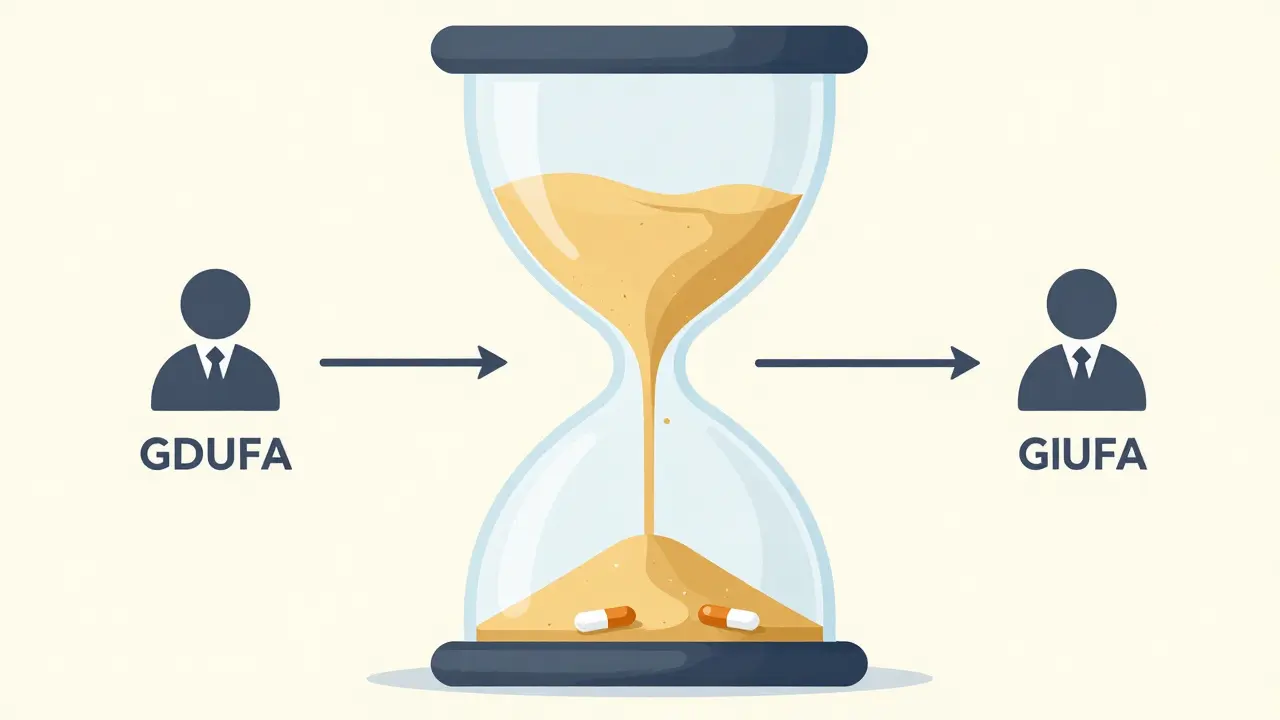
OGD operates under a unique funding model called Generic Drug User Fee Amendments (GDUFA). Unlike many government agencies funded solely by taxpayer dollars, OGD receives significant revenue from user fees paid by generic drug manufacturers. This partnership allows the FDA to hire more reviewers and commit to specific performance goals, such as reviewing applications within set timeframes. In return, manufacturers get predictable timelines and clearer communication during the review process.
How Is OGD Structured?
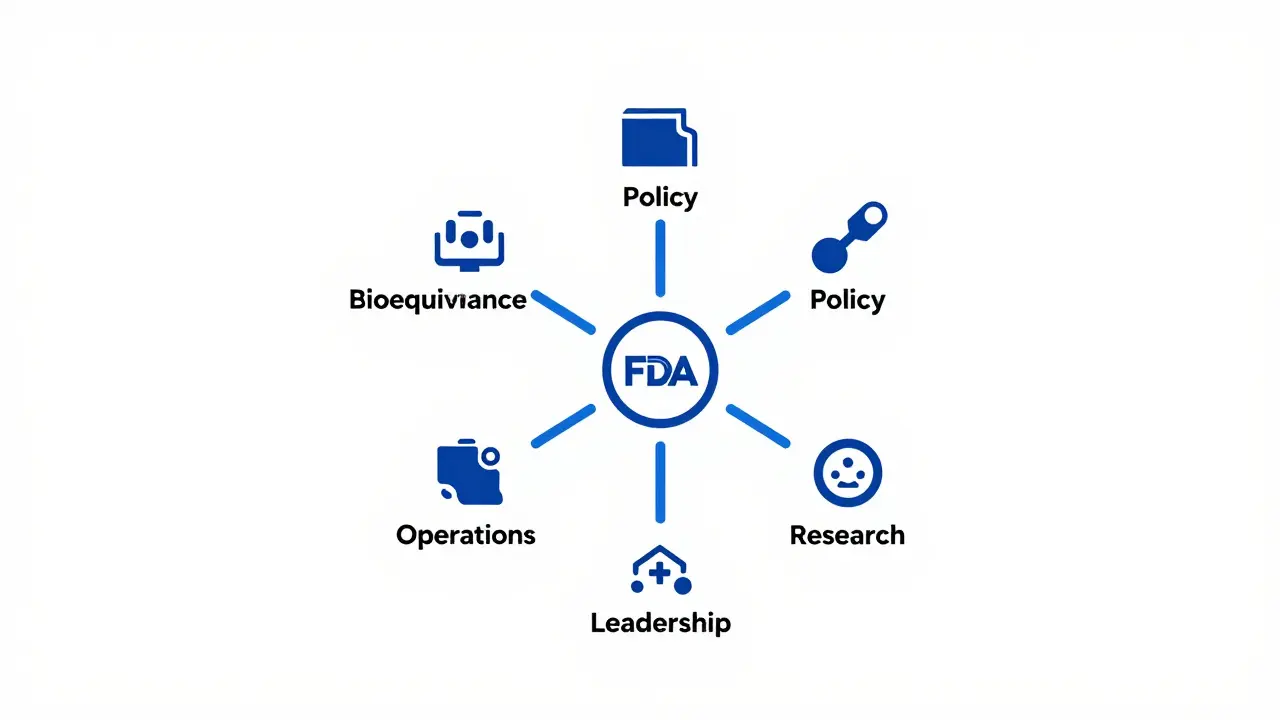
To handle its massive workload, OGD is divided into five main sub-offices, each with specific expertise. Think of it like a hospital: you have specialists for different organs, but they all work together to treat the patient. Here is how OGD’s internal structure supports its mission:
| Sub-Office | Primary Function | Key Divisions |
|---|---|---|
| Immediate Office (IO) | Leadership, strategy, and global coordination | Global Generic Drug Affairs Team, Division of Legal and Regulatory Support |
| Office of Bioequivalence (OB) | Ensuring generic drugs perform similarly to brand names | Divisions of Bioequivalence, Division of Clinical Review |
| Office of Generic Drug Policy | Handling patent issues and regulatory policy | Division of Policy Development, Hatch-Waxman experts |
| Office of Regulatory Operations (ORO) | Managing the day-to-day review workflow | Division of Project Management, Labeling Review, Filing Review |
| Office of Research and Standards (ORS) | Developing scientific methods and quality standards | Division of Therapeutic Performance, Quantitative Methods |
The Immediate Office serves as the brain of OGD. It provides strategic direction and houses the Global Generic Drug Affairs Team, which coordinates with international regulators. This is crucial because drug development is no longer confined to US borders. The Immediate Office also includes legal support teams that advise on complex regulatory questions.
The Office of Bioequivalence is perhaps the most scientifically intensive unit. It determines whether a generic drug delivers the same amount of active ingredient into the bloodstream over the same period as the brand-name drug. This involves rigorous clinical studies and statistical analysis. If the bioequivalence isn’t proven, the drug cannot be approved.
The Office of Regulatory Operations acts as the engine room. It employs Regulatory Project Managers (RPMs) who oversee individual Abbreviated New Drug Applications (ANDAs). RPMs coordinate between scientists, chemists, and clinicians to ensure every aspect of the application is reviewed thoroughly and on time. They are the single point of contact for applicants, reducing confusion and delays.
Core Responsibilities: From Application to Approval
The heart of OGD’s work is the review and approval of Abbreviated New Drug Applications (ANDAs). When a company wants to sell a generic version of an existing drug, they file an ANDA. Unlike a full New Drug Application (NDA), which requires extensive new clinical trials, an ANDA relies on the data already established for the brand-name drug. The applicant only needs to prove that their version is bioequivalent and meets quality standards.
Here is what happens during the review process:
- Filing Review: Experts check if the application contains all necessary information. If not, it is marked as "Refuse to File," and the clock stops until the applicant fixes the issues.
- Scientific Review: Teams examine chemistry, manufacturing, controls, and bioequivalence data. Scientists verify that the drug is made consistently and safely.
- Labeling Review: Ensures the package insert matches the brand-name drug’s labeling, including warnings and usage instructions.
- Patent Certification: Legal teams assess whether the generic applicant has properly certified that they won’t infringe on existing patents or will challenge them.
One of OGD’s most critical responsibilities is navigating the Hatch-Waxman Act (Drug Price Competition and Patent Term Restoration Act of 1984). This law created the ANDA pathway but also introduced complex patent provisions. Brand-name companies can sue generic makers for patent infringement, which triggers an automatic 30-month stay on FDA approval. OGD’s legal experts monitor these lawsuits and determine when the stay ends, allowing approval to proceed if the patent issue is resolved in favor of the generic maker.
OGD also prioritizes public health needs. During drug shortages, the office fast-tracks reviews for generic versions of essential medications. This flexibility ensures hospitals and pharmacies don’t run out of life-saving treatments. Additionally, OGD investigates adverse event reports related to generic drugs, working closely with other FDA offices to track safety signals.
The Role of GDUFA in Shaping OGD
You can’t talk about OGD without mentioning GDUFA. First implemented in 2012 and reauthorized since, GDUFA transformed how the FDA regulates generic drugs. Before GDUFA, the agency struggled with understaffing and outdated processes, leading to long delays. Manufacturers had little visibility into where their applications stood.
GDUFA changed the game by introducing performance goals. For example, OGD committed to reviewing 90% of complete ANDAs within 10 months. To achieve this, the FDA hired hundreds of new reviewers and invested in modern technology. In exchange, generic manufacturers pay substantial user fees-tens of millions of dollars annually. This creates a direct link between industry investment and regulatory efficiency.
However, GDUFA isn’t perfect. Critics argue that relying on user fees might create conflicts of interest, though the FDA maintains that safety decisions remain independent. Regardless, the framework has undeniably sped up the availability of generic drugs. Patients now see more competition sooner after patents expire, driving down costs faster than in previous decades.
Why Does OGD Matter to You?
If you’re a patient, OGD’s work directly impacts your wallet and health. Generic drugs account for nearly 90% of prescriptions filled in the US. Without OGD’s rigorous oversight, there would be no guarantee that those cheap pills are safe. Imagine buying a generic blood pressure medication that doesn’t dissolve properly in your stomach. That could lead to dangerous spikes in blood pressure. OGD prevents this by enforcing strict quality controls.
For healthcare providers, OGD’s consistency means they can trust that switching patients from brand-name to generic drugs won’t compromise treatment outcomes. The bioequivalence standards ensure therapeutic interchangeability. Doctors don’t need to worry about subtle differences in efficacy unless specifically noted in the labeling.
Even if you’re not taking medication right now, OGD influences the broader healthcare economy. Lower drug prices reduce insurance premiums and Medicare spending. This frees up resources for other medical services and innovations. In short, OGD plays a quiet but vital role in making healthcare more accessible and sustainable.
What is the difference between OGD and CDER?
CDER (Center for Drug Evaluation and Research) is the larger parent organization within the FDA that oversees all human prescription drugs. OGD is a specific office inside CDER focused exclusively on generic drugs. Think of CDER as the entire university, and OGD as the department of biology.
How long does it take for OGD to approve a generic drug?
Under GDUFA commitments, OGD aims to review 90% of complete ANDAs within 10 months. However, this timeline can extend if the application requires additional information, faces patent litigation stays, or encounters complex scientific questions.
Can OGD reject a generic drug application?
Yes. If the data shows the generic drug is not bioequivalent to the brand-name version, or if manufacturing quality fails to meet standards, OGD will issue a Complete Response Letter detailing the deficiencies. The applicant can then revise and resubmit the application.
Who pays for OGD’s operations?
OGD is primarily funded through user fees collected from generic drug manufacturers under the GDUFA program. These fees supplement federal appropriations and allow the FDA to maintain a robust review workforce and infrastructure.
Does OGD regulate over-the-counter (OTC) generic drugs?
No. OGD focuses on prescription generic drugs. Over-the-counter generic products are regulated under monographs managed by the Office of Over-the-Counter Human Drug Products, another division within CDER.