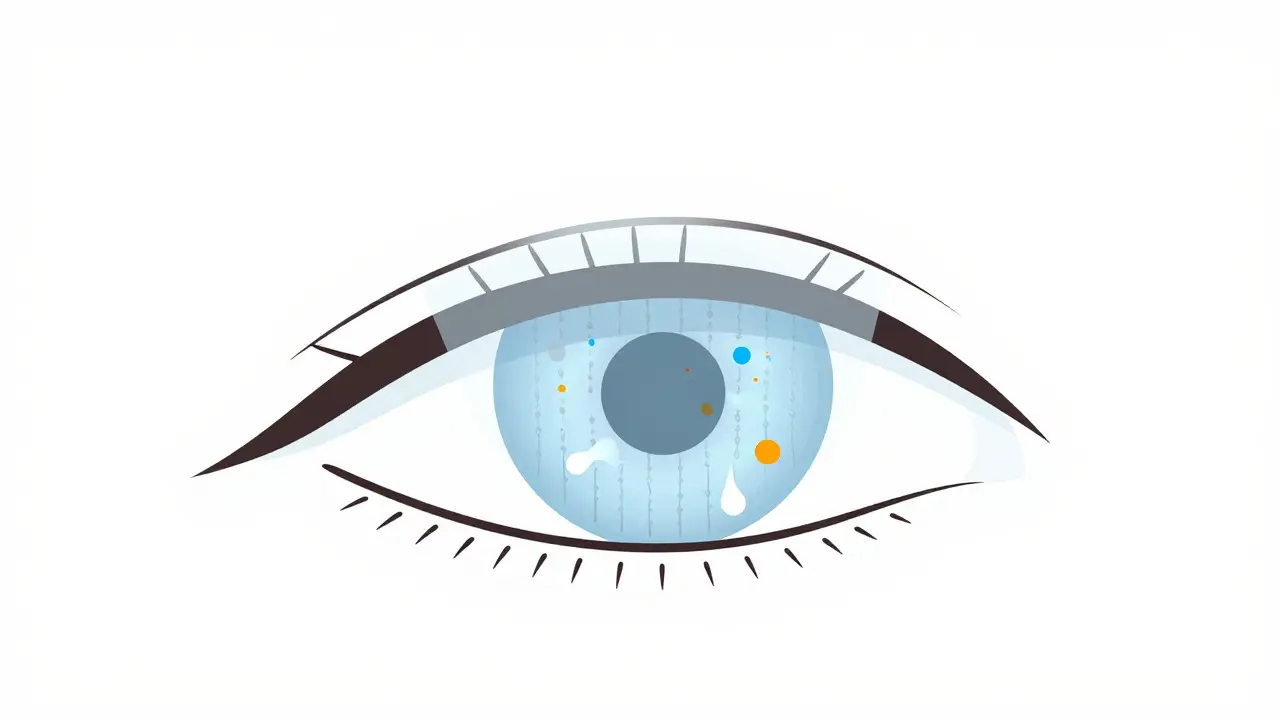
Your eyes feel gritty, burning, or like they are filled with sand. You blink, but the relief doesn't last. This isn't just "dry eyes" in the traditional sense. For millions of people, this discomfort stems from a specific mechanical failure inside your eyelids known as Meibomian Gland Dysfunction, commonly referred to by its acronym MGD. It is a chronic condition where the glands responsible for producing the oily layer of your tears become blocked or produce poor-quality oil. Without that oil, your tears evaporate too quickly, leaving the surface of your eye exposed and irritated. Understanding MGD is the first step toward stopping the cycle of irritation and restoring comfort.
Understanding Meibomian Gland Dysfunction
To treat MGD effectively, you need to understand what is actually happening behind your eyelids. Your eyelids contain tiny structures called meibomian glands. These glands secrete meibum, an oily substance that sits on top of your tear film. Think of meibum as a sealant; it prevents your watery tears from evaporating into the air. When these glands malfunction, that seal breaks. The International Task Force on Meibomian Gland Dysfunction, established in 2010, defined MGD as a distinct ocular surface disorder characterized by obstruction or changes in the glandular secretions.
There are two main types of MGD you should be aware of:
- Obstructive MGD (OMGD): This is the most common form. The glands are physically blocked. Thickened oil gets stuck inside the ducts, preventing it from reaching the eye. Over time, the pressure can cause the gland to atrophy, meaning the tissue dies off permanently.
- Hypersecretory MGD (HMGD): In this case, the glands are not blocked, but they produce excessive amounts of low-quality oil. This oil is often watery or inflammatory, failing to provide the necessary barrier against evaporation.
The prevalence of this condition is staggering. Current estimates suggest that MGD affects approximately 38% to 50% of patients visiting ophthalmology clinics. More alarmingly, it is the root cause of about 86% of all dry eye disease cases. If left untreated, the consequences go beyond discomfort. Chronic inflammation can lead to corneal damage, vision impairment, and permanent loss of gland function. Once a meibomian gland is gone, it does not grow back. Early intervention is critical to preserving the remaining healthy tissue.
Diagnosing the Problem
You cannot fix what you cannot see. Diagnosing MGD requires more than just asking how your eyes feel. It involves looking at the structure and function of the glands themselves. Modern diagnostic tools have made this process much more precise than in the past.
A comprehensive exam typically includes several key assessments:
- Lipid Layer Analysis: Doctors examine the quality of the oil on your tear film. Healthy oil appears rainbow-colored under certain lights. Poor-quality oil may look thin, broken, or absent.
- Gland Expression: The clinician gently presses on your eyelids to see if oil flows out easily. If no oil comes out, or if it looks thick and cloudy like toothpaste, it indicates obstruction.
- Meibography: This imaging technique uses infrared light to create a picture of the glands inside your eyelids. It reveals how many glands are present and how much atrophy has occurred. Seeing the actual dropout of glands can be a powerful motivator for sticking to treatment plans.
- Ocular Surface Disease Index (OSDI): This is a questionnaire that quantifies your symptoms. Scores help track progress over time, providing objective data to complement physical exams.
If you suspect you have MGD, do not wait until your vision is affected. Schedule an exam with a specialist who focuses on ocular surface disease. General check-ups often miss the subtle signs of early gland dysfunction.
In-Office Procedures: Advanced Therapies
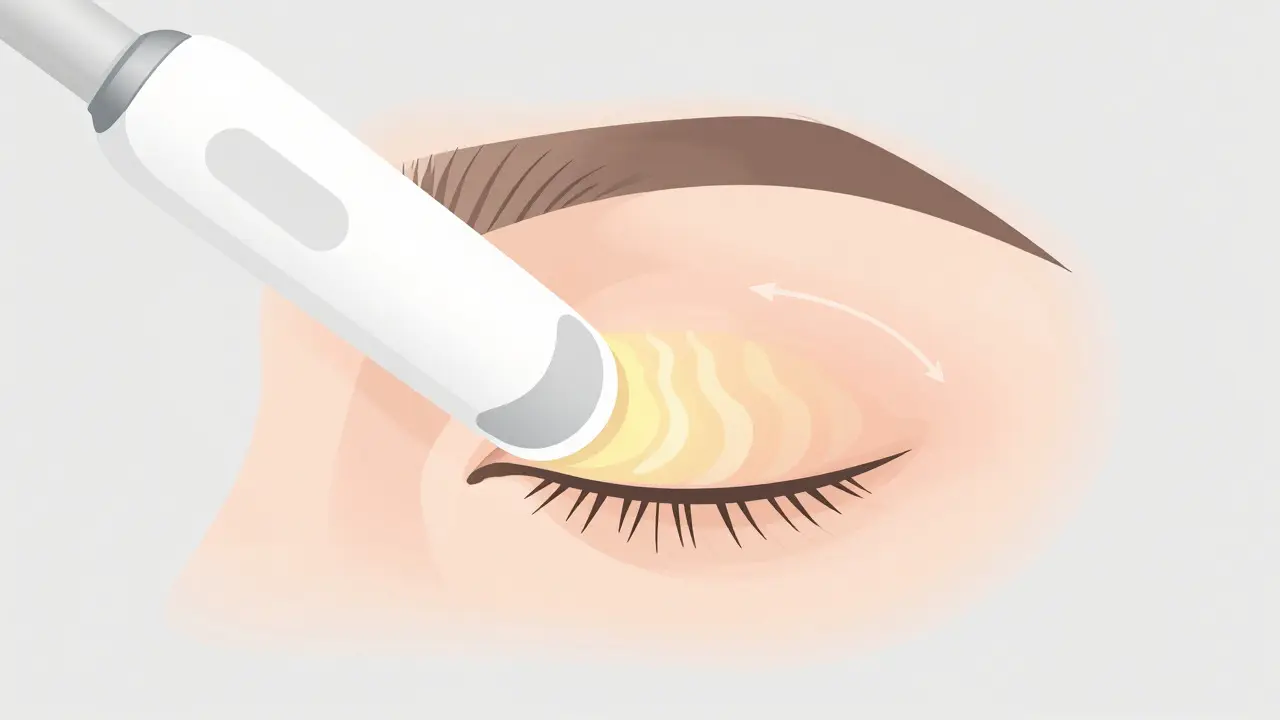
When home remedies fail, in-office procedures offer a way to mechanically clear blockages and reduce inflammation. These treatments are designed to restore gland function that has been lost due to chronic obstruction.
| Treatment | Mechanism | Duration & Frequency | Key Benefit |
|---|---|---|---|
| LipiFlow Thermal Pulsation | Applies controlled heat (42.5°C) to inner eyelids while massaging glands to express contents. | One session, ~12 minutes per eye. | High efficacy for obstructive MGD; significant improvement in gland expressibility. |
| Intense Pulsed Light (IPL) | Uses light wavelengths (500-1200 nm) to target abnormal blood vessels, reducing inflammation. | Four sessions, spaced three weeks apart. | Reduces underlying inflammation; works well when combined with gland expression. |
| Meibomian Gland Probing (MGP) | Mechanical relief of obstructions using a specialized probe under local anesthesia. | One session, 30-40 minutes. | Directly clears deep blockages that heat alone cannot resolve. |
LipiFlow is one of the most widely recognized treatments. Cleared by the FDA in 2011, it applies precise heat to the inner eyelid surface while simultaneously providing gentle massage. Clinical studies show that patients experience significant improvements in their ability to express gland contents. However, it works best for obstructive MGD. Patients with hypersecretory MGD tend to see less benefit because the issue is not blockage but poor oil quality.
IPL Therapy takes a different approach. Instead of focusing solely on the glands, it targets the blood vessels near the skin surface. Abnormal telangiectatic vessels contribute to inflammation around the glands. By causing thrombosis in these vessels, IPL reduces the inflammatory environment. Research indicates that combining IPL with manual gland expression yields better results than either treatment alone. Patients report sustained improvements in their OSDI scores for up to six months after the final session.
Meibomian Gland Probing is a more invasive option reserved for severe cases. Developed by Dr. Steven L. Maskin, this procedure uses a tiny probe to physically open blocked ducts. It is particularly effective when fibrosis (scarring) has hardened the blockages. While it carries a slightly higher risk profile due to the mechanical nature of the procedure, it can restore flow in glands that other methods have failed to reach.
Medications and Pharmacological Support
Procedures address the mechanics, but medications manage the biology. Inflammation is both a cause and a consequence of MGD. Breaking this cycle often requires pharmacological support.
Oral antibiotics have long been a staple in MGD treatment, but the protocol has evolved. Historically, doctors prescribed doxycycline for weeks or months. Recent evidence favors short-course oral azithromycin. A study published in *Eye* found that a five-day course of azithromycin (500 mg on day one, followed by 250 mg daily) was significantly better tolerated than a month-long doxycycline regimen. It showed equivalent efficacy in reducing redness and improving symptoms, with far fewer side effects like stomach upset or sun sensitivity.
Topical treatments also play a crucial role. Lifitegrast 5% is a prescription drop that blocks lymphocyte activation, directly targeting the immune response driving inflammation. Clinical trials demonstrated that lifitegrast significantly reduced corneal staining in patients with advanced MGD. Another emerging option is nanomicellar cyclosporine, which offers better penetration into the eye tissues compared to traditional formulations, potentially enhancing its effectiveness.
It is important to note that medications work best when combined with procedural therapies. Anti-inflammatory drops can soothe the eye, but they cannot unblock a physically clogged gland. A multimodal approach-combining drugs with mechanical clearance-is consistently shown to yield the highest success rates.
The Critical Role of Home Care
No matter how advanced the in-office treatment, it will fail without consistent home maintenance. Think of professional procedures as resetting the clock. Home care keeps the hands moving forward. The standard home regimen is simple but demanding in terms of consistency.
Here is the daily routine recommended by specialists:
- Warm Compresses: Apply heat to your closed eyelids for 10-15 minutes. The goal is to melt the thickened oil inside the glands. Use a mask that retains heat, such as the Bruder Mask, set between 40-42°C. Microwaveable masks often cool down too quickly, making them less effective.
- Lid Massage: Immediately after heating, gently massage your eyelids. Roll your fingers along the edge of the eyelid, pushing outward toward the lashes. This helps express the liquefied oil from the glands.
- Lid Hygiene: Clean your eyelid margins to remove debris and bacteria. Use a hypochlorous acid solution, such as OCuSOFT Lid Scrub. These solutions are gentle yet effective at breaking down biofilms that contribute to inflammation.
Compliance is the biggest hurdle. Data shows that only 43% of patients stick to their home regimens after six months. Why? Because it feels tedious. But the alternative is recurrence. Studies indicate that without daily warm compresses and lid hygiene, symptom recurrence rates exceed 60% within six months, even after successful LipiFlow treatment. Make it part of your nightly ritual, like brushing your teeth. Consistency beats intensity every time.

Cost, Insurance, and Realistic Expectations
Let's talk about the elephant in the room: cost. MGD treatments are expensive, and insurance coverage is inconsistent. In the United States, a single LipiFlow treatment can cost between $1,500 and $2,500 per eye. IPL sessions range from $800 to $1,200 each. Meibomian gland probing adds another $750 to $1,200 to the bill.
Insurance companies often classify these procedures as "investigational" or "experimental." For example, the Veterans Affairs Community Care Network currently designates thermal evacuation therapies as investigational. Major commercial insurers approve only a small percentage of claims for these treatments. This financial barrier forces many patients to delay care, leading to worse outcomes later.
However, consider the cost of inaction. Untreated MGD can lead to chronic pain, inability to work, and potential vision loss. The global dry eye treatment market is projected to grow to $7.1 billion by 2028, reflecting the increasing demand for these solutions. While out-of-pocket costs are high, many patients report that the improvement in quality of life justifies the expense. Look for payment plans or discounts offered by clinics. Some centers offer package deals for multiple sessions, which can reduce the overall cost.
Set realistic expectations. MGD is a chronic condition. There is no permanent cure. Treatments aim to manage the disease, relieve symptoms, and prevent progression. You may need repeat procedures annually or biannually. The goal is not to eliminate the need for care forever, but to maintain a state of comfort and functional vision.
Future Directions and Emerging Therapies
Research into MGD is accelerating. New technologies and biological insights are opening doors to more effective treatments. One promising area is exosome therapy. Early trials combining exosomes with meibomian gland probing and heat treatment showed a 92% symptom improvement at six months, compared to 76% with standard therapy. Exosomes are tiny vesicles that carry genetic material between cells, potentially promoting healing and reducing inflammation at a cellular level.
Genetic research is also shedding light on the root causes of MGD. Scientists have identified involvement of the IL-17 pathway in the inflammatory process. This discovery could lead to targeted biologic therapies that specifically block the signals driving gland dysfunction, offering a more precise treatment than broad-spectrum anti-inflammatories.
Additionally, the 2023 Dry Eye Workshop II updated guidelines now recommend treating MGD before cataract surgery, even in asymptomatic patients. Pre-treating MGD has been shown to lower postoperative inflammation rates by 40%, leading to smoother recoveries and better visual outcomes. This shift underscores the importance of recognizing MGD not just as a nuisance, but as a significant factor in overall eye health and surgical success.
Is Meibomian Gland Dysfunction permanent?
MGD itself is a chronic condition, meaning it requires ongoing management. However, the symptoms are highly treatable. The structural damage, such as gland atrophy, is permanent. Once a gland dies, it does not regenerate. Therefore, early treatment is essential to preserve existing gland function and prevent further loss.
Does insurance cover LipiFlow or IPL?
Coverage varies widely. Many major insurers consider these procedures investigational and deny claims. Only about 15-20% of commercial plans currently cover MGD procedures. It is crucial to check with your specific provider and ask for pre-authorization. Some clinics offer financial assistance programs or payment plans to help mitigate the cost.
How long does it take for MGD treatments to work?
Results vary by treatment. LipiFlow often provides immediate relief after the single session, with peak benefits seen over the following weeks. IPL requires four sessions spaced three weeks apart, so full results are typically assessed after the final treatment. Oral antibiotics like azithromycin show improvement within days. Consistent home care is required to maintain these benefits long-term.
Can I wear contact lenses with MGD?
Yes, but it can be challenging. MGD makes contact lens wear uncomfortable due to increased evaporation and inflammation. Treating the underlying MGD often improves contact lens tolerance significantly. After successful treatment, 68% of patients report improved ability to wear contacts. Silicone hydrogel lenses are generally preferred as they allow more oxygen to reach the eye.
What is the difference between dry eye and MGD?
Dry eye is a broad term describing a lack of lubrication. MGD is a specific cause of dry eye. In MGD, the problem is not necessarily a lack of water, but a lack of oil. This leads to evaporative dry eye, where tears disappear too quickly. Treating MGD addresses the root cause of this type of dry eye, whereas artificial tears only provide temporary symptomatic relief.