Kidney Medication Safety Calculator
This tool helps you understand if your current medication doses are safe based on your kidney function (eGFR). Enter your eGFR value and select your medication to get personalized safety guidance.
eGFR values: 90+ (normal), 60-89 (stage 2), 30-59 (stage 3), 15-29 (stage 4), below 15 (stage 5)
Enter your eGFR and medication to see safety recommendations.
Key Takeaways
• Always ask for your eGFR at every doctor visit
• NSAIDs triple kidney injury risk when eGFR < 60
• Metformin requires dose adjustment when eGFR < 45
• Always check medication labels for kidney dosing information
• Use the Meds & CKD app for full medication safety review
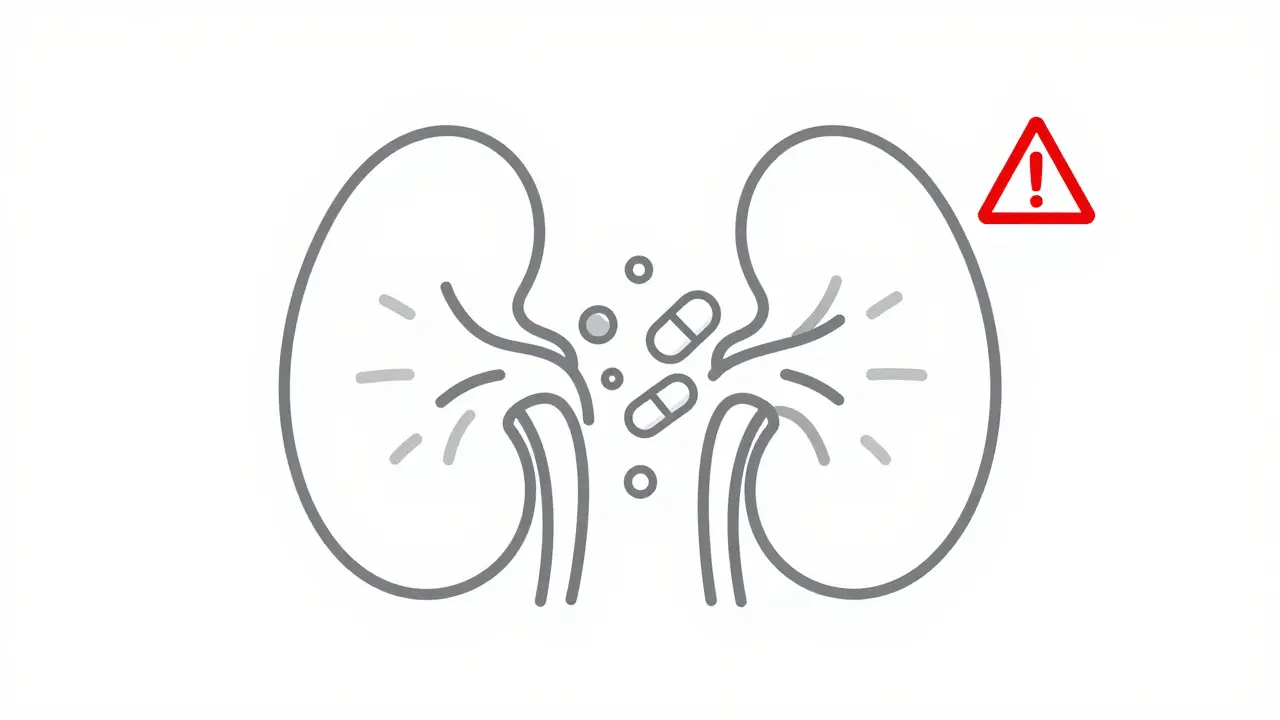
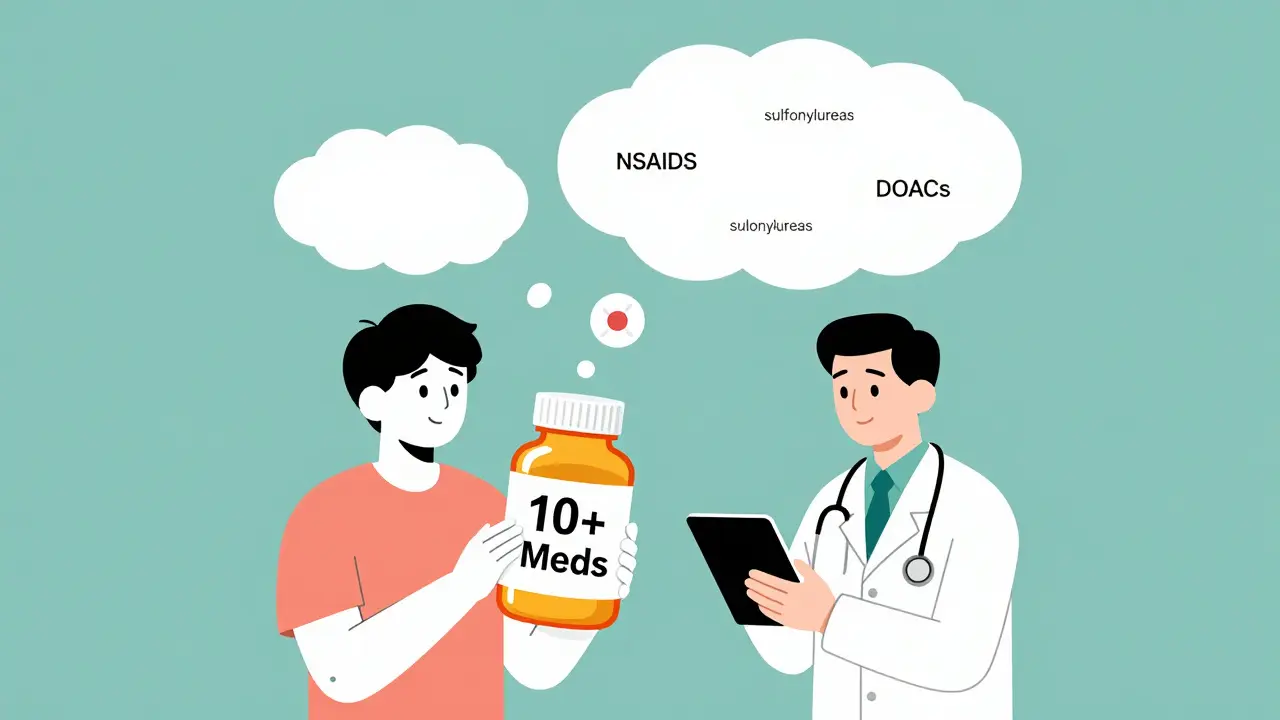
When your kidneys aren’t working right, your body can’t flush out medicines like it should. That means drugs stick around longer-sometimes dangerously so. For someone with chronic kidney disease (CKD), even a normal dose of a common painkiller could lead to hospitalization. This isn’t rare. Around 37 million American adults have CKD, and many are taking 10 or more medications daily for diabetes, high blood pressure, or heart problems. The problem? Most of those drugs rely on the kidneys to clear them. When kidney function drops, those drugs pile up. And that buildup can turn harmless pills into silent poisons.
How Kidneys Handle Medications
Your kidneys don’t just make urine. They’re your body’s main filter for drugs. About 30% of all medications are cleared directly through the kidneys. Others are broken down by liver enzymes, but even those often need healthy kidneys to remove the leftover pieces. When your kidneys start to fail, this cleanup system slows down. The result? Drugs stay in your bloodstream longer than they should. The key number doctors use is eGFR-estimated glomerular filtration rate. It tells you how well your kidneys are filtering. A normal eGFR is above 90 mL/min/1.73m². Once it drops below 60, you’re in stage 3 CKD. That’s when things start getting risky. At this point, 40% of commonly prescribed drugs need dose changes. By stage 4 (eGFR under 30), that number jumps even higher. Many patients never get this warning because their doctor only checks serum creatinine-ignoring the eGFR calculation entirely. That mistake happens in 35% of primary care visits.Medications That Are Especially Dangerous
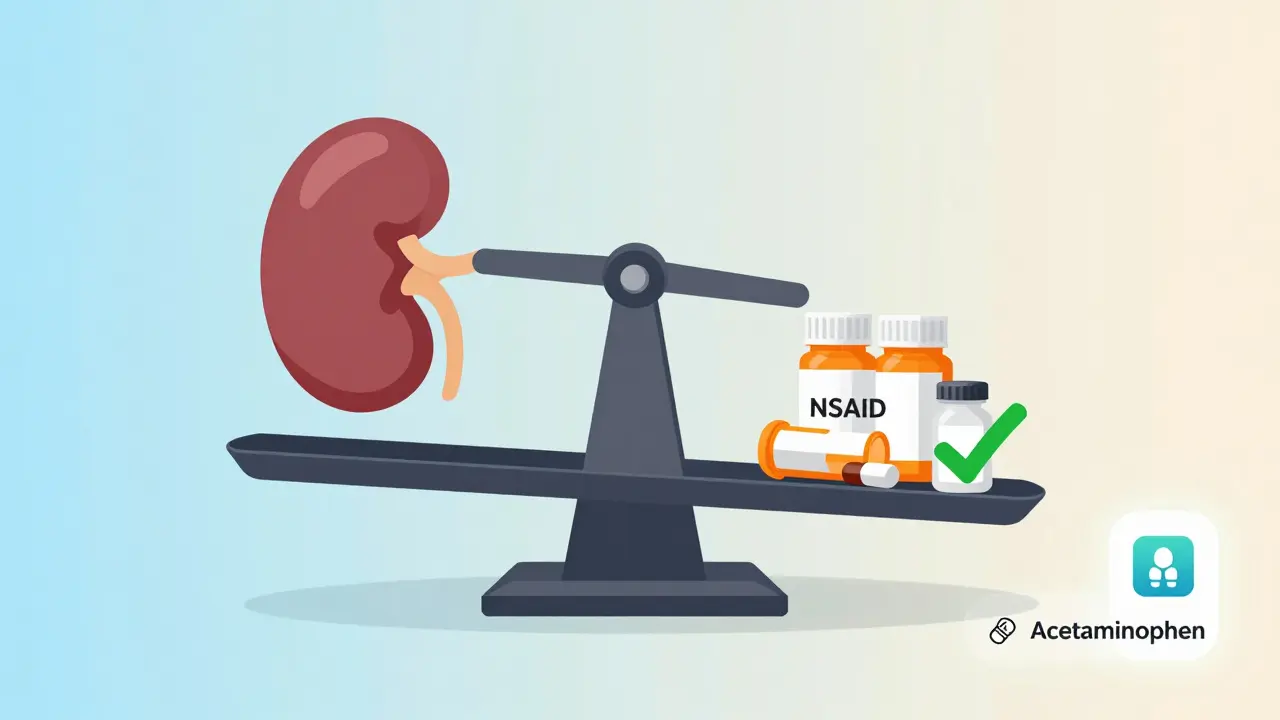
Not all drugs are equal when it comes to kidney risk. Some are far more likely to cause harm. Here are the big ones:- NSAIDs (ibuprofen, naproxen, diclofenac): These over-the-counter pain relievers block prostaglandins-chemicals that help keep blood flowing to the kidneys. In someone with CKD, this can cause sudden kidney failure. Studies show NSAIDs triple the risk of acute kidney injury when eGFR is below 60. One Reddit user shared how a standard dose of ibuprofen spiked their creatinine from 1.8 to 3.2 in just two days, landing them in the hospital.
- Metformin: Used by 18 million Americans with type 2 diabetes, metformin is usually safe. But if your eGFR drops below 30, it can cause lactic acidosis-a rare but deadly buildup of acid in the blood. Guidelines say to stop it below eGFR 30. Still, many patients keep taking it because their doctor doesn’t check kidney function regularly.
- Sulfonylureas (chlorpropamide, glyburide): These diabetes drugs can cause severe, long-lasting low blood sugar in CKD patients. Chlorpropamide’s half-life jumps from 34 hours to over 200 hours in stage 5 CKD. Glyburide’s active metabolite lingers for days. Both can trigger unconsciousness or seizures. Glipizide, on the other hand, is cleared by the liver and remains safe across all CKD stages.
- Trimethoprim (and co-trimoxazole): This antibiotic is often prescribed for urinary tract infections. But when combined with ACE inhibitors or ARBs-common blood pressure drugs-it can spike potassium levels by 1.2 to 1.8 mmol/L in just 48 hours. That’s enough to cause dangerous heart rhythms. One study found this combo increases hyperkalemia risk by 7-fold.
- Aciclovir: Used for herpes and shingles, aciclovir can form crystals in the kidney tubules, especially when eGFR is under 50. This leads to crystal nephropathy. About 5-15% of CKD patients on standard doses develop it. Some get confused, dizzy, or even have seizures from the drug buildup.
- Direct Oral Anticoagulants (DOACs) (apixaban, rivaroxaban): These blood thinners are popular because they don’t need regular blood tests like warfarin. But apixaban is 50% cleared by the kidneys. Rivaroxaban is 33%. In stage 4 CKD, bleeding risk rises by 40% compared to healthy kidneys. Many doctors still prescribe them at full doses without realizing the danger.
- Tacrolimus and cyclosporine: These are life-saving for transplant patients. But they’re narrow-window drugs-too little and the body rejects the organ; too much and they damage the kidneys. Chronic use leads to scarring in 25-30% of transplant recipients over time.
Why Doctors Miss These Risks
It’s not that doctors don’t care. It’s that the system makes it hard to get it right.- Many still rely on serum creatinine alone, not eGFR. Creatinine can look normal even when kidney function is falling-especially in older adults or those with low muscle mass.
- Dosing guidelines aren’t always in the electronic health record. If a doctor prescribes a drug without checking the renal dosing table, they won’t see the warning.
- Patients take multiple meds from different specialists. A cardiologist might prescribe a beta-blocker, a rheumatologist an NSAID, a diabetologist metformin. None of them know what the others prescribed.
- Over-the-counter drugs are the biggest blind spot. People think ibuprofen is safe because it’s sold next to aspirin. But for CKD patients, it’s as risky as a prescription drug.
A JAMA Internal Medicine study found that 42% of prescriptions for drugs cleared by the kidneys weren’t adjusted properly when eGFR was below 60. That’s not a small error. That’s a pattern.
What Happens When You Get It Wrong
The consequences aren’t theoretical. They’re life-altering.- Acute kidney injury from a drug overdose can require dialysis-even if your kidneys were fine before.
- Severe hypoglycemia from sulfonylureas can lead to falls, strokes, or cardiac arrest.
- Hyperkalemia from trimethoprim and ACE inhibitors can stop your heart.
- Drug-induced kidney injury increases hospital stays by 5-7 days and raises mortality by nearly 2 times compared to non-drug-related kidney failure.
One patient on the American Kidney Fund forum said: “I took ibuprofen for my arthritis like I always did. My doctor never told me it was dangerous. I woke up swollen, confused, and couldn’t urinate. They told me I almost died.”
And it’s expensive. Drug-related kidney injury adds $10,000 to $15,000 per hospitalization. In the U.S. alone, preventable cases cost $18.7 billion a year.
What You Can Do
You don’t have to wait for a mistake to happen. Here’s how to protect yourself:- Know your eGFR. Ask for it at every visit. Don’t settle for “your kidneys are fine” unless they show you the number.
- Keep a full medication list. Include every pill, patch, cream, and OTC drug. Bring it to every appointment-even if you think it’s not important.
- Ask about kidney safety. For every new prescription, ask: “Is this safe for my kidneys? Do I need a lower dose?”
- Avoid NSAIDs. Use acetaminophen (Tylenol) for pain instead. If you must use ibuprofen, never take it daily without checking with your doctor.
- Use a kidney-safe app. Apps like Meds & CKD (developed by Healthmap Solutions) scan your meds and flag risks based on your eGFR. Users report 82% better communication with their doctors after using it.
- Get a medication review. Ask your pharmacist for a “medication reconciliation.” Pharmacists are trained to spot these interactions. Many insurance plans offer this for free.
The Future Is Getting Smarter
There’s hope. New tools are emerging to catch these errors before they happen.- The FDA now requires all new drugs to include renal dosing info on their labels. Companies that skip this face fines up to $2.5 million.
- KidneyIntelX, a new AI tool approved in 2023, predicts individual toxicity risk with 89% accuracy by analyzing your meds, eGFR, age, and other factors.
- Electronic health records are starting to auto-flag risky prescriptions. Stanford researchers predict this will cut errors by 75% within five years.
- Pharmacogenomics-the study of how genes affect drug response-is being tested in clinical trials. Early results show a 63% drop in adverse events when dosing is personalized.
Still, the problem is huge. The Global Burden of Disease Study estimates 8.2 million people will suffer medication-related kidney injury every year through 2030. The good news? 65% of those cases are preventable-if we pay attention.
Can I still take ibuprofen if I have kidney disease?
No, it’s not safe. Even occasional use can cause sudden kidney damage if your eGFR is below 60. The risk triples. Use acetaminophen (Tylenol) instead for pain relief. If you’ve been taking ibuprofen daily, talk to your doctor about switching. Don’t stop suddenly if you’re on it for arthritis-ask for a safe plan.
How do I know if my medication dose needs adjusting?
Your eGFR is the key. If it’s below 60, most drugs cleared by the kidneys need a lower dose or longer spacing between doses. Ask your doctor or pharmacist: “Is this drug cleared by the kidneys? What dose should I take with my eGFR?” You can also check the Meds & CKD app or the FDA’s drug label for renal dosing info. Don’t assume your current dose is safe just because it’s what you’ve always taken.
Is metformin dangerous for people with kidney disease?
It can be, but only if misused. Metformin is safe and effective if your eGFR is above 45. Between 30 and 45, your dose should be reduced. Below 30, you should stop it entirely. A Cochrane review of 20,000 patients found no cases of lactic acidosis when these guidelines were followed. The danger comes from continuing metformin without checking kidney function. Always get your eGFR tested before refilling this prescription.
What should I do if I’m taking 10 or more medications?
You’re at high risk. People on 10+ meds have 2.3 times more hospitalizations than those on 5 or fewer. Request a full medication review from your pharmacist or a nephrologist. Bring every pill bottle-even vitamins and supplements. Many drugs interact in ways that harm the kidneys. A simple review can cut your risk of toxicity by half. Don’t wait for a crisis-get it done now.
Can kidney damage from medication be reversed?
Sometimes, yes-if caught early. If drug toxicity causes acute kidney injury, stopping the offending medication and getting fluids can help kidney function recover over days or weeks. But if the damage is chronic-like from long-term NSAID use or calcineurin inhibitors-it can lead to permanent scarring. That’s why prevention matters. Once kidney tissue is scarred, it doesn’t heal. The goal isn’t to fix it after the fact-it’s to stop it before it starts.
Are natural supplements safe for people with kidney disease?
Not necessarily. Many herbal supplements-like licorice root, creatine, or high-dose vitamin C-are processed by the kidneys and can cause harm. Some, like St. John’s Wort, interfere with blood pressure and transplant meds. There’s no FDA safety testing for supplements, so assume they’re risky unless proven otherwise. Always tell your doctor about every supplement you take, even if you think it’s harmless.
Ed Mackey
February 3, 2026 AT 11:01man i just found out my eGFR is 48 and i’ve been popping ibuprofen like candy for my back pain... guess i’m switching to tylenol now. thanks for the wake-up call.
Katherine Urbahn
February 4, 2026 AT 18:42It is unconscionable-yes, unconscionable-that physicians continue to prescribe unadjusted nephrotoxic medications without verifying eGFR. This is not negligence; it is malpractice. The guidelines have been clear since 2012. Patients are dying because of systemic incompetence. Someone should be held accountable.
Joseph Cooksey
February 5, 2026 AT 16:51you ever notice how the system’s designed to fail you? doctors get paid to see 20 patients an hour, not to cross-check 12 meds against a kidney function chart that’s buried in some dropdown menu no one remembers exists. and don’t even get me started on OTCs-people treat ibuprofen like it’s aspirin, but it’s basically a slow-motion knife to the kidneys. i’ve seen it: grandma on 8 meds, takes Advil for her knees, ends up on dialysis. nobody meant for it to happen-but nobody stopped it either. it’s not malice, it’s momentum. and momentum kills.
Coy Huffman
February 7, 2026 AT 12:53this is wild how much we trust pills without asking where they go... like, i just assume my body knows what to do with them. but nope, kidneys are the unsung heroes doing the laundry for all our drugs. if they’re tired? everything gets messy. thanks for the reminder to check my eGFR. also, meds & ckd app looks legit. gonna download it after this comment 😊
Amit Jain
February 7, 2026 AT 15:16in india, many people don't even know what eGFR is. doctors give metformin and NSAIDs freely. i tell my patients: if you have kidney problem, avoid painkillers like ibuprofen. use paracetamol. simple. ask pharmacist. save your kidneys.
Harriot Rockey
February 8, 2026 AT 04:02thank you for sharing this 💙 i’ve been on 9 meds for years and never once had someone sit down with me and say "let’s go through these one by one." i’m booking a pharmacist consult this week. also-i’m ditching the ibuprofen. tylenol here i come 🙌
rahulkumar maurya
February 9, 2026 AT 20:41How quaint. You assume that patients have access to pharmacists, apps, or even functional primary care. In rural America, many can’t afford a $150 eGFR test. And let’s be honest-most doctors don’t even know how to interpret the results. This is a structural failure, not a patient education problem. The solution isn’t "ask your doctor," it’s systemic reform.
Demetria Morris
February 10, 2026 AT 15:19I’ve been on dialysis for three years now. I didn’t know ibuprofen was dangerous until I was already in the hospital. I wish someone had told me earlier. I don’t blame anyone. I just wish I’d known sooner.
Geri Rogers
February 12, 2026 AT 14:38OMG I just checked my meds and I was still taking glyburide!! 😱 I’m calling my doctor right now. Also-this post saved my life. I’m sharing it with my mom and her 11-pill routine. You’re a hero 🙏💖
Janice Williams
February 13, 2026 AT 11:52It is deeply regrettable that the public is expected to self-educate on pharmacokinetics in order to avoid iatrogenic harm. The onus should not be on the vulnerable to navigate a labyrinthine medical system. Rather, the burden of diligence must rest squarely with the prescribing authorities. To suggest otherwise is to perpetuate a moral hazard of the highest order.
Roshan Gudhe
February 13, 2026 AT 17:02we think of kidneys as filters, but they’re more like translators-they turn drugs into waste, but only if they’re awake. when they’re tired, the translation breaks. and suddenly, your painkiller becomes a poison. it’s not about being careful. it’s about the body being a language no one bothered to learn.
Rachel Kipps
February 15, 2026 AT 00:28i never realized how many of my meds were cleared by kidneys... i’ve been on metformin for 8 years and my last eGFR was 52. i’m going to ask my dr to adjust it. thank you for writing this. i’ll print it out and bring it to my next appointment.