Imagine taking the exact same pill you’ve taken for years, only to find it suddenly makes you dizzy or stops working altogether. For many people over 65, this isn’t just bad luck-it’s biology. As we age, our liver and kidneys don’t just slow down; they change structure and function in ways that dramatically alter how our bodies process medication. This is why a standard dose of painkiller or blood pressure medicine might be safe for a 40-year-old but dangerous for an 80-year-old.
The stakes are high. About 10% of hospital admissions among older adults are directly caused by adverse drug reactions. With the global population aging rapidly-projected to reach 1.5 billion people aged 65+ by 2050-understanding these physiological shifts is no longer optional for patients, caregivers, or doctors. It’s a matter of survival and quality of life.
Quick Takeaways
- Liver blood flow drops by ~40% and mass by ~30% with age, slowing drug clearance.
- Kidney filtration (GFR) declines 30-50% between ages 30 and 80, requiring dose adjustments.
- Phase I liver enzymes decrease significantly, while Phase II enzymes remain relatively stable.
- Polypharmacy (5+ meds) increases adverse reaction risk by 88% in older adults.
- Use tools like Cockcroft-Gault or CKD-EPI equations to estimate renal function before dosing.
The Silent Decline: What Happens to the Liver?
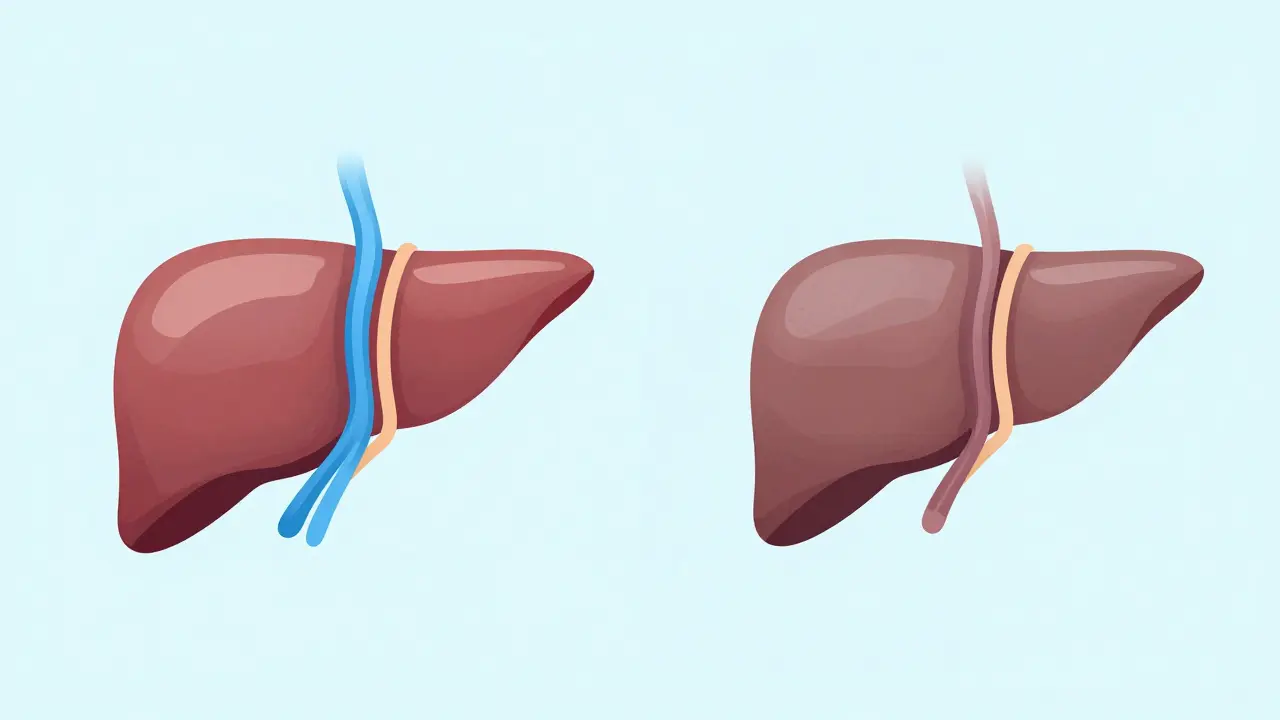
Your liver is the body’s primary chemical processing plant. When you’re young, it handles toxins and medications with efficiency. But as you age, two major structural changes occur that impact drug metabolism. First, hepatic blood flow decreases by approximately 40% compared to younger adults. Second, the actual mass of the liver shrinks by about 30%. These aren’t minor tweaks; they fundamentally change how drugs move through your system.
This reduction in blood flow affects "flow-limited" drugs most severely. These are medications where the liver clears almost everything that reaches it. Examples include propranolol (a beta-blocker), lidocaine (anesthetic), and morphine (pain relief). Because less blood flows through the liver, these drugs stay in the bloodstream longer. The result? A 40% reduction in clearance can lead to toxic buildup if doses aren’t adjusted.
However, not all drugs are affected equally. "Capacity-limited" drugs, such as diazepam (Valium), theophylline, and phenytoin, rely more on enzyme activity than blood flow. Research by Le Couteur and McLean shows that while blood flow drops, the activity of many drug-metabolizing enzymes remains relatively preserved. This means capacity-limited drugs may only see a 10-15% reduction in clearance. Understanding which category a drug falls into is critical for safe prescribing.
Kidney Function: The Filtration Slowdown
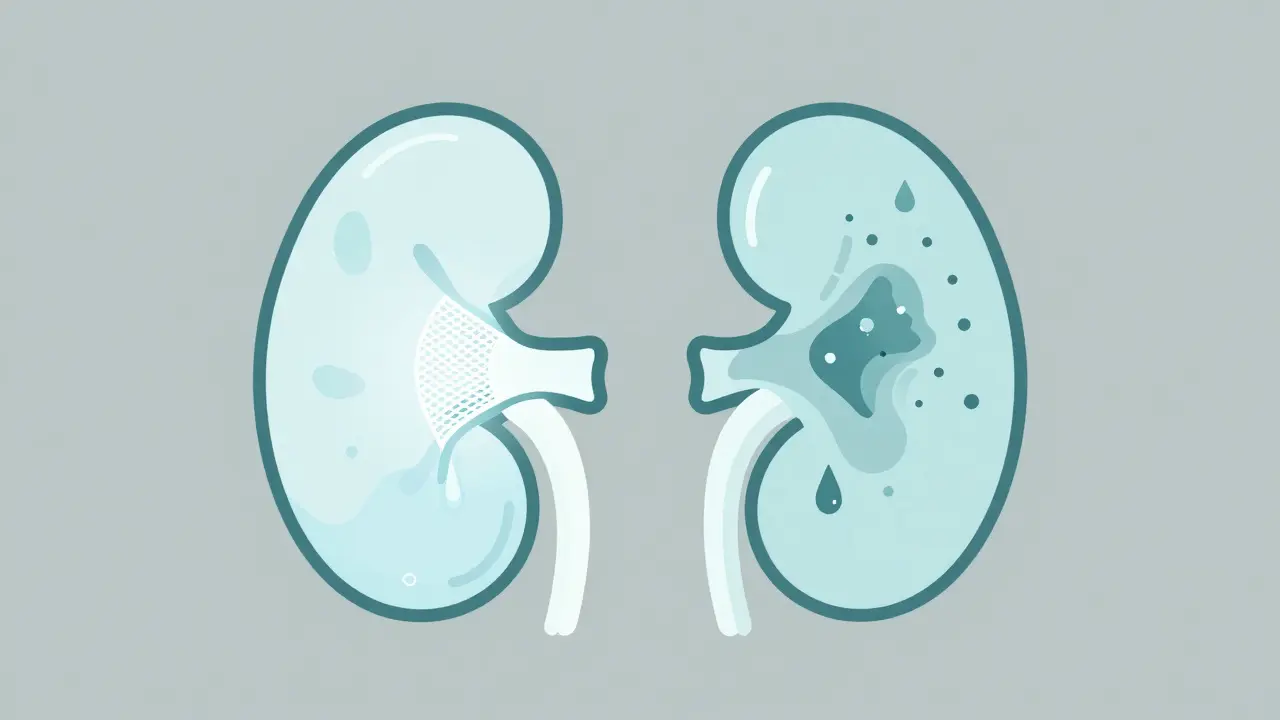
If the liver is the processor, the kidneys are the filters. They remove waste and excess drugs from the blood. In older adults, this filtration capability declines steadily. Between ages 30 and 80, the glomerular filtration rate (GFR) typically drops by 30-50%. This decline is often silent because serum creatinine levels-the standard marker for kidney health-may remain normal due to decreased muscle mass in older adults. This creates a dangerous illusion of healthy kidney function when, in reality, the kidneys are struggling to clear medications.
This discrepancy is why relying solely on blood tests can be misleading. Doctors must use estimation equations like the Cockcroft-Gault equation or the newer CKD-EPI equation to calculate true renal function. Without these calculations, renally excreted drugs like digoxin, lithium, and certain antibiotics can accumulate to toxic levels. A 2022 case study highlighted how adjusting vancomycin doses based on estimated GFR prevented nephrotoxicity in a 78-year-old patient, underscoring the importance of precise calculation over guesswork.
Enzyme Changes: Phase I vs. Phase II Metabolism
The liver uses two main systems to break down drugs: Phase I and Phase II metabolism. Aging affects them differently. Phase I involves oxidation, reduction, and hydrolysis, primarily driven by cytochrome P450 (CYP) enzymes. Studies indicate that Phase I activity decreases by 37-60% in older adults. This means drugs metabolized by CYP enzymes, such as warfarin or statins, may stay in the body longer, increasing the risk of side effects like bleeding or muscle pain.
In contrast, Phase II metabolism involves conjugation processes like glucuronidation. Surprisingly, research suggests that Phase II enzyme activity remains relatively preserved with age. Drugs like lorazepam or oxazepam, which undergo Phase II metabolism, are often safer choices for older adults because their clearance doesn’t drop as drastically. This distinction helps clinicians choose medications that are less likely to cause accumulation and toxicity.
The Polypharmacy Problem
Aging organs are bad enough, but combining multiple medications amplifies the risk. Polypharmacy, defined as using five or more prescription medications, is common in older adults. Data from the National Health and Nutrition Examination Survey (NHANES) shows that 41% of adults aged 65+ used five or more prescriptions in a 30-day period. This complexity increases the risk of adverse drug reactions by 88%.
When you mix drugs that compete for the same metabolic pathways, the situation worsens. For example, if two drugs both rely on the CYP3A4 enzyme, they can block each other’s breakdown, leading to dangerously high levels of one or both. Over-the-counter medications add another layer of danger. Acetaminophen, widely considered safe, accounts for 50% of acute liver failure cases in older adults when combined with other hepatotoxic substances or taken in excess. Always review every supplement and OTC drug with a healthcare provider.
Clinical Tools for Safer Prescribing
To navigate these complexities, healthcare providers use evidence-based guidelines. The Beers Criteria® Updated 2019 lists medications that are potentially inappropriate for older adults due to increased sensitivity or metabolic changes. It recommends reducing initial doses by 20-40% for liver-metabolized drugs in patients over 65, with further reductions for those over 75.
Additionally, the START (Screening Tool of Older Person's Prescriptions) and STOPP (Screening Tool of Older Person's Potentially Inappropriate Prescriptions) criteria help identify missed opportunities for treatment and harmful prescriptions. Implementing these tools has been shown to reduce adverse drug events by 22%. Patients should ask their doctors: "Is this medication on the Beers List?" and "Have we checked my kidney function for dosing?"
Comparison: Flow-Limited vs. Capacity-Limited Drugs
| Drug Type | Mechanism | Effect of Aging | Examples | Clinical Action |
|---|---|---|---|---|
| Flow-Limited | High extraction ratio (>0.7) | Clearance drops ~40% due to reduced blood flow | Propranolol, Morphine, Lidocaine | Significant dose reduction required |
| Capacity-Limited | Low extraction ratio (<0.3) | Clearance drops only 10-15%; enzyme activity preserved | Diazepam, Phenytoin, Theophylline | Monitor levels; modest adjustments may suffice |
| Renally Excreted | Filtered by kidneys | Clearance drops 30-50% due to GFR decline | Digoxin, Lithium, Aminoglycosides | Calculate CrCl/GFR before dosing |
Frequently Asked Questions
Why do I feel worse on a medication that worked fine before?
As you age, your liver produces less blood flow and your kidneys filter slower. Even if the drug worked well at 50, your body now clears it much slower. This leads to higher concentrations in your blood, causing side effects like dizziness, confusion, or excessive sedation. You likely need a lower dose.
Should I stop taking my medications if I’m worried about interactions?
Never stop prescribed medications abruptly without consulting your doctor. Sudden cessation can cause withdrawal symptoms or rebound conditions. Instead, schedule a "medication review" with your pharmacist or physician to evaluate each drug’s necessity and adjust doses based on your current liver and kidney function.
What is the Beers Criteria and why does it matter?
The Beers Criteria is a list of medications that are potentially unsafe for older adults due to increased sensitivity or metabolic changes. It matters because it helps doctors avoid drugs that have little benefit but high risk of harm, such as certain anticholinergics or benzodiazepines, which can increase fall risk and confusion.
How can I tell if my kidney function is declining?
Kidney decline is often silent. Standard creatinine blood tests can appear normal even when function is poor because older adults have less muscle mass. Ask your doctor for an eGFR (estimated Glomerular Filtration Rate) calculation using the CKD-EPI or Cockcroft-Gault equation. This provides a more accurate picture of how well your kidneys are filtering drugs.
Are there any drugs that are safer for older adults?
Yes. Drugs that undergo Phase II metabolism (like lorazepam instead of diazepam) or have wide therapeutic indices are generally safer. Additionally, medications with fewer drug-drug interactions and those that don’t rely heavily on hepatic blood flow for clearance are preferred. Always discuss alternatives with your healthcare provider.