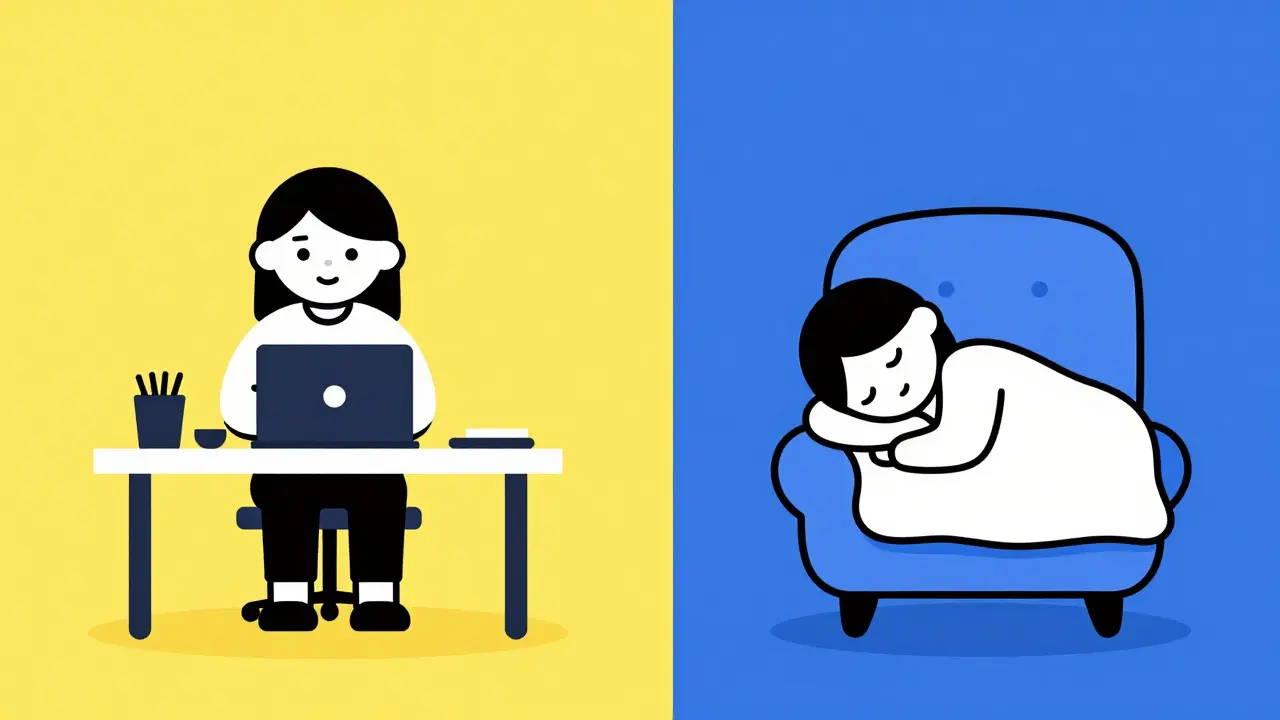
Ever wondered why some allergy meds make you feel like you've been hit by a sedative while others let you power through a workday? It usually comes down to the "generation" of the drug. If you've ever grabbed a bottle of antihistamines medications that block H-1 histamine receptors to stop allergic responses, you're dealing with a tool that manages everything from itchy eyes to full-blown hives. But picking the wrong one can mean the difference between a productive afternoon and an unplanned four-hour nap.
Quick Guide to Choosing Your Allergy Med
If you're in a rush, here is the baseline: use first-generation options for sudden, acute attacks or when you need to sleep. Use second-generation options for daily maintenance and staying alert. The modern medical consensus, including views from the American Academy of Allergy, Asthma & Immunology (AAAAAI), is that second-generation drugs should be the first choice for chronic allergies because they are safer and more convenient.
| Feature | First-Generation | Second-Generation |
|---|---|---|
| Onset of Action | Fast (30 mins) | Slower (1-3 hours) |
| Dosing Frequency | Every 4-6 hours | Once daily (24 hours) |
| Sedation Level | High (50-60% of users) | Low (10-15% of users) |
| Main Use Case | Acute flares, sleep aid | Chronic management |
| Common Example | Diphenhydramine (Benadryl) | Loratadine (Claritin) |
The Heavy Hitters: First-Generation Antihistamines
First-generation drugs entered the scene in the 1930s and 40s. A classic example is Diphenhydramine, better known as Benadryl. These drugs are essentially "leaky." Because they are lipid-soluble and have a low molecular weight, they easily cross the blood-brain barrier. Once they hit your brain, they don't just block histamine in your nose; they block it in your central nervous system, which is why you feel so drowsy.
This brain-penetration is a double-edged sword. On one hand, it's great if you have allergy-induced insomnia or need something for motion sickness. On the other, it's dangerous if you're driving. In fact, studies on driving simulators have shown that these drugs can reduce reaction times by 25%. They also carry "anticholinergic" side effects, which is a fancy way of saying they dry things out. About 30% of users report dry mouth, and elderly patients can face more serious issues like urinary retention.
The big advantage here is speed. If you just walked into a field of ragweed and your eyes are swelling shut, first-gen drugs work within 30 minutes. However, they wear off fast, usually lasting only 4-6 hours, meaning you're popping pills multiple times a day to stay symptom-free.
The Modern Standard: Second-Generation Antihistamines
By the 1980s, scientists wanted a way to stop the sneezing without the nap. They created second-generation antihistamines, starting with Terfenadine (Seldane) in 1985. These molecules are designed to be more polar or are actively transported out of the brain, meaning they stay out of your central nervous system. This is why they are labeled "non-drowsy."
Popular choices today include Loratadine (Claritin), Cetirizine (Zyrtec), and Fexofenadine (Allegra). These drugs are built for the long haul. They last 12 to 24 hours, which is why you only need one dose a day. Compliance is much higher here-about 85% of people stick to a once-daily routine compared to only 60% for the multi-dose first-gen regimens.
There is a slight trade-off: they take longer to kick in. You might wait 1 to 3 hours before feeling relief. This means you can't use them as a "rescue" medication for a sudden attack; you have to take them prophylactically (before you're exposed to the allergen) to get the best results. Also, while they're great for itching and sneezing, they're less effective at clearing a stuffed nose, which is why some people prefer combination pills that include a decongestant.
Comparing Efficacy and Side Effects
When we look at the data, second-generation meds generally win on efficacy for nasal symptoms, showing a 60-70% reduction in symptoms for allergic rhinitis, compared to 50-60% for the older versions. But not all second-gen drugs are equal. For instance, some research suggests Cetirizine provides 15-20% more relief for moderate-to-severe rhinitis than Loratadine.
Cost is another factor. Generic first-generation tablets are incredibly cheap-often around $4 to $6 for 100 pills. Second-generation generics are slightly more expensive, usually $10 to $15 for a month's supply, while brand names can easily exceed $25. For most, the extra few dollars are worth avoiding the "brain fog" that comes with the older drugs.
A serious warning for seniors: chronic use of first-generation antihistamines can lead to cognitive impairment. Dr. Pieter Cohen from Harvard Medical School has noted that for elderly patients, the long-term cognitive risk can be similar to taking low-dose benzodiazepines. If you're over 65, the non-drowsy options aren't just a convenience-they're a safety necessity.
How to Pick the Right Medication for Your Scenario
Choosing the right pill depends entirely on your goal for the day. Here are a few common scenarios:
- The Workday: Go with a second-generation option like Fexofenadine or Loratadine. You need to stay focused, and these won't cloud your judgment.
- The Sudden Flare-up: If you've had an acute reaction and need immediate relief, a first-generation drug like Diphenhydramine is your best bet due to the 30-minute onset.
- Nighttime Relief: If allergies are keeping you awake, first-generation meds can double as a sleep aid. Many users report better sleep quality with these than with supplements like melatonin.
- Long-term Seasonal Allergies: Stick to once-daily second-generation meds. They provide a steady level of protection without the roller coaster of dosing every few hours.
If you find that a standard "non-drowsy" pill isn't clearing your congestion, don't just double the dose. Higher doses of second-generation meds can actually start causing sedation in about 20% of people. Instead, look for combination therapies that pair an antihistamine with pseudoephedrine, which targets the swelling in your nasal passages more effectively.
Are second-generation antihistamines really non-drowsy?
For most people, yes. Only about 10-15% of users experience drowsiness with second-generation drugs, compared to 50-60% with first-generation. However, if you take a higher-than-recommended dose, the "non-drowsy" effect can disappear, and sedation may occur in up to 20% of users.
Can I take Benadryl every day?
It's generally not recommended for chronic use. Because it requires dosing every 4-6 hours and causes significant sedation and dry mouth, it's better suited for occasional acute attacks or nighttime use. For daily management, a second-generation drug is safer and more effective.
Which is better for children?
Pediatricians generally recommend second-generation antihistamines for children due to their safety profile and once-daily dosing, which is much easier for parents to manage. Always consult a doctor for specific dosing based on the child's weight and age.
Why does my second-generation med take so long to work?
These drugs have different plasma concentration curves. While first-gen drugs hit the system quickly, second-gen drugs take 1 to 3 hours to reach peak levels. This is why they are best used as a preventative measure rather than a rescue treatment.
Do these medications interact with other drugs?
Both classes are metabolized by the cytochrome P450 enzyme system in the liver. First-generation drugs tend to have a broader range of potential drug interactions because they interact with more metabolic pathways. Always check with a pharmacist if you are taking other medications.
Next Steps for Allergy Relief
If you're still struggling with symptoms after trying these medications, your next move should be a consultation with an allergist. You might be dealing with something that requires a nasal corticosteroid or a prescription-strength combination therapy. If you are starting a new second-generation med, remember to give it a few days to build up in your system and take it at the same time each morning for the most consistent relief.