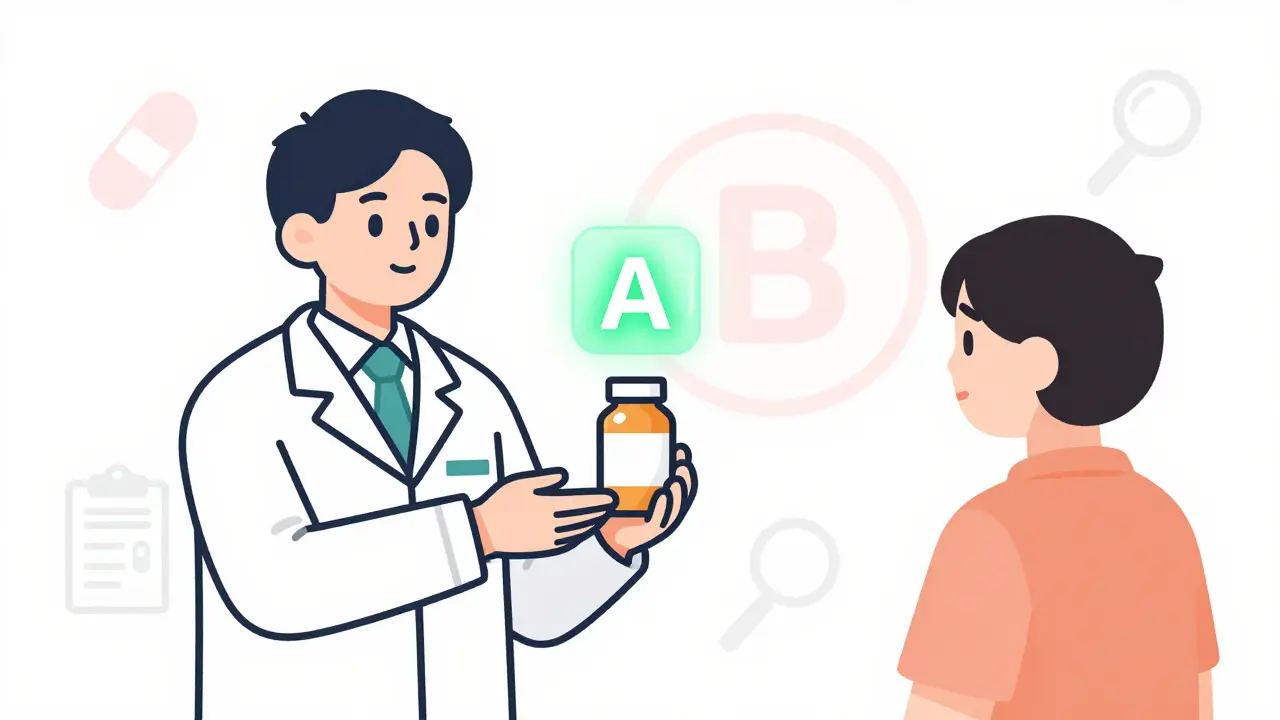
When your pharmacist hands you a generic pill instead of the brand-name version, you might not think twice. But behind that simple swap is a complex legal and scientific system that decides whether it’s safe to substitute one drug for another. This system is built on FDA therapeutic equivalency codes - a set of letters and numbers that tell pharmacists, doctors, and state regulators exactly which generics can be swapped without risking your health.
What Are FDA Therapeutic Equivalency Codes?
These codes, known as TE codes, are assigned by the U.S. Food and Drug Administration to prescription drugs listed in the Approved Drug Products with Therapeutic Equivalence Evaluations, commonly called the Orange Book. First published in 1980 and expanded after the 1984 Hatch-Waxman Act, the Orange Book is the official government source for determining if a generic drug can legally replace a brand-name drug. The TE code isn’t just a label. It’s a legal signal. It tells pharmacists: “You can substitute this.” Or: “Don’t substitute this - it’s not proven safe to swap.” The code has two parts: a letter and a number. The first letter is what matters most. If a drug has an “A” rating, it means the FDA has confirmed it’s therapeutically equivalent to the brand-name version. That means it has the same active ingredient, same strength, same dosage form, and has passed strict bioequivalence tests. In other words, it works the same way in your body. If it has a “B” rating, the FDA says there’s not enough proof to say it’s interchangeable. That doesn’t mean it’s unsafe - just that the science isn’t clear enough to guarantee it will act exactly like the brand-name drug. These are often complex drugs like inhalers, topical creams, or extended-release tablets.How the “A” and “B” Ratings Work
Not all “A” codes are the same. The second character adds detail. For example:- AA = Immediate-release oral pills with no bioequivalence issues. These are the most common generics - think generic lisinopril or metformin.
- AB = Products that initially had questions but later proved equivalent. Maybe the first version had a different inactive ingredient, but follow-up studies showed no difference in how the body absorbs it.
- AB1, AB2, AB3, AB4 = Used when multiple brand-name drugs exist as reference points. For instance, if three different versions of a drug were approved as the original, each gets its own AB code to track which generic matches which brand.
- BC = Extended-release tablets with unresolved bioequivalence concerns
- BD = Proven bioequivalence problems
- BT = Topical products like creams or gels where absorption is hard to measure
- BN = Nebulizer aerosols - tricky because delivery depends on device design
- BX = Not enough data to rate - these are often new generics still under review
Why This Matters: The Law Behind the Swap
The FDA sets the scientific standard. But the law that lets pharmacists actually swap drugs comes from the states. All 50 states have laws that require pharmacists to follow the FDA’s TE codes when substituting generics. California’s law, for example, says substitution is only allowed if the generic has an “A” rating. New York’s rules are even stricter: pharmacists must check the current edition of the Orange Book before making any swap. In practice, this means if your doctor prescribes a brand-name drug with an “A” rated generic available, the pharmacist can legally give you the cheaper version - unless your doctor writes “Dispense as Written” or “Do Not Substitute.” But here’s the catch: even if the FDA says a drug is “A” rated, some pharmacists still hesitate. A 2023 survey found that 42% of independent pharmacists struggle to interpret “B” codes, especially for topical or inhaled drugs. Why? Because the science behind those products is harder to measure. A cream might look the same, but does it absorb the same way? A nebulizer might deliver the same dose, but does the patient inhale it correctly? These are real clinical concerns.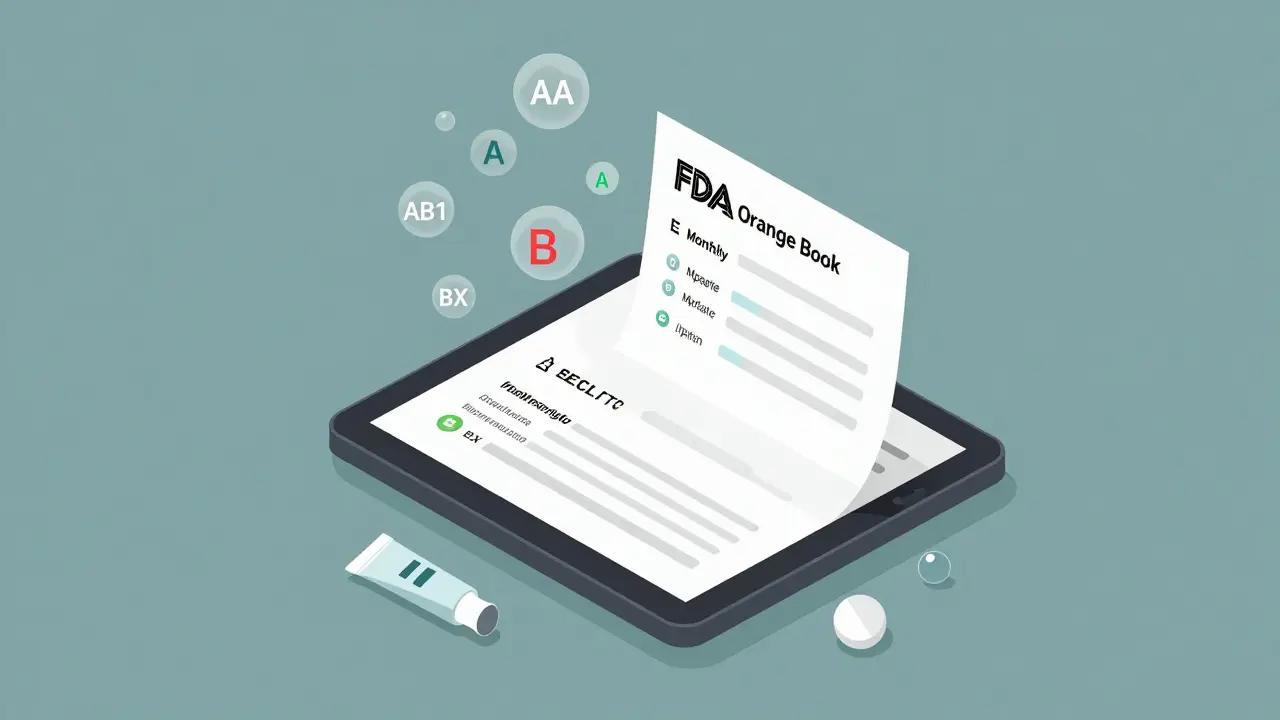
How TE Codes Impact Your Health and Wallet
The system works. And it saves billions. In 2022, generic drugs with “A” codes saved the U.S. healthcare system $298 billion. That’s 97% of all generic prescriptions. Meanwhile, “B” rated generics made up only 5.3% of dispensed generics - mostly because they’re harder to make and less commonly prescribed. But here’s what most people don’t realize: two different generic versions of the same drug can have different TE codes. For example, one manufacturer’s generic metformin might be rated “AA,” while another’s is “AB.” That’s because even small changes in inactive ingredients - like binders or coatings - can affect how quickly the drug dissolves. If the FDA finds a difference in absorption, they assign a different code. This matters if you’ve been taking one generic for years and your pharmacy switches to another. You might not notice a difference - but if you’re on a narrow-therapeutic-index drug like warfarin or levothyroxine, even tiny changes in absorption can affect your health. That’s why some doctors prefer to stick with one generic brand, even if it’s more expensive.What’s Changing in 2025?
The FDA is working hard to reduce the number of “B” codes. In 2018, over 30% of listed drugs had “B” ratings. By October 2023, that number dropped to 24.3%. The goal? Get it under 15% by 2027. The FDA launched the Complex Generic Drug Initiative to improve testing methods for tricky products - things like inhalers, injectables, and topical gels. They’ve also updated their guidance to say that minor changes in inactive ingredients don’t automatically disqualify a drug from an “A” rating, as long as performance stays the same. In January 2023, the Orange Book went fully digital. Now, electronic health record systems can pull TE code data directly - meaning your doctor’s software can flag if a prescribed generic isn’t interchangeable. Pharmacists get real-time alerts. The Generic Drug User Fee Amendments (GDUFA) III, signed in 2022, allocated $28.7 million specifically to improve how the FDA evaluates complex generics. That’s money going toward better lab tools, more clinical data, and faster reviews.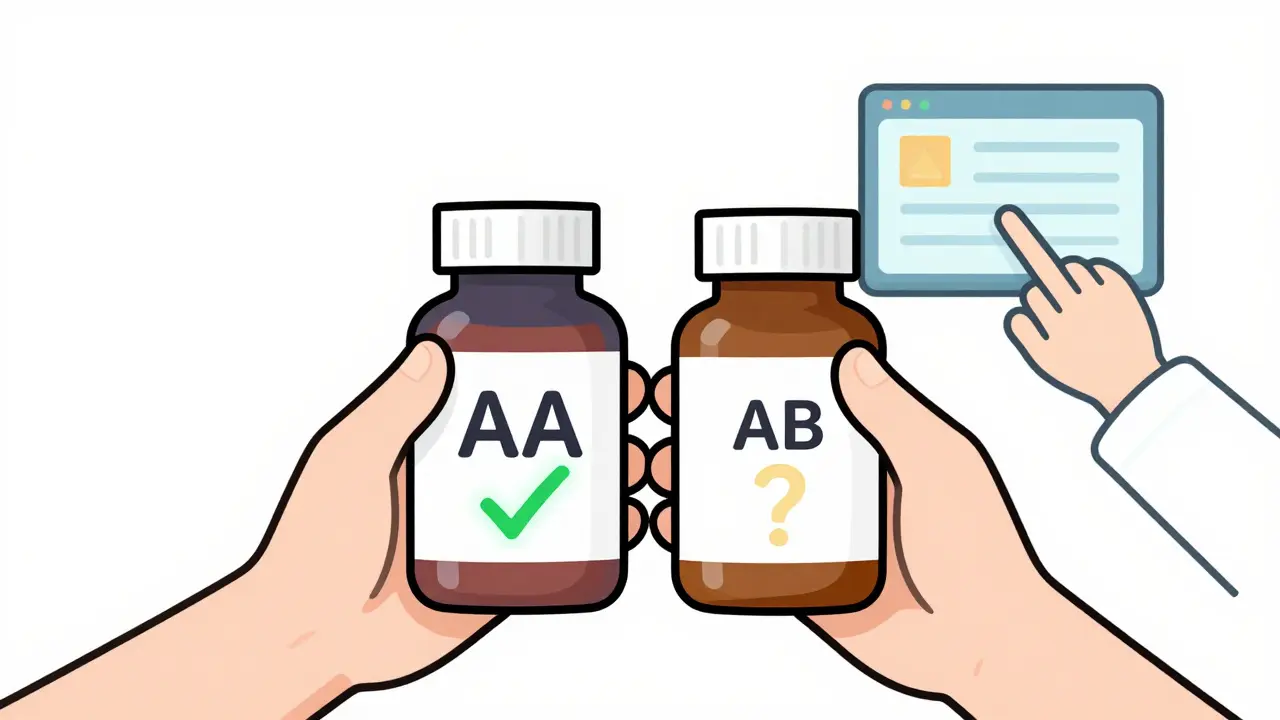
What You Should Do
You don’t need to memorize TE codes. But you should know this:- If you’re on a generic drug and your pharmacy switches brands, ask if it’s the same TE code. If it’s not, talk to your doctor.
- For critical medications - like blood thinners, seizure drugs, or thyroid pills - ask your pharmacist to confirm the TE code matches what you’ve been taking.
- Don’t assume all generics are the same. Even if they’re both labeled “metformin,” the one with an “AA” code is more predictable than one with an “AB” code.
- Check your prescription label. If it says “substitution permitted,” the pharmacist used an “A” rated generic. If it says “dispensed as written,” your doctor blocked substitution.
Can a pharmacist substitute a generic drug without my doctor’s permission?
Yes, in most cases. All 50 states allow pharmacists to substitute a generic drug for a brand-name drug if the FDA has assigned an “A” therapeutic equivalency code and the prescriber hasn’t written “Dispense as Written.” The pharmacist must follow state law and consult the current Orange Book before making the swap.
Are all generic drugs rated with TE codes?
No. Only multisource prescription drugs approved under Section 505 of the Federal Food, Drug, and Cosmetic Act get TE codes. Over-the-counter drugs, biological products like insulin or vaccines, and single-source brand-name drugs (505(b)(1) NDAs) are not rated. Also, some complex generics - especially those with unresolved bioequivalence data - receive “B” codes or no code at all.
Why do some generic drugs have “B” codes if they’re FDA-approved?
FDA approval and therapeutic equivalence are two different things. A drug can be approved as safe and effective but still not have enough data to prove it behaves exactly like the brand-name version. This often happens with complex delivery systems - like inhalers, topical creams, or extended-release tablets - where absorption varies based on formulation. “B” codes mean the FDA can’t yet guarantee substitution is risk-free.
Can a “B” rated drug ever become an “A” rated drug?
Yes. If new scientific data proves the generic performs the same as the brand-name drug, the FDA can reclassify it from “B” to “A.” This has happened with several extended-release and topical products in recent years. Manufacturers can submit additional bioequivalence studies to support a code change.
How often is the Orange Book updated?
The Orange Book is updated monthly by the FDA. New drugs get added, TE codes are revised based on new data, and discontinued products are removed. Pharmacists and health systems rely on these monthly updates to ensure they’re using the most current substitution rules.
Michael Bond
December 27, 2025 AT 19:36So if my warfarin generic switched from AA to AB, I should freak out?
Jay Ara
December 27, 2025 AT 22:58man i just take what the pharmacy gives me
if it works, it works
if i feel weird, i call my doc
no need to overthink the codes
just keep taking it
Kuldipsinh Rathod
December 29, 2025 AT 07:24my grandma takes 7 meds and she dont know what TE code means
but she knows if her pills look different she asks
smart lady
Angela Spagnolo
December 29, 2025 AT 20:49I... I didn’t realize that two different generics of the same drug could have different codes…
That’s… kind of terrifying, honestly.
Like, what if I’ve been switching between them and not even noticed?
And what if my doctor doesn’t even know?
…I’m going to check my last prescription label now.
…Okay, it says AA. Phew.
Zina Constantin
December 30, 2025 AT 12:42Let’s be real: the FDA’s Orange Book is one of the most underappreciated public health tools we have.
It’s not sexy like a new cancer drug, but it’s what keeps millions of Americans from going bankrupt just to stay alive.
And the fact that they’re actively reducing B codes? That’s science in action.
Shoutout to the chemists, pharmacists, and regulators who grind behind the scenes so you don’t have to think about pill chemistry on a Tuesday morning.
Also, thank you for not calling them ‘copy drugs.’ They’re not copies. They’re clones with a PhD.
Shreyash Gupta
December 31, 2025 AT 08:13Wait… so if a generic has a B rating, it’s still FDA-approved? 😏
Then why are we pretending this system is ‘safe’?
It’s just a corporate loophole disguised as science.
Brand companies pay for studies that make generics look ‘different’ so they can keep prices high.
And you? You’re the one swallowing the uncertainty.
😂
Also, I once took a B-rated generic for my blood pressure… and my hands turned blue for three days. Coincidence? I think not.
Matthew Ingersoll
December 31, 2025 AT 18:59As someone who’s worked in pharmacy for 22 years, I’ve seen this system evolve.
Most B-rated drugs are complex delivery systems-like inhalers or transdermal patches.
It’s not that they’re unsafe-it’s that we can’t measure absorption the same way we do with a pill.
And yes, pharmacists hesitate. We’re not being stubborn-we’re being cautious.
One wrong substitution with a topical steroid or nebulizer can cause real harm.
So when you say ‘just give me the cheapest,’ remember: we’re not choosing the brand. We’re choosing your safety.
And yes, I’ve seen patients get better on generics.
And I’ve seen them crash when we swapped without enough data.
It’s not black and white.
It’s a spectrum.
And the Orange Book is our compass.
SHAKTI BHARDWAJ
January 1, 2026 AT 01:00THEY LET PHARMACISTS SWITCH MY LEEVOXYTHYRINE WITHOUT TELLING ME??
MY TSH WAS FINE FOR 3 YEARS AND THEN I GOT FATIGUE AND HAIR LOSS AND MY DOCTOR SAID ‘OH YOU GOT A DIFFERENT GENERIC’
WHY IS THIS EVEN LEGAL??
THEY DON’T TELL YOU THIS STUFF WHEN YOU GET PRESCRIBED
THEY JUST GIVE YOU THE CHEAP ONE AND SAY ‘IT’S THE SAME’
WHEN IT’S NOT
IT’S NEVER THE SAME
THE FDA IS A CORPORATE TOY
AND I’M STILL ON A B-RATED ONE BECAUSE ‘THERE’S NO A RATED VERSION’
HOW IS THAT FAIR??
MY HAIR IS FALLING OUT AND NO ONE CARES
😭😭😭😭😭
Dan Alatepe
January 2, 2026 AT 10:45So let me get this straight.
There’s a whole alphabet soup of codes-AA, AB1, BC, BX-and we’re supposed to trust that the guy behind the counter knows what they mean?
Meanwhile, my cousin in Lagos got his HIV meds from a pharmacy that didn’t even have a license.
And here I am, sweating because my metformin changed from AA to AB.
Meanwhile, the FDA’s got $28.7 million to fix this…
But my insurance still won’t cover the brand.
So I take the AB.
And hope.
And Google.
And cry a little.
And then I take another pill.
Because what else can I do?
😂