Why Eating Out Feels So Hard With Diabetes
Imagine sitting down at your favorite restaurant, hungry, surrounded by friends or family, and the menu looks amazing-crispy chicken, loaded fries, creamy pasta, sweet sauces. You want to enjoy it. But you also know one wrong choice can send your blood sugar soaring. That’s the real challenge of eating out with diabetes. It’s not about giving up food. It’s about making smarter calls without feeling like you’re ruining the moment.
Most restaurant portions are way bigger than what you’d eat at home. A typical steakhouse entree might come with 12 ounces of meat and a side of mashed potatoes the size of a baseball. That’s not one serving-it’s three. And sauces? They’re often loaded with sugar and hidden carbs. A simple “grilled chicken” dish can turn into a 65-gram carb bomb if it’s smothered in teriyaki or alfredo.
Studies show that people with diabetes who eat out regularly are more likely to have higher blood sugar spikes and struggle with long-term HbA1c control. But here’s the good news: you don’t need to avoid restaurants. You just need a plan.
The Diabetes Plate Method: Simple, Visual, and Works Everywhere
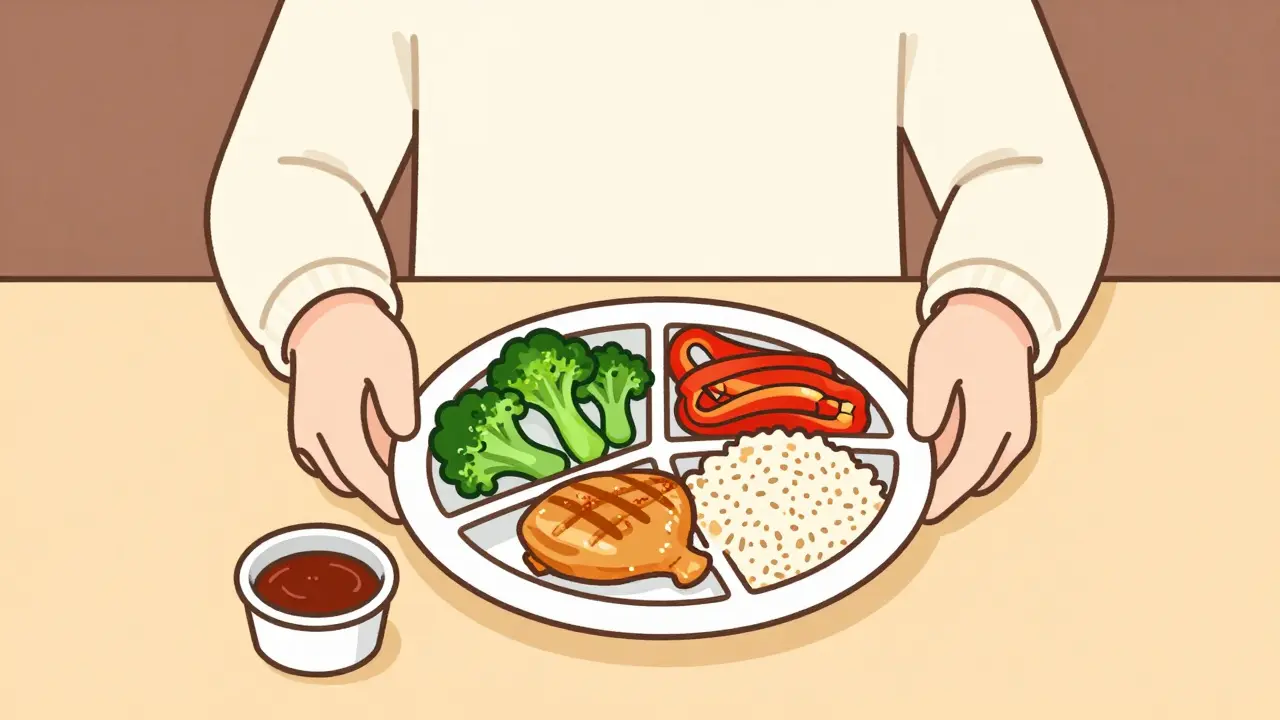
Forget counting every gram of carbs on the spot. The easiest, most proven way to eat out with diabetes is the Diabetes Plate Method. It’s endorsed by the American Diabetes Association and the CDC because it doesn’t require math, apps, or guesswork. Just use a regular nine-inch plate.
- Fill half your plate with non-starchy vegetables: broccoli, spinach, green beans, peppers, mushrooms, zucchini. These are low in carbs and high in fiber, helping slow sugar absorption.
- Put one-quarter of your plate with lean protein: grilled chicken, fish, tofu, lean beef, or turkey. Stick to 3-4 ounces-that’s about the size of a deck of cards.
- Use the last one-quarter for carbs: rice, pasta, potatoes, bread, or corn. Keep it to 15-30 grams of carbs per meal. That’s half a cup of rice or one small roll.
This method works at Italian, Mexican, Chinese, or even fast-food places. At a burger joint, swap the bun for a lettuce wrap and skip the fries. At a Chinese restaurant, choose steamed vegetables and grilled fish, and ask for brown rice instead of white-still in that quarter section.
How to Spot Hidden Carbs (They’re Everywhere)
Not all carbs are obvious. Some of the biggest blood sugar spikes come from things you wouldn’t think are high in carbs.
- “Crispy,” “breaded,” or “crunchy” = breading adds 10-15 grams of carbs. Skip fried chicken, breaded shrimp, or crispy tofu.
- “Creamed,” “au gratin,” or “smothered” = these mean cheese, butter, flour, or cream sauces. A single serving of creamed spinach can have 15 grams of carbs.
- Sauces and dressings = even “light” versions often have added sugar. Always ask for them on the side. Use no more than two tablespoons.
- Stir-fries and Asian dishes = soy sauce, hoisin, oyster sauce, and sweet chili sauce are packed with sugar. A single tablespoon of hoisin can add 10 grams of carbs.
- “Healthy” salads = watch out for croutons, dried fruit, candied nuts, and sweet dressings. A Caesar salad can easily hit 50 grams of carbs with dressing and croutons.
When in doubt, ask: “Can you tell me what’s in this sauce?” or “Is there sugar added to this dish?” Most restaurants will tell you. If they don’t know, assume it’s loaded.
Portion Control: The Secret Weapon You’re Not Using
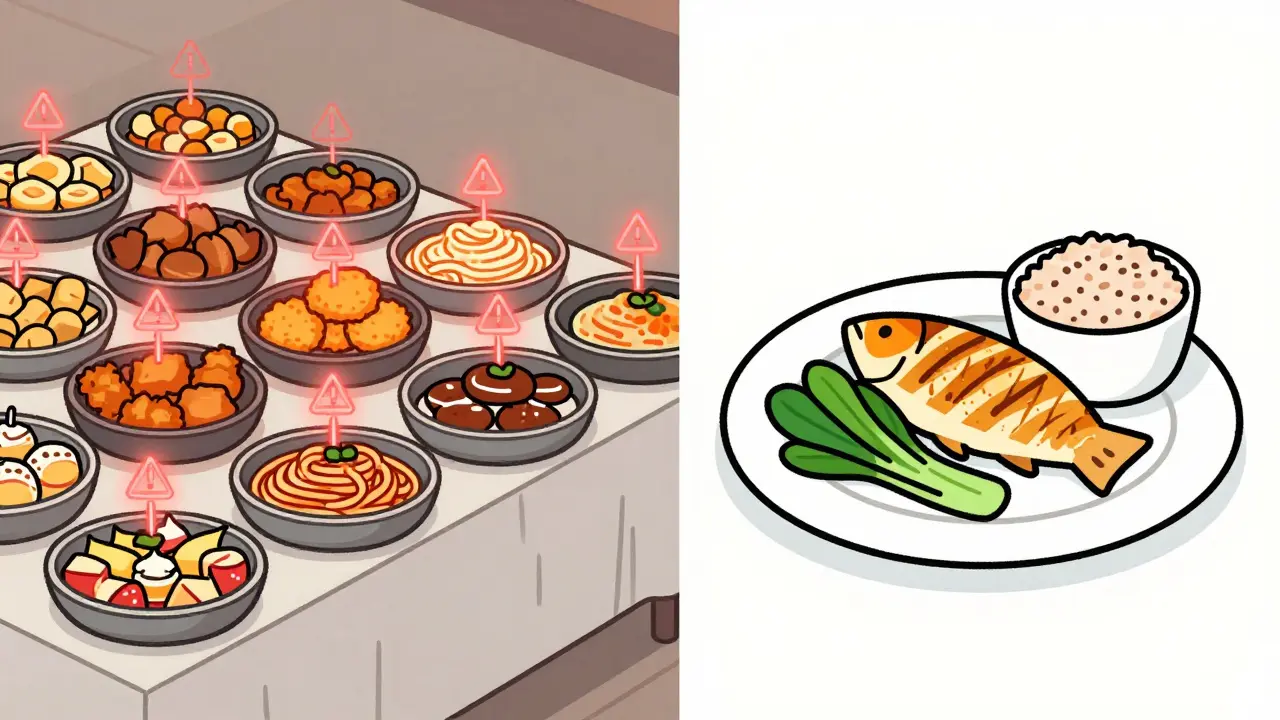
Restaurants serve portions that are 2 to 3 times larger than what you should eat. You don’t need to finish it all.
- Ask for a half portion of starchy sides. Many places will do it, especially if you say you’re managing diabetes.
- Share your main dish with someone. Splitting a pasta dish or a steak cuts your carbs and calories in half.
- Ask for a to-go box at the start of the meal. Put half your food in it before you even take your first bite. This prevents mindless eating.
- Order an appetizer as your main. A grilled shrimp skewer or a small portion of grilled chicken with veggies is often enough.
- Skip the bread basket. Seriously. Even if it’s whole grain, one slice adds 15 grams of carbs. You don’t need it.
One patient I worked with lost 1.4% off her HbA1c in six months just by asking for half portions and boxing up leftovers before eating. She didn’t change her meds. She just changed how much she ate.
Restaurant Types Ranked: Which Are Easiest?
Not all dining spots are created equal. Here’s how they stack up:
| Restaurant Type | Carb Risk | Best Choices | Worst Choices |
|---|---|---|---|
| Fast Food | High | Grilled chicken salad (no croutons), plain burger without bun, side salad with vinaigrette | Big Mac (46g carbs), fries, milkshakes, breakfast sandwiches |
| Italian | High | Grilled fish with steamed veggies, marinara sauce on spaghetti (half portion) | Pasta alfredo, chicken parmesan, garlic bread, tiramisu |
| Mexican | Medium-High | Fajitas with lean meat and veggies (skip tortillas), black beans (½ cup), grilled corn (1 ear) | Tacos with flour tortillas, nachos, rice bowls with sour cream, chimichangas |
| Asian | Very High | Steamed fish or tofu with broccoli, brown rice (½ cup), miso soup | General Tso’s chicken, sweet and sour pork, fried rice, lo mein, teriyaki sauce |
| Buffet | Extreme | Stick to the veggie and protein stations. Avoid anything with glaze or sauce. | Everything. Seriously. Unlimited access = blood sugar chaos |
Buffets are the worst. Research shows blood sugar spikes 65 mg/dL higher after buffet meals than after ordered meals. The problem isn’t just food-it’s the mindset. When everything’s available, you eat more than you planned. Avoid them if you can.
Pre-Game Strategy: What to Do Before You Even Walk In
Planning beats reacting every time.
- Check the menu online before you go. Most chains list nutrition info now. Look for carb counts or use the ADA’s Restaurant Ready app, which has verified data for over 15,000 menu items.
- Don’t go in starving. Eat a small snack with protein and fiber-like a hard-boiled egg and a few almonds-30 minutes before you leave. This cuts impulsive carb choices by 37%.
- Call ahead. Ask if they can accommodate your needs: no sauce on the side, extra veggies, no bread.
- Bring your glucose meter and fast-acting glucose tablets. Delays happen. If your meal is late and you’re on insulin, you could crash.
People who review menus ahead of time are 58% more likely to stick to their carb goals. That’s not luck. That’s strategy.
What About Dessert?
You don’t have to skip it. But you need to be smart.
- Share a dessert. One slice between two people cuts your carb load in half.
- Choose fruit-based desserts. A small bowl of berries with whipped cream has fewer carbs than a slice of cake.
- Ask for a half portion. Many places will bring you a smaller plate.
- Swap dessert for coffee with a splash of cream. Often, that’s enough to feel like you’re ending the meal on a sweet note.
One woman I know always orders a small cup of gelato after dinner. She splits it with her husband. It’s her treat. It’s also only 12 grams of carbs. She doesn’t feel deprived. She feels in control.
What If You Make a Mistake?
Everyone does. One meal won’t ruin your progress.
If you overdo it on carbs:
- Check your blood sugar 2 hours after eating. Don’t panic if it’s high-just note it.
- Drink water. Hydration helps flush out excess sugar.
- Take a walk. Even 15 minutes of walking after eating helps lower blood sugar.
- Don’t punish yourself. The next meal is your chance to reset.
Perfection isn’t the goal. Consistency is.
Final Thought: You Deserve to Eat Out
Eating out with diabetes isn’t about restriction. It’s about empowerment. You’re not saying no to food. You’re saying yes to your health-and yes to enjoying life.
Most people won’t understand why you’re asking for no bread or extra veggies. That’s okay. You don’t need their approval. You just need your plan.
With the plate method, portion control, and a little prep, you can eat at any restaurant, any time, and still keep your blood sugar steady. It’s not magic. It’s just smart choices.
Can I still eat pasta when I have diabetes?
Yes, but keep the portion small-half a cup of cooked pasta equals about 20 grams of carbs. Choose whole grain if available, and pair it with plenty of vegetables and lean protein. Skip creamy sauces. Tomato-based sauces are better. Always check your blood sugar after to see how your body reacts.
Are sugar-free desserts safe for people with diabetes?
Not always. Sugar-free doesn’t mean carb-free. Many sugar-free desserts still contain flour, milk, or other starches that raise blood sugar. Always check the nutrition label for total carbohydrates, not just sugar. A sugar-free cheesecake might have 25 grams of carbs from flour and cream cheese. Compare it to a small bowl of fresh berries-often a better choice.
What if my friends keep ordering unhealthy food and pressuring me?
It’s okay to say no politely. Try: “I’m watching my carbs tonight, so I’m going with grilled chicken and veggies.” Most people respect that. If they don’t, remember: your health comes first. You’re not being difficult-you’re being responsible. You can even turn it into a positive: “Want to try the grilled salmon? It’s actually really good.”
Do I need to count carbs every single time I eat out?
Not if you use the Diabetes Plate Method. It gives you a visual guide that works without numbers. But if you’re on insulin or your blood sugar is hard to control, counting carbs helps fine-tune your dose. Start with the plate method, then add carb counting if you need more precision.
Is it okay to eat at fast-food places with diabetes?
Yes, but you have to be selective. Skip the fries and sugary drinks. Go for grilled chicken sandwiches without the bun, side salads with oil and vinegar, or plain yogurt with fruit. McDonald’s grilled chicken salad has about 18 grams of carbs without dressing. That’s manageable. Avoid anything labeled “crispy,” “breaded,” or “loaded.”
What’s the biggest mistake people make eating out with diabetes?
Underestimating sauces and hidden carbs. People focus on the main dish but forget the dressing, glaze, or gravy. A single tablespoon of teriyaki or barbecue sauce can add 10-15 grams of carbs. Always ask for sauces on the side and use them sparingly.
Can I drink alcohol when eating out?
Yes, but be careful. Alcohol can lower blood sugar, especially if you’re on insulin or certain pills. Stick to dry wine, light beer, or spirits with soda water and lime. Avoid sweet cocktails, margaritas, and sugary mixers. Always eat food when drinking, and check your blood sugar before bed.
How long does it take to get good at eating out with diabetes?
Most people get comfortable after 3 to 5 outings with practice. It’s like learning to drive-you’ll make mistakes at first. But once you know how to read menus, ask for substitutions, and use the plate method, it becomes second nature. Keep track of what works for you. Over time, you’ll build your own list of safe go-to meals.
Nancy Kou
December 20, 2025 AT 10:49Meenakshi Jaiswal
December 21, 2025 AT 00:59Tim Goodfellow
December 22, 2025 AT 22:02Aboobakar Muhammedali
December 24, 2025 AT 06:40Elaine Douglass
December 25, 2025 AT 19:43anthony funes gomez
December 26, 2025 AT 23:12Mahammad Muradov
December 27, 2025 AT 01:46Hussien SLeiman
December 28, 2025 AT 12:09Lynsey Tyson
December 29, 2025 AT 00:45Laura Hamill
December 29, 2025 AT 06:13Sarah McQuillan
December 29, 2025 AT 15:35Chris Clark
December 31, 2025 AT 08:17Edington Renwick
January 1, 2026 AT 19:54Alana Koerts
January 2, 2026 AT 12:45Connie Zehner
January 3, 2026 AT 06:23