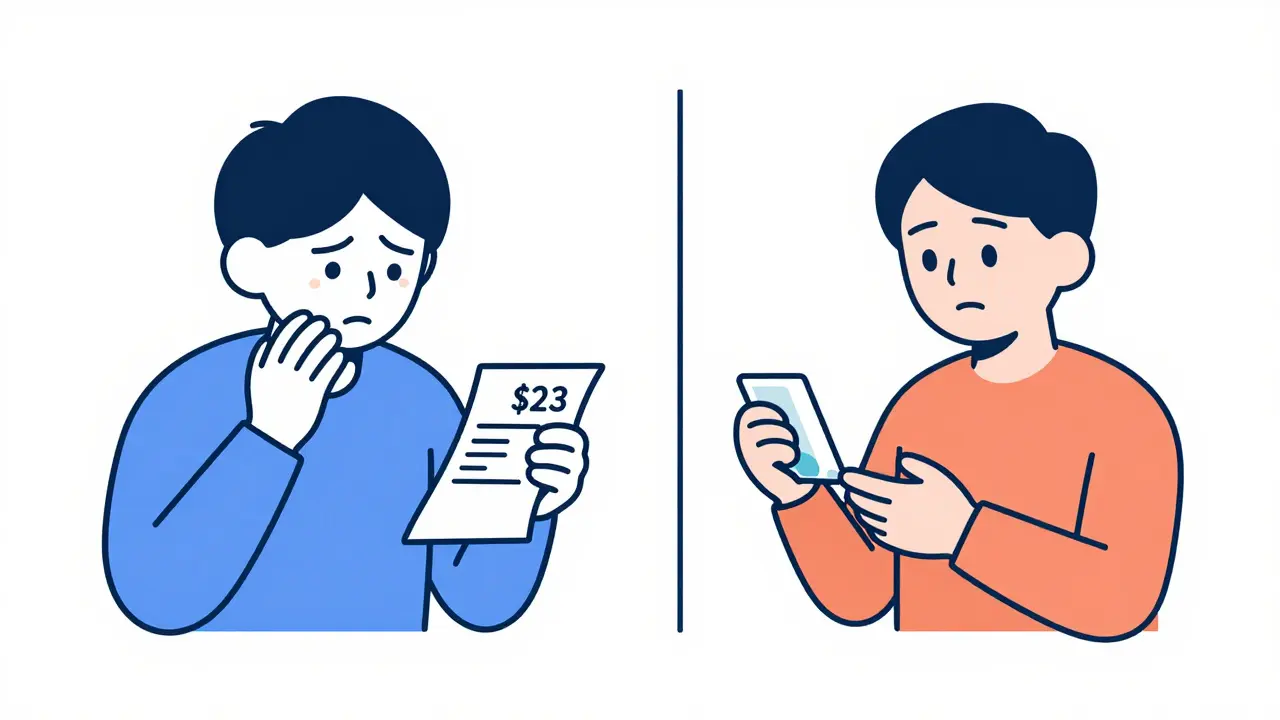
Imagine staring at a pharmacy receipt and realizing you're paying three times more for a pill than someone in Canada or Sweden. For many, especially those in the U.S., this isn't a hypothetical-it's a daily financial burden. The idea of sourcing global generics pharmaceutical versions of brand-name drugs produced in different countries, often at a lower cost seems like an obvious win. But is it actually cheaper, and more importantly, is it safe?
The short answer is: yes, it can be cheaper, but the "generic" label doesn't always mean the same thing once you cross a border. While you might save hundreds of dollars, you could be trading financial stress for medical risk. Let's break down the actual math, the hidden dangers, and how to navigate this without compromising your health.
The Price Paradox: Are Generics Really Cheaper Abroad?
You'd think generics are always the cheapest option, regardless of where you are. However, the data shows a weird contradiction. According to an ASPE/HHS report, U.S. prices for brand-name drugs are often over 400% higher than in other OECD countries. But when it comes to unbranded generics, the U.S. actually has some of the lowest prices globally-sometimes just 67% of the cost in other nations. Why?
It comes down to how the system is built. The U.S. uses Pharmacy Benefit Managers third-party administrators that negotiate rebates and discounts between insurers and pharmacies to drive down generic costs. Meanwhile, countries like Germany or France use reference pricing systems-essentially a government-mandated price cap-to keep everything low.
So, if you're looking for a specific generic, the "best deal" depends entirely on the drug. For some, Canada or the UK offers prices 30% to 47% lower than U.S. list prices. For others, the U.S. generic market is already the cheapest place to buy. To see how these regions stack up, look at this breakdown:
| Region | Pricing Mechanism | Typical Cost Trend | Primary Advantage |
|---|---|---|---|
| United States | PBM Negotiations | Very low for high-volume generics | Massive generic utilization (90%) |
| Canada / UK | Direct Price Controls | Consistent mid-to-low range | Lower retail list prices |
| EU (Germany/France) | Reference Pricing | Lowest for brand-equivalent generics | Government-mandated caps |
| Sweden | Competitive Tendering | Among the cheapest in Europe | High competition levels |
The Safety Gap: Bioequivalence and Quality Control
When you buy a generic in your home country, you trust that it works exactly like the brand name. In the U.S., the FDA the U.S. federal agency responsible for protecting public health by ensuring the safety and efficacy of drugs requires a strict "bioequivalence" standard, meaning the generic must perform within 80-125% of the reference drug. The EMA the European Medicines Agency, which evaluates and monitors medicines within the European Union has similar rules, but not identical ones.
The real danger isn't necessarily the regulation, but the execution. The World Health Organization has found that while many countries have regulatory agencies, less than half are actually capable of consistent quality control for imported drugs. For example, an FDA inspection of foreign manufacturing plants found that over 12% received "Official Action Indicated" ratings-a fancy way of saying they failed to meet standards. Compare that to only 4.7% of domestic plants.
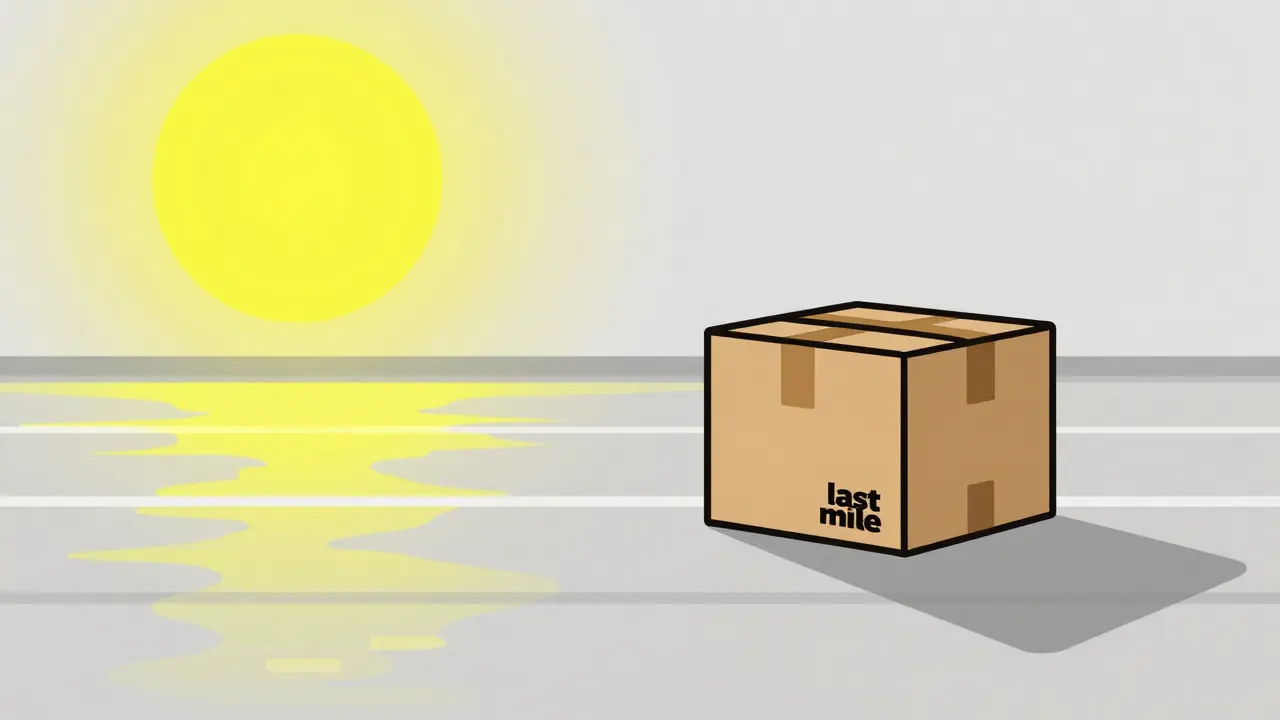
Then there's the "last mile" problem: shipping. Many medications are temperature-sensitive. If a shipment of insulin or certain biologics sits on a hot tarmac in a transit hub, the drug can degrade. Research suggests up to 20-25% of temperature-sensitive pharmaceuticals experience these "excursions," which can lead to a 30% loss in potency. You might be taking the right pill, but it's only half as strong as it should be.
The Red Flags of International Online Pharmacies
Searching for "cheap generics" online often leads to a rabbit hole of websites promising miracles. This is where the risk of counterfeit drugs spikes. The FDA's 2023 Import Risk Assessment found that nearly 16% of seized counterfeit drugs entered via international mail, with the vast majority coming from China, India, and Canada.
How do you spot a dangerous site? Be wary if they don't require a prescription or if the price seems too good to be true. Real pharmacies don't sell controlled substances without a doctor's sign-off. User stories on platforms like Reddit highlight the gamble: one person might save $1,200 a year on atorvastatin from a certified Canadian pharmacy, while another receives sertraline from an unverified Indian site with inconsistent tablet sizes and potency issues that required emergency medical care.
If you're going to do this, you need to verify credentials. Look for the VIPPS Verified Internet Pharmacy Practice Sites program, which certifies that an online pharmacy is legitimate and safe accreditation. As of mid-2024, only a handful of international pharmacies have managed to meet these rigorous standards.
Navigating the Legal Maze
Is it illegal to buy medicine from abroad? Technically, the FDA prohibits the importation of unapproved drugs. However, they often exercise "enforcement discretion." This means that if the drug is for personal use (usually a 90-day supply), isn't for resale, and doesn't pose an imminent danger, they likely won't come after you.
But "not being arrested" isn't the same as "being legal." Your shipment can still be seized by customs. About 18% of users who attempt international purchasing report their packages being held or destroyed. To avoid this, some U.S. states have launched official importation programs. Florida and Vermont have created pathways to import from Canada, saving users an average of $389 to $427 per prescription. These programs remove the guesswork and the risk of customs seizures.
If you are managing this yourself, keep a checklist of what you need: a valid prescription, proof of personal use, and a clear understanding of the customs forms required for high-value shipments (typically over $800).
Trade-offs: Cost vs. Convenience
Before you hit "order" on a foreign website, consider the non-monetary costs. Buying abroad isn't just about the price of the pill; it's about the logistical headache. Common issues include:
- Language Barriers: Over a quarter of users report struggle with foreign language packaging, which can lead to dangerous dosing errors.
- Lack of Consultation: You lose the ability to ask a pharmacist about drug interactions in real-time.
- Shipping Delays: Expect wait times of 7 to 14 business days, which can be critical if you're running low on a life-sustaining medication.
- Return Difficulties: Returning a defective or wrong product to another country is nearly impossible for 68% of users.
The financial incentive is strong-some users report average savings of 58%-but you have to weigh that against the risk of receiving a counterfeit product or a degraded chemical compound.
Is it legal to import generics from Canada?
While technically against FDA regulations, the agency typically allows "personal importation" for a 90-day supply if the drug is for personal use and not for resale. However, customs can still seize shipments at their discretion. Some states, like Florida and Maine, have established official programs to make this process safer and legal.
How can I tell if an international pharmacy is legitimate?
Look for accreditation from the National Association of Boards of Pharmacy's VIPPS program. A legitimate pharmacy will always require a valid prescription, provide a way to speak with a licensed pharmacist, and will not offer "miracle cures" or incredibly low prices for drugs that usually cost thousands.
Do international generics have the same strength as U.S. versions?
In theory, yes, if they meet bioequivalence standards. In practice, it varies. Some foreign manufacturing plants have lower quality control standards than domestic ones. Additionally, temperature excursions during shipping can reduce the potency of certain medications by up to 30%.
What are the biggest risks of buying meds online from abroad?
The primary risks are receiving counterfeit medications (which may contain the wrong ingredient or none at all), experiencing a loss of drug potency due to heat during shipping, and facing customs seizures that leave you without your medication during a critical treatment window.
Why are generics sometimes cheaper in the U.S. than abroad?
The U.S. has a massive volume of generic prescriptions (about 90% of all fills). Pharmacy Benefit Managers (PBMs) use this volume to negotiate very deep discounts with manufacturers. In other countries, prices are managed by government caps, which can actually make some generics more expensive than the highly negotiated U.S. versions.
Next Steps and Troubleshooting
If you're considering this route, start with a low-risk approach. First, check if your medication is one of those that is actually cheaper abroad; don't assume it is. Use a price comparison tool or a pharmacy aggregator to verify the cost in Canada or the UK versus your local pharmacy.
If you decide to proceed, only use pharmacies with verified credentials. If your shipment arrives and the pills look different (different color, size, or smell) than your usual dose, do not take them. Contact your doctor immediately and report the issue to the FDA's Office of Pharmaceutical Quality.
For those in states with sanctioned importation programs, those are always the safest bet. They provide a layer of government verification that individual online shopping simply cannot match. If you experience a customs delay, don't panic-but always keep at least a 14-day buffer of your current medication to ensure you don't miss a dose while waiting for the package to clear.


Emily Wheeler
April 12, 2026 AT 08:55It really makes one ponder the ethical implications of a world where the geography of your birth determines the accessibility of life-saving chemistry, and while I totally agree that safety is the priority, there's something profoundly tragic about the way we've commodified basic wellness to the point where people have to play a game of roulette with customs agents just to avoid bankruptcy. I've always felt that we should strive for a more globalized standard of care where the human right to health transcends these arbitrary national borders and the complex web of corporate negotiations that seem to prioritize profit margins over the actual pulse of the patient who is just trying to survive another month without losing their home to a pharmacy bill.
Trey Kauffman
April 12, 2026 AT 15:48Oh sure, because nothing says 'health' like a pill that spent three days baking on a tarmac in Dubai before arriving in a bubble-wrap envelope. Truly a masterclass in medical strategy.
Danny Wilks
April 13, 2026 AT 12:15The nuances of the European reference pricing models are quite fascinating when you actually dive into the legislation, and while it might seem cumbersome from an American perspective, the stability it provides to the average citizen is an invaluable part of the social contract that we simply lack in the States. I tend to believe that the inherent risks of importation are often amplified by a lack of understanding regarding the stringent quality controls present in Germany and Sweden, though I certainly concede that the 'last mile' shipping issue mentioned is a legitimate concern that cannot be ignored by anyone thinking rationally about their medication.
kalpana Nepal
April 14, 2026 AT 07:40India provides the cheapest and best medicines to the whole world. Why do you talk about risks when our labs are the best. This is just another way to make us look bad while you steal our knowledge.
Victor Parker
April 16, 2026 AT 05:00WAKE UP PEOPLE!! 👁️ The FDA and the big pharma companies are just in cahoots to keep us scared of the 'foreign' pills so we keep paying the 400% markup! It's all a scam to keep us dependent on their broken system! 😡💊
Ryan Hogg
April 16, 2026 AT 20:57I can't even deal with this. My insurance just denied my refill and now I'm reading about how my meds might be fake or melt in the sun. I'm literally shaking just thinking about the cost of a mistake here. This is just too much for me to handle right now.
Lynn Bowen
April 18, 2026 AT 16:05It's really a toss-up depending on the specific medication you need.